No. The simulation focuses on strategy and decision-making, not coding.

AI in Financial Decision-Making Simulation
In this simulation, participants explore how artificial intelligence transforms investment, risk, and corporate finance decisions - balancing data-driven insights with human judgment, ethics, and organizational strategy under uncertainty.

AI in Financial Decision-Making Simulation Overview
Participants step into the role of finance professionals using AI-powered tools to support critical decisions. Each round introduces new opportunities and risks: algorithmic trading strategies, credit scoring, risk modeling, or corporate investment planning.
They must balance AI-driven recommendations with ethical, regulatory, and strategic considerations. Scenarios highlight both the potential and limitations of AI - bias in algorithms, data quality issues, transparency concerns, and overreliance on automation.
This simulation is designed for finance, data analytics, and strategy courses, as well as executive and corporate training. It brings abstract AI concepts to life through immersive financial decision-making scenarios.

AI in Financial Decision-Making Simulation Concepts
Participants work through realistic scenarios, which can be customized to emphasize or exclude specific topics depending on the learning goals. This modular structure allows the simulation to be tailored to any type of session. Key concepts include:
- AI applications in trading, credit, and corporate finance
- Data-driven decision-making and predictive analytics
- Algorithmic bias and ethical considerations
- Regulatory challenges in AI adoption
- Human-AI collaboration in financial contexts
- Risk management with AI-based models
- Transparency, interpretability, and trust in algorithms
- Cost-benefit analysis of AI adoption
- AI’s role in financial innovation and disruption
- Limits of automation and importance of human oversight

Gameflow
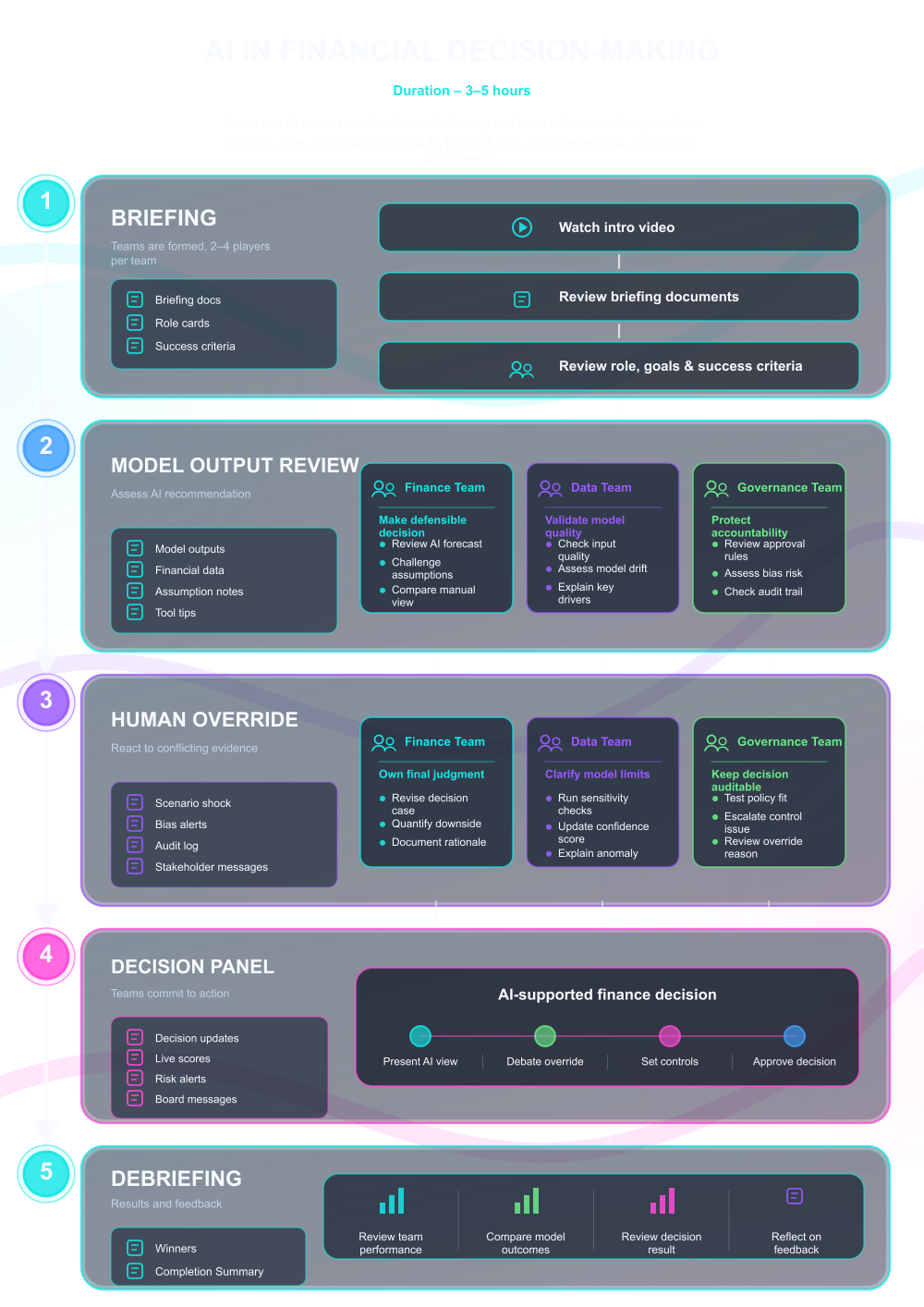

What Participants Do
In the simulation, participants act as financial decision-makers leveraging AI. They:
- Review AI model outputs for trading, lending, or investment decisions
- Balance human judgment with machine recommendations
- Manage risks from data bias, errors, or system failures
- Respond to regulatory scrutiny or stakeholder concerns
- Adapt strategies to external shocks such as volatility or market disruptions
- Present AI-driven strategies to boards, regulators, or clients

Learning Objectives
By the end of the simulation, participants will be able to:
- Apply AI concepts in financial decision-making
- Recognize the strengths and weaknesses of AI models
- Balance automation with human oversight in high-stakes contexts
- Evaluate data quality and model transparency issues
- Manage ethical and regulatory challenges of AI in finance
- Respond to external shocks with agility
- Communicate AI-based strategies persuasively to stakeholders
- Collaborate across technical and business functions effectively
- Anticipate long-term impacts of AI adoption in financial services
- Build confidence in integrating AI into strategic finance decisions
The simulation’s flexible structure ensures that these objectives can be calibrated to match the depth, duration, and focus areas of each program, whether in higher education or corporate learning.
How the AI in Financial Decision-Making Simulation Works
The simulation can be delivered individually or in teams, in classrooms, workshops, or executive education. Each cycle mirrors a decision-making round enhanced by AI inputs.
1. Receive a Scenario or Brief: Participants are introduced to a financial challenge where AI tools provide data-driven insights.
2. Analyse the Situation: They review model outputs, financial data, and contextual factors to weigh trade-offs.
3. Make Strategic Decisions: Participants decide whether to follow AI recommendations, override them, or adjust strategies.
4. Collaborate Across Roles: Teams represent different stakeholders - finance leaders, data scientists, regulators - debating risks and opportunities.
5. Communicate Outcomes: Participants deliver strategy memos, board updates, or client presentations explaining their choices.
6. Review and Reflect: Feedback highlights outcomes, AI effectiveness, and ethical implications. Participants refine their judgment in later rounds.
Frequently Asked Questions
Assessment
Assessment can be tailored to focus on technical, strategic, or ethical decision-making. Participants may be evaluated on:
- Quality of decisions balancing AI and human input
- Recognition of risks and limitations in AI use
- Clarity and persuasiveness of communication
- Responsiveness to regulatory and stakeholder challenges
- Collaboration across technical and strategic roles
You can also include memo writing and debrief presentations as part of the assessment structure. Additionally, you can also add a built-in peer and self-assessment tool to see how participants rate themselves. This flexibility allows the simulation to be easily integrated by professors as graded courses at universities and by HR at assessment centres at companies.