This simulation is designed for undergraduate and graduate business students, MBA candidates, finance professionals seeking skill enhancement, and corporate training programs.

Advisory Services Simulation
The Advisory Services Simulation plunges participants into the high-stakes world of financial consulting, where technical skill meets strategic negotiation. See beyond the numbers and guide clients through their financial decisions.

Advisory Services Simulation Overview
In today's volatile market, corporations rely on expert advisors to navigate mergers, acquisitions, capital raising, and financial restructurings. This simulation provides an immersive, hands-on experience in the core pillars of financial advisory.
Participants are divided into teams, representing either a boutique or bulge-bracket advisory firm, and are tasked with managing a portfolio of live client cases. They will be confronted with realistic scenarios mirroring those handled by top-tier investment banks and consulting firms. From valuing a target company and structuring a deal, to negotiating terms and managing client expectations, the simulation replicates the end-to-end process of advisory work.
Success is measured not just by the financial outcome of the deals, but by participants’ ability to build client trust, manage competing interests, and deliver sound strategic counsel under pressure.

Advisory Services Simulation Concepts
Participants work through realistic scenarios, which can be customized to emphasize or exclude specific topics depending on the learning goals. This modular structure allows the simulation to be tailored to any type of session. Key concepts include:
- Company Valuation
- Deal Structuring
- Capital Raising
- M&A Strategy
- Financial Modeling
- Client Management
- Negotiation Tactics
- Regulatory and Legal Considerations

Gameflow

What Participants Do
In the simulation, participants will:
- Represent either the buy-side or sell-side in live M&A transactions.
- Utilize multiple methodologies to determine a target's fair value.
- Create term sheets and present strategic rationale to a simulated "Board of Directors."
- Engage in multi-round negotiations on price, structure, and covenants.
- Advise a client on the optimal capital structure and pitch to potential lenders or investors.
- Forecast the combined financials of merged entities.
- Juggle multiple client mandates with competing deadlines and resources.

Learning Objectives
By the end of the simulation, participants will be able to:
- Analyze a company's financial position and strategic options to provide actionable advice.
- Value a business using mainstream valuation techniques and justify the assumptions.
- Structure a merger, acquisition, or financing deal that aligns with client goals and market realities.
- Construct a sophisticated financial model to analyze the impact of a proposed transaction.
- Negotiate deal terms effectively, balancing assertiveness with the need to close the transaction.
- Communicate complex financial strategies clearly and persuasively to clients and stakeholders.
- Evaluate ethical challenges and conflicts of interest common in advisory roles.
- Synthesize quantitative data and qualitative factors to form a holistic advisory recommendation.
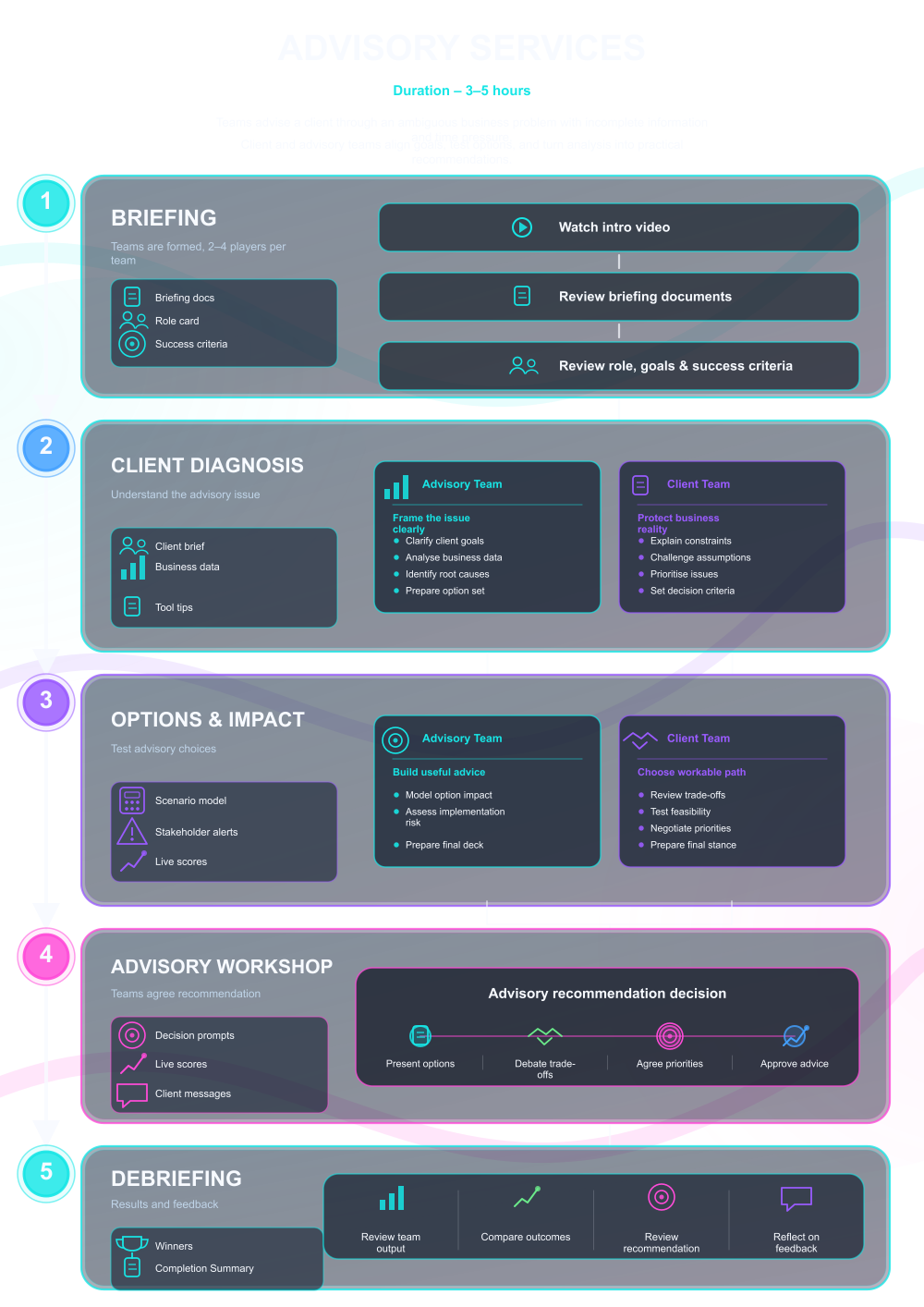
How the Advisory Services Simulation Works
This simulation can be run individually or in teams in academic or corporate contexts. Each cycle represents a stage of getting through a pressing financial situation.
1. Team Formation and Briefing Participants are grouped into advisory firms and receive their first client mandate.
2. Market and Data Analysis Teams access a dynamic market environment, company financials, and research reports.
3. Strategy Development Based on the client's goals, teams develop a strategic plan ("Advise on the acquisition of Company X").
4. Financial Modeling and Valuation Teams build models and perform valuations to support their strategic advice.
5. Negotiation Rounds Teams interact with other teams (representing the counterparty) in structured negotiation rounds, moderated by the platform.
6. Client Pitches and Deliverables Teams present their final recommendations and deal terms to an automated "client" or instructor for a grade.
Frequently Asked Questions
Assessment
Assessment of participant performance can be tailored according to the host institution’s objectives (business school, corporate training, assessment centre). Typical assessment criteria include:
- Accuracy of valuation models and assumptions.
- Soundness of financial projections and synergy calculations.
- Quality of the final deal terms achieved (price, covenants, structure).
- Effectiveness in negotiation rounds against counterparties.
- Clarity, logic, and defensibility of the strategic recommendation.
- Ability to justify decisions based on data and client objectives.
- Quality and clarity of the final client pitch deck or advisory report.
- Professionalism in all written and verbal communications.