This simulation is ideal for university students in actuarial science, finance, and risk management, as well as early-career professionals in insurance or financial consulting looking to deepen their practical skills.

Actuarial Services Simulation
Our Actuarial Services Simulation plunges participants into the high-stakes world of actuarial science, moving beyond theory to the practical application of models that define financial stability and risk for insurance companies and pension funds.

Actuarial Services Simulation Overview
In this dynamic, online simulation, participants step into the role of actuarial consultants hired by a mid-sized life insurance company. The company is facing pressure from regulators and shareholders to better manage its capital reserves and product profitability.
Over the course of the simulation, teams will analyze complex data sets, build and validate actuarial models, and provide critical recommendations that will directly impact the virtual company's balance sheet and strategic future. Participants will grapple with real-world challenges such as mortality risk, lapse risk, and investment risk.
Participants must balance the competing demands of solvency and profitability. The simulation provides a safe, competitive environment to understand how actuarial judgment directly influences corporate strategy and financial health.

Actuarial Services Simulation Concepts
Participants work through realistic scenarios, which can be customized to emphasize or exclude specific topics depending on the learning goals. This modular structure allows the simulation to be tailored to any type of session. Key concepts include:
- Life Tables and Mortality Risk
- Lapse Risk
- Reserving and Liability Valuation
- Pricing and Premium Calculation
- Cash Flow Projection
- Capital Adequacy
- Investment Strategy
- Sensitivity Analysis and Scenario Testing

Gameflow
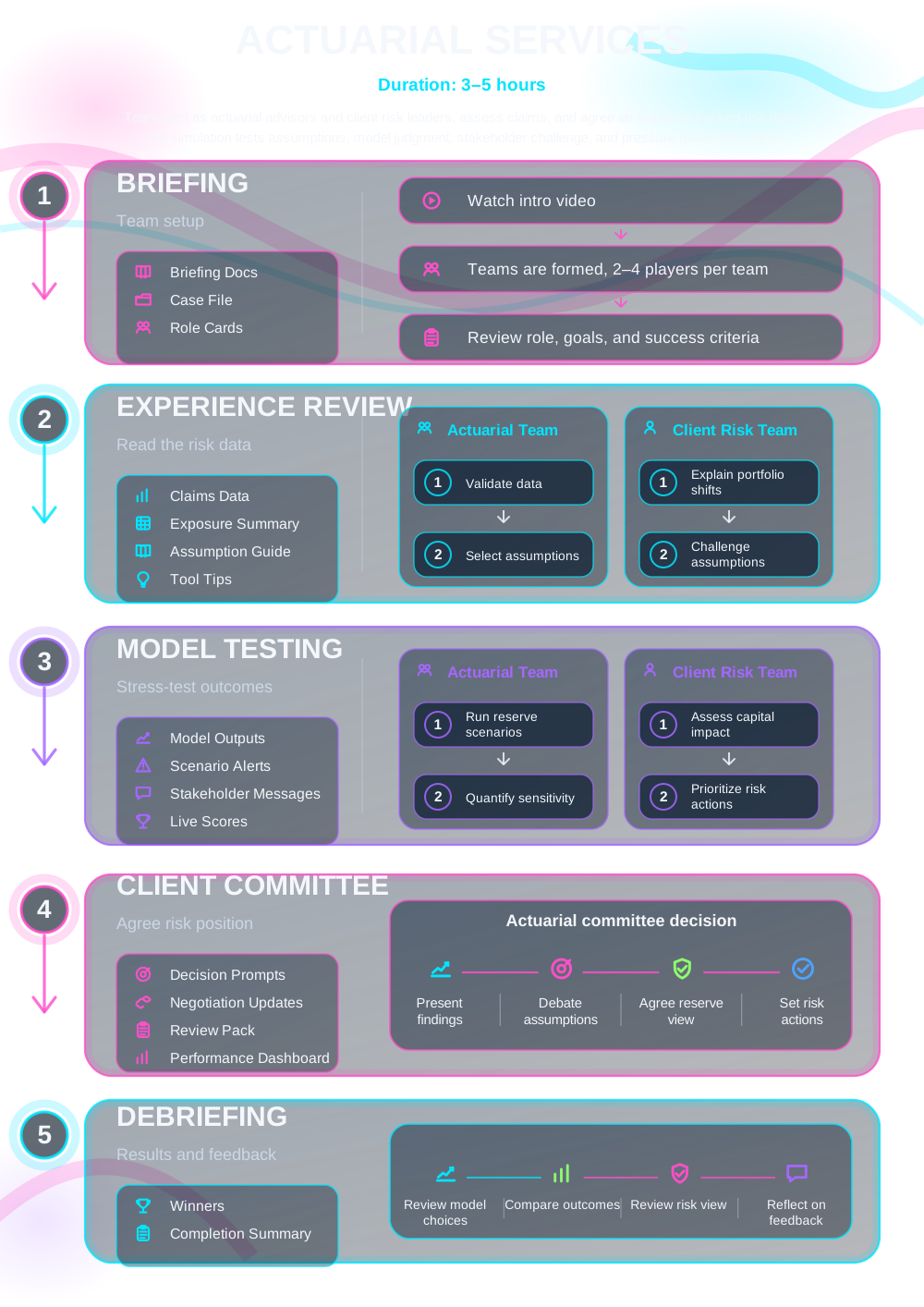

What Participants Do
In the simulation, participants will:
- Analyze historical policy data, claims experience, and economic variables.
- Build and calibrate actuarial models to project liabilities and cash flows.
- Determine optimal premium pricing for a new product launch.
- Calculate and justify the level of capital reserves required by the company.
- Perform sensitivity analysis on key assumptions.
- Compete against other teams to provide the most accurate and profitable consultancy.
- Present findings and recommendations to the "board" in a final report or presentation.

Learning Objectives
By the end of the simulation, participants will be able to:
- Apply core actuarial principles to value insurance liabilities and price products.
- Construct a coherent actuarial model to project cash flows and assess capital needs.
- Evaluate the financial impact of changes in key demographic and economic assumptions.
- Interpret the requirements of solvency capital regimes and their business implications.
- Formulate strategic recommendations based on quantitative model outputs and qualitative business judgment.
- Collaborate effectively within a team to solve complex, multi-faceted financial problems.
How the Actuarial Services Simulation Works
This simulation can be run individually or in teams in academic or corporate contexts. Each cycle represents a stage of getting through a pressing financial situation.
1. Team Formation Participants are divided into consulting teams.
2. Introduction and Briefing Teams receive the "SureLife Insurance" case, including financial statements, product details, and regulatory constraints.
3. Data Analysis and Modeling Over several decision rounds, teams access the simulation platform to input data, run their models, and make key decisions on pricing and reserving. Each round represents a new fiscal year or a new strategic challenge.
4. Results and Market Feedback After each round, the platform generates results, showing the impact of their decisions on the company's profitability, solvency ratio, and competitive ranking.
5. Final Presentation Teams consolidate their learnings into a final actuarial report or board presentation, justifying their strategy and model choices.
Frequently Asked Questions
Assessment
Assessment of participant performance can be tailored according to the host institution’s objectives (business school, corporate training, assessment centre). Typical assessment criteria include:
- Capital Adequacy
- Profitability
- Model Accuracy
- Depth of analysis
- Clarity of assumptions
- Robustness of the model
- Strength of the financial recommendations.