This simulation is ideal for anyone seeking to understand practical portfolio management, including business students, finance professionals, financial advisors, and individual investors looking to deepen their knowledge.

Active vs Passive Investing Simulation
In this simulation, participants take on the role of portfolio managers at a leading asset management firm. They are challenged to design, implement, and defend investment strategies for a multi-asset portfolio.

Active vs Passive Investing Simulation Overview
Participants step into a competitive financial environment where they must manage a multi-asset class portfolio for a high-net-worth client. Over several simulated years, they confront real-world dilemmas: Should they pick individual stocks or opt for low-cost index funds? How much should they pay in fees for potential outperformance? When is market timing justified?
Each decision round introduces new market data, economic shocks, and shifting client expectations. Participants must analyze performance, justify their strategic choices, and adapt their approach in response to market volatility, fee pressure, and competitive benchmarks. The simulation creates a tangible tension between the pursuit of alpha through active management and the reliable, cost-efficient returns of passive strategies.
This simulation is designed for university finance programs, MBA courses, executive education, and professional training workshops within asset management firms. It makes abstract investment theories concrete, showing how strategy, behavior, and costs interact to determine long-term financial outcomes.

Active vs Passive Investing Simulation Concepts
Participants work through realistic scenarios, which can be customized to emphasize or exclude specific topics depending on the learning goals. This modular structure allows the simulation to be tailored to any type of session. Key concepts include:
- Core philosophies of active and passive investing
- Portfolio construction and strategic asset allocation
- Benchmark selection and performance attribution analysis
- Cost analysis: expense ratios, transaction fees, and tax implications
- Factor investing and Smart Beta strategies
- Market efficiency and behavioral finance biases
- Risk-adjusted performance metrics (Sharpe Ratio, Alpha, Tracking Error)
- The impact of compounding costs on long-term returns
- Client reporting, communication, and expectation management

Gameflow
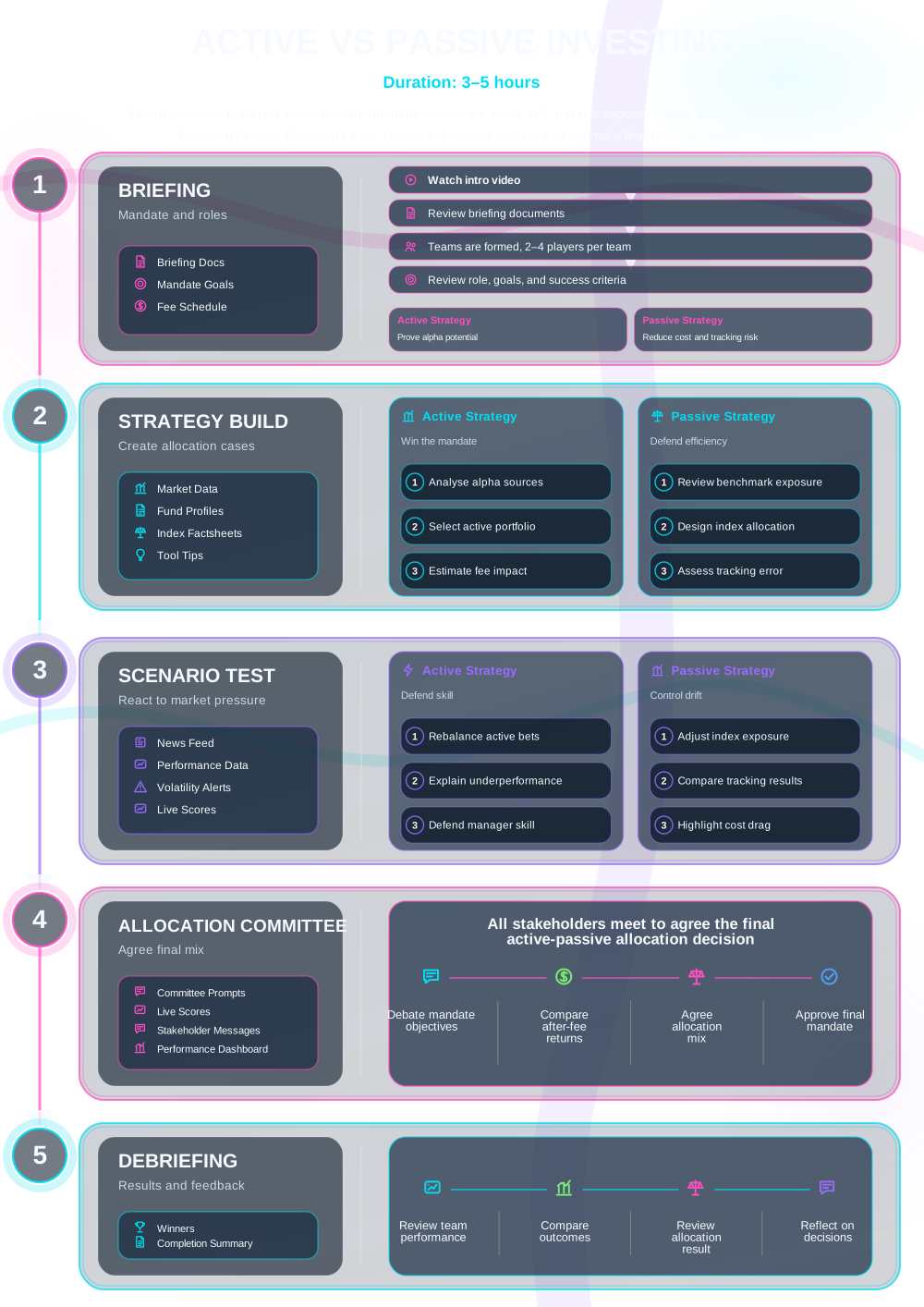

What Participants Do
In the simulation, participants will:
- Choose an initial strategic mandate leaning Active, Passive, or Hybrid.
- Construct a portfolio by selecting specific securities, active funds, or passive ETFs.
- Analyze incoming market data, economic reports, and competitor benchmarks.
- Decide to rebalance, shift strategy, or stay the course each period.
- Manage costs and justify fee structures to a simulated client.
- Present a final performance review, defending their strategic choices.

Learning Objectives
By the end of the simulation, participants will be able to:
- Articulate the core arguments for and against active and passive investing.
- Construct a multi-asset portfolio aligned with a specific investment philosophy.
- Quantify the impact of management fees and costs on net investment returns.
- Analyze performance using appropriate benchmarks and risk-adjusted metrics.
- Adjust investment strategy in response to changing market regimes.
- Communicate portfolio performance and strategy effectively to stakeholders.
- Develop a nuanced, practical understanding of the modern asset management landscape.
How the Active vs Passive Investing Simulation Works
This simulation can be run individually or in teams in academic or corporate contexts. Each cycle represents a stage of getting through a pressing financial situation.
1. Receive the Client Brief Participants are given a client profile with specific return goals, risk tolerance, and investment horizons.
** 2. Develop Initial Strategy** They research simulated market data and fund factsheets to choose an initial strategic direction.
3. Make Allocation Decisions Participants allocate capital across asset classes and specific investment products.
4. Respond to Market Events Each round introduces new data: earnings reports, interest rate changes, market corrections, forcing participants to react.
5. Review and Rebalance They analyze their portfolio's performance against relevant benchmarks and decide whether to adjust.
6. Client Reporting Phase At key intervals, participants summarize their performance, costs incurred, and strategic rationale for the client.
Frequently Asked Questions
Assessment
Assessment of participant performance can be tailored according to the host institution’s objectives (business school, corporate training, assessment centre). Typical assessment criteria include:
- Risk-adjusted returns (Sharpe Ratio) and success in meeting client benchmarks.
- Adherence to and effective application of their chosen active, passive, or hybrid mandate.
- Efficiency in minimizing fees and transaction costs without sacrificing strategic goals.
- Clarity and persuasiveness in defending strategy choices in written and oral reports.
- Appropriate strategic shifts in response to clear market regime changes.