All you need is a modern web browser and Microsoft Excel. The simulation is cloud-based and accessible 24/7.

Acquisition Modelling Simulation
The Acquisition Modelling Simulation plunges participants into the high-stakes world of mergers and acquisitions tasked with analyzing a target company, building a comprehensive financial model, and executing a strategic acquisition for the client.

Acquisition Modelling Simulation Overview
In the Acquisition Modelling Simulation, participants step into the shoes of an investment banking analyst or associate. They are presented with a live case: a publicly-traded or private company is seeking to acquire a strategic target to enhance its market position, diversify its revenue streams, or achieve cost synergies.
The simulation revolves around a single, critical deliverable: a fully-integrated, three-statement acquisition model. Participants will start from scratch, importing historical data, making key assumptions about the target's future performance, and ultimately modeling the impact of the acquisition on the acquirer's financial statements.
The core challenge is to determine a justifiable valuation range, decide on the optimal financing mix (cash, debt, stock), and quantify the accretion/dilution to earnings per share. Success is measured by the accuracy of their model, the soundness of their strategic rationale, and the value created for the acquiring company's shareholders.

Acquisition Modelling Simulation Concepts
Participants work through realistic scenarios, which can be customized to emphasize or exclude specific topics depending on the learning goals. This modular structure allows the simulation to be tailored to any type of session. Key concepts include:
- M&A Deal Rationale and Strategy
- Financial Statement Analysis
- Financial Modelling and Forecasting
- Discounted Cash Flow (DCF) Analysis
- Comparable Company Analysis (Comps)
- Precedent Transaction Analysis
- Acquisition Mechanics
- Financing the Deal
- Accretion/Dilution Analysis
- Credit Metrics and Leverage
- Synergy Modelling

Gameflow
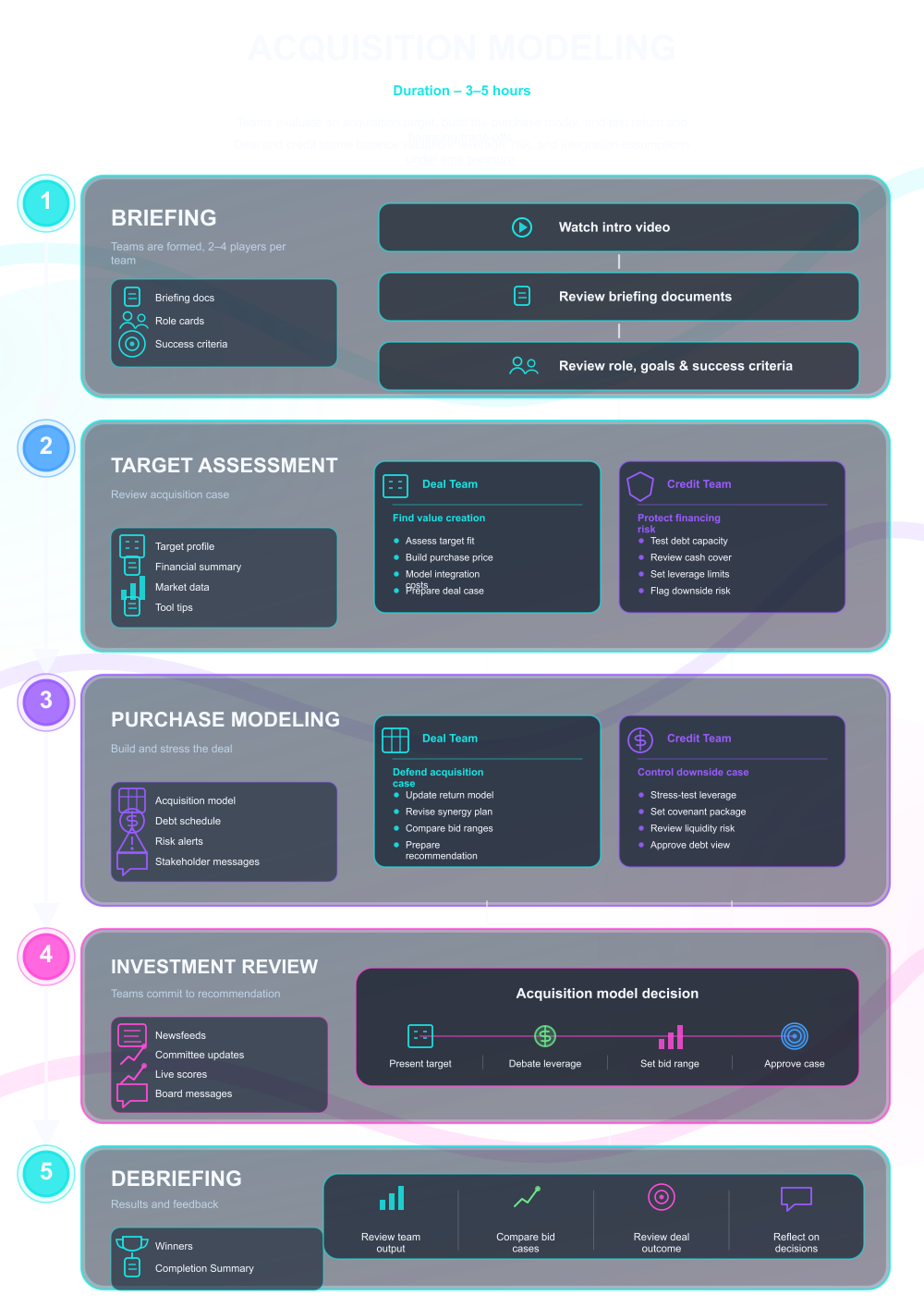

What Participants Do
In the simulation, participants will:
- Analyze a comprehensive company information packet (CIM) for the target company.
- Build a three-statement financial model (Income Statement, Balance Sheet, Cash Flow Statement) for the target from the ground up.
- Forecast the target's future revenue, expenses, and working capital needs.
- Perform a full business valuation using DCF, Comparable Companies, and Precedent Transactions.
- Model the acquisition, including the creation of goodwill and intangible assets.
- Evaluate different financing scenarios (all-cash, all-stock, mixed) and their impact.
- Conduct a detailed accretion/dilution analysis to determine if the deal creates value.
- Prepare a summary of findings and a recommendation for the "Board of Directors".

Learning Objectives
By the end of the simulation, participants will be able to:
- Construct a professional, three-statement acquisition model in Excel.
- Value a company using the three primary valuation methodologies used on Wall Street.
- Analyze the strategic and financial merits of a potential acquisition.
- Calculate the accretion or dilution of a transaction to the acquirer's EPS.
- Assess the impact of different financing structures on the combined entity's balance sheet and credit profile.
- Quantify and model potential operational and revenue synergies.
- Develop a coherent investment thesis to support an M&A recommendation.
- Interpret complex financial data to make informed strategic decisions under time constraints.
How the Acquisition Modelling Simulation Works
This simulation can be run individually or in teams in academic or corporate contexts. Each cycle represents a stage of getting through a pressing financial situation.
1. Registration and Team Formation Participants are registered and can form teams or work individually.
2. Access the Platform Participants gain access to our proprietary simulation platform, which includes the case study, financial data, and a structured Excel environment.
3. Self-Paced Learning Modules Work through guided modules that cover financial modeling, valuation, and M&A mechanics.
4. Hands-On Modelling Using the provided data, participants will build the acquisition model step-by-step, from historical analysis to the final accretion/dilution output.
5. Scenario Testing The simulation allows for testing different assumptions (growth rates, synergy levels, purchase premiums) and financing options to see their immediate impact on the deal's outcome.
6. Final Submission and Assessment Submit your completed model and a brief executive summary. Your work is then assessed based on technical accuracy, model integrity, and the logic of your conclusions.
Frequently Asked Questions
Assessment
Assessment of participant performance can be tailored according to the host institution’s objectives (business school, corporate training, assessment centre). Typical assessment criteria include:
- Review of the final financial model for accuracy, formula integrity, and correct application of valuation and M&A mechanics.
- Evaluation of the participant's ability to run different financing and synergy scenarios and provide a logical, data-driven justification for their recommended course of action.
- Assessment of the participant's ability to distill complex financial analysis into a clear, concise, and persuasive summary for a senior management audience.
Assessment may incorporate peer and self-review components, facilitator scoring, and debrief discussion. Results may feed into grades, executive feedback, certification or development plans.