Basic knowledge of financial statements is helpful, but the simulation is accessible for learners at all levels.

Accounting Fraud Detection Simulation
In this simulation, participants act as financial investigators uncovering irregularities, analyzing statements, and identifying red flags - balancing skepticism, evidence, and ethics while managing corporate, regulatory, and reputational pressures.

Accounting Fraud Detection Simulation Overview
Participants step into the role of auditors, analysts, or compliance officers tasked with detecting and responding to accounting fraud within an organization. Each round introduces suspicious activity, incomplete information, or pressured reporting environments.
They must investigate anomalies in financial statements, assess internal controls, and decide whether to escalate concerns. Scenarios mirror real-world challenges: earnings manipulation, revenue recognition games, expense inflation, or off-balance-sheet entities.
The simulation is ideal for accounting, finance, and governance courses, as well as corporate training in audit, compliance, and ethics. It brings fraud detection theory to life through immersive, practical experience.

Accounting Fraud Detection Simulation Concepts
Participants work through realistic scenarios, which can be customized to emphasize or exclude specific topics depending on the learning goals. This modular structure allows the simulation to be tailored to any type of session. Key concepts include:
- Red flags in financial reporting
- Fraudulent earnings management tactics
- Internal control failures and risk assessment
- Whistleblowing and reporting protocols
- Ethical dilemmas in fraud detection
- Pressure from management and external stakeholders
- Data analytics in fraud detection
- Regulatory frameworks and auditor responsibilities
- Impact of fraud on stakeholders and markets
- Evidence gathering and professional skepticism

Gameflow
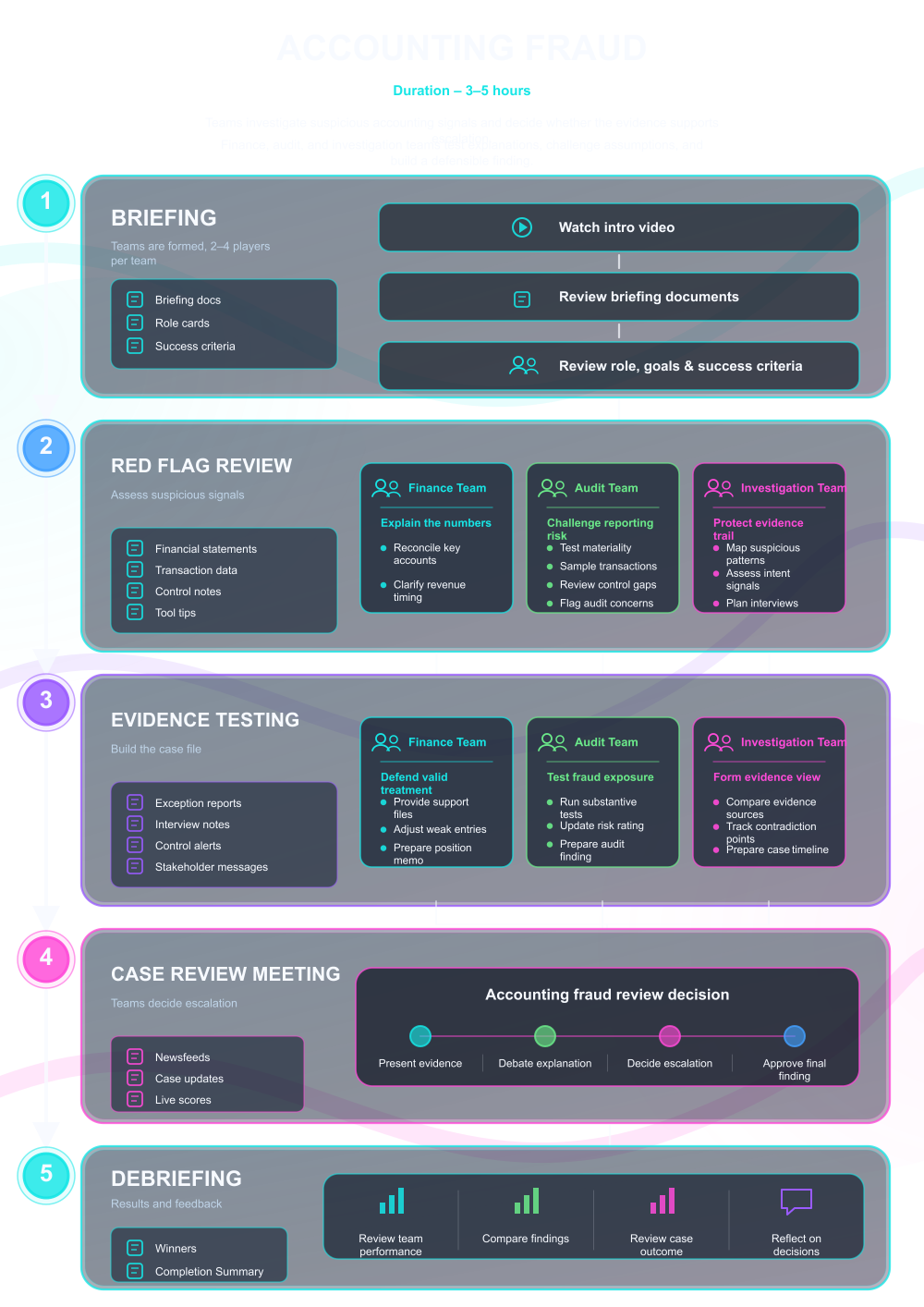

What Participants Do
In this simulation, participants act as financial detectives within an organization. They:
- Review income statements, balance sheets, and cash flow statements for anomalies
- Investigate unusual journal entries, transactions, or ratios
- Decide when to escalate findings to regulators, boards, or audit committees
- Respond to pressure from executives to downplay concerns
- Use data analysis and forensic techniques to uncover hidden risks
- Communicate findings through audit memos, reports, or press briefings

Learning Objectives
By the end of the simulation, participants will be able to:
- Identify and analyze red flags in financial reporting
- Apply professional skepticism to accounting irregularities
- Understand common fraud schemes and manipulation tactics
- Evaluate internal controls and compliance risks
- Balance ethical responsibility with career and organizational pressures
- Communicate concerns effectively to stakeholders
- Recognize the role of auditors, analysts, and regulators in fraud prevention
- Manage reputational and financial fallout of fraud exposure
- Apply data analytics to forensic accounting investigations
- Reflect on ethical dilemmas in fraud detection and reporting
The simulation’s flexible structure ensures that these objectives can be calibrated to match the depth, duration, and focus areas of each program, whether in higher education or corporate learning.
How the Accounting Fraud Detection Simulation Works
This simulation can be run individually or in teams in academic or corporate contexts. Each cycle represents a stage of fraud detection.
1. Receive a Scenario or Brief: Participants receive company financials, reports, and contextual clues—some of which may be misleading.
2. Analyse the Situation: They review statements, ratios, and transactions to identify anomalies.
3. Make Investigative Decisions: Participants decide whether to probe further, escalate findings, or confront management.
4. Collaborate and Debate: In team formats, participants compare interpretations and challenge each other’s conclusions.
5. Communicate Findings: They draft audit memos, board updates, or whistleblower reports based on their discoveries.
6. Review and Reflect: Feedback highlights uncovered frauds, missed red flags, and ethical implications. Participants adapt strategies across rounds.
Frequently Asked Questions
Assessment
Assessment can be tailored to focus on analytical accuracy, ethical judgment, and communication. Participants may be evaluated on:
- Effectiveness in identifying financial irregularities
- Judgment in escalating fraud concerns
- Clarity and structure of audit or investigation reports
- Responsiveness to pressure and ethical challenges
- Collaboration and peer/self-assessment in fraud analysis
You can also include memo writing and debrief presentations as part of the assessment structure. Additionally, you can also add a built-in peer and self-assessment tool to see how participants rate themselves. This flexibility allows the simulation to be easily integrated by professors as graded courses at universities and by HR at assessment centres at companies.