This simulation provides a practical, hands-on experience in corporate valuation, specifically teaching participants how to value a company using Wall Street-standard techniques like DCF and Comparable Company Analysis for critical investment decisions.

Valuation Techniques for Investment Decisions Simulation
The ability to accurately value a business, an asset, or a project is the cornerstone of investment decisions. The Valuation Techniques for Investment Decisions Simulation is an immersive, hands-on learning platform that moves beyond textbook theory.

Valuation Techniques for Investment Decisions Simulation Overview
Participants are placed in the role of financial analysts at a leading investment firm, tasked with evaluating real-world investment opportunities across various sectors and deal types. This simulation challenges teams to apply core valuation methodologies in a dynamic, market-driven environment. They will grapple with imperfect information, make critical assumptions, and defend their valuations in a competitive setting.
By bridging the gap between academic models and practical application, this program equips participants with the confidence and skills to perform robust valuation analysis, a critical competency for careers in investment banking, private equity, corporate M&A, and equity research.
Although ideal for undergraduate and graduate finance courses, executive training, and corporate finance skill workshops, the simulation is modular and scalable, allowing instructors to vary complexity.

Valuation Techniques for Investment Decisions Simulation Concepts
Participants work through realistic scenarios, which can be customized to emphasize or exclude specific topics depending on the learning goals. This modular structure allows the simulation to be tailored to any type of session. Key concepts include:
- Intrinsic vs. Relative Valuation
- Discounted Cash Flow Analysis
- Comparable Company Analysis
- Precedent Transaction Analysis
- Leveraged Buyout Model
- Cost of Capital
- Terminal Value
- Valuation Football Field
- Due Diligence and Assumption Sensitivity

Gameflow
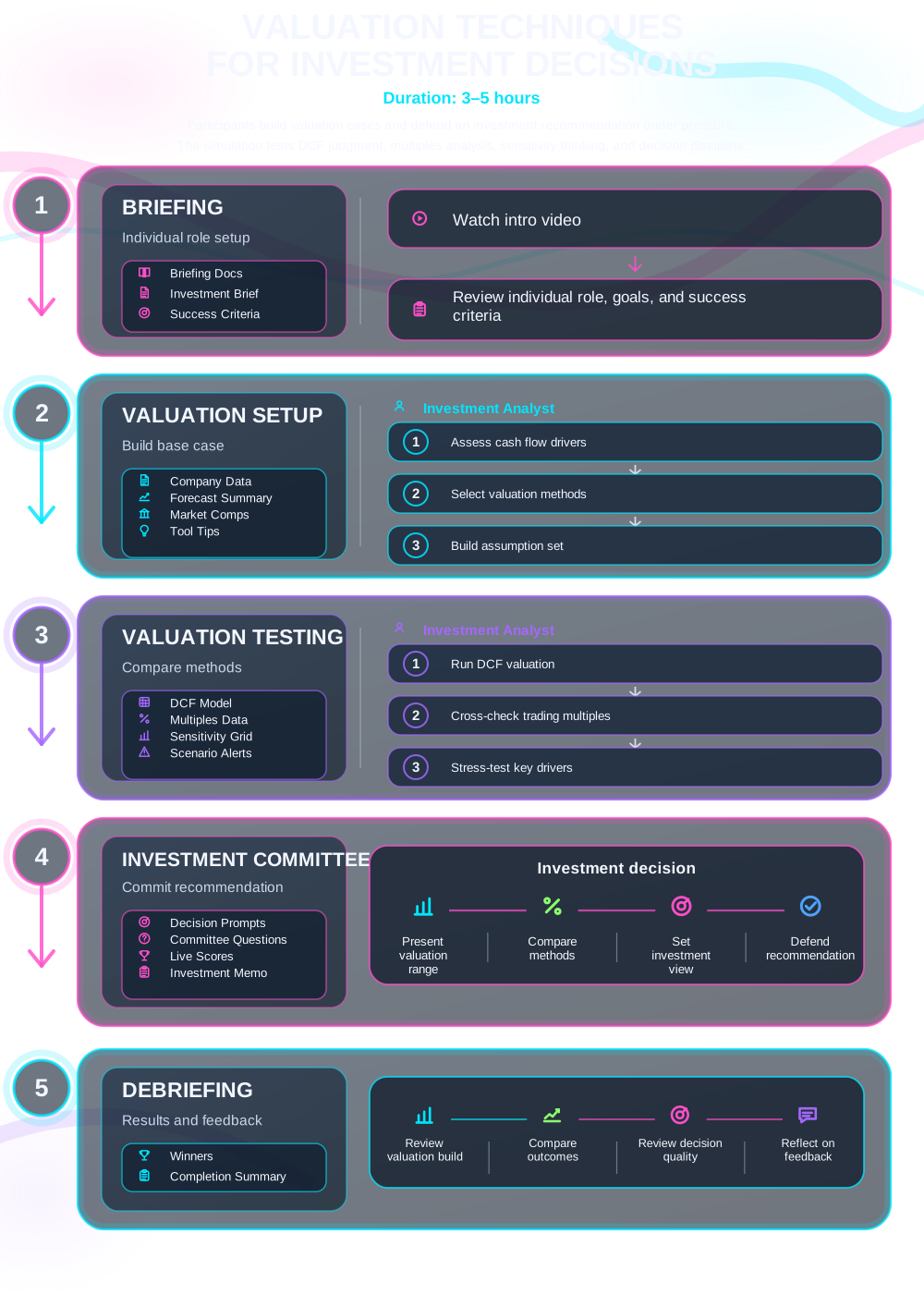

What Participants Do
In the simulation, participants will:
- Dive deep into historical income statements, balance sheets, and cash flow statements.
- Construct a three-statement model to forecast future financial performance.
- From unlevered free cash flow forecasting to terminal value calculation.
- Research the market, select relevant peers and precedent transactions, and calculate valuation multiples.
- Assess the feasibility of an acquisition under a leveraged buyout structure.
- Create a comprehensive "football field" chart to present a compelling valuation range.
- Present and justify your analysis, assumptions, and final investment recommendation to a simulated investment committee.
- In some scenarios, teams may compete to acquire assets at the most accurate valuation, maximizing their simulated fund's returns.

Learning Objectives
By the end of the simulation, participants will be able to:
- Confidently apply the three core valuation methodologies to a real-world target.
- Build a dynamic financial model to forecast a company's financial statements and free cash flows.
- Critically assess the drivers of value within a business and identify the most sensitive assumptions in any model.
- Calculate a company's cost of capital and understand its critical role in valuation.
- Synthesize multiple, often differing, valuation outputs into a logical and defensible valuation range.
- Develop the analytical and presentation skills necessary to communicate valuation findings effectively to senior management or clients.
- Understand how different stakeholders view and calculate value.
- Think and act like a professional investor or financial analyst, making decisions under uncertainty.
How the Valuation Techniques for Investment Decisions Simulation Works
This simulation can be run individually or in teams in academic or corporate contexts. Each cycle represents a stage of getting through a pressing financial situation.
1. Team Formation and Briefing Participants are divided into analyst teams at a fictional investment firm. They receive a detailed case study, including company financials, industry reports, and market data.
2. Training and Toolkits Access is provided to our platform, which includes video tutorials, Excel templates, and a financial data engine to support the analysis.
3. The Analysis Phase Over several rounds, teams work collaboratively to analyze the provided data, build their financial models and perform DCF, Comparable, and Precedent Transaction analyses, input their assumptions, forecasts, and final valuation ranges into the simulation platform.
4. The Decision Phase Teams submit their final investment recommendation at a specific price based on their valuation range.
5. Debrief and Results The simulation concludes with a comprehensive debrief. The instructor reveals the "market outcome," compares team performances, and leads a discussion on the various valuation approaches, highlighting the strengths and weaknesses of each team's analysis.
Frequently Asked Questions
Assessment
Assessment of participant performance can be tailored according to the host institution’s objectives (business school, corporate training, assessment centre). Typical assessment criteria include:
- The technical soundness of the financial models and the logic behind the valuation calculations.
- The quality of the research and rationale used to support key assumptions.
- The ability to rationally reconcile different valuation outputs into a coherent and defensible range.
- The clarity and persuasiveness of the final "buy" or "sell" recommendation and the proposed price.
- Effectiveness in working as a team and communicating complex financial concepts clearly.