While beneficial, advanced knowledge is not required. The simulation is designed for MBA students, finance undergraduates, and professionals seeking practical application. Core concepts are introduced through preparatory materials.

Trading Strategies Simulation
The Trading Strategies Simulation is a dynamic, hands-on platform where participants learn to build, test, and execute sophisticated trading strategies in a realistic, risk-free market environment.

Trading Strategies Simulation Overview
This simulation propels participants into the role of a proprietary trading desk or hedge fund team. They are given a virtual capital allocation and must navigate a live, simulated market that reacts to economic news, company events, and the collective actions of all players.
Moving beyond theoretical finance, the simulation focuses on the practical application of strategy development, real-time decision-making, and risk management. Participants will experience the psychological pressure of gains and losses, learn to analyze market microstructure, and understand how macroeconomic factors translate into actionable trades. It bridges the gap between academic theory and the chaotic reality of the trading floor.
Although ideal for undergraduate and graduate finance courses, executive training, and corporate finance skill workshops, the simulation is modular and scalable, allowing instructors to vary complexity.

Trading Strategies Simulation Concepts
Participants work through realistic scenarios, which can be customized to emphasize or exclude specific topics depending on the learning goals. This modular structure allows the simulation to be tailored to any type of session. Key concepts include:
- Strategy Development and Backtesting
- Technical Analysis and Chart Patterns
- Market Microstructure and Order Types
- Risk Management and Position Sizing
- Portfolio Diversification and Correlation
- Behavioral Finance and Trading Psychology
- Alpha Generation and Performance Metrics (Sharpe Ratio, Max Drawdown)
- Impact of Macroeconomic News and Earnings Reports
- Algorithmic Trading Concepts
- Short Selling and Leverage

Gameflow
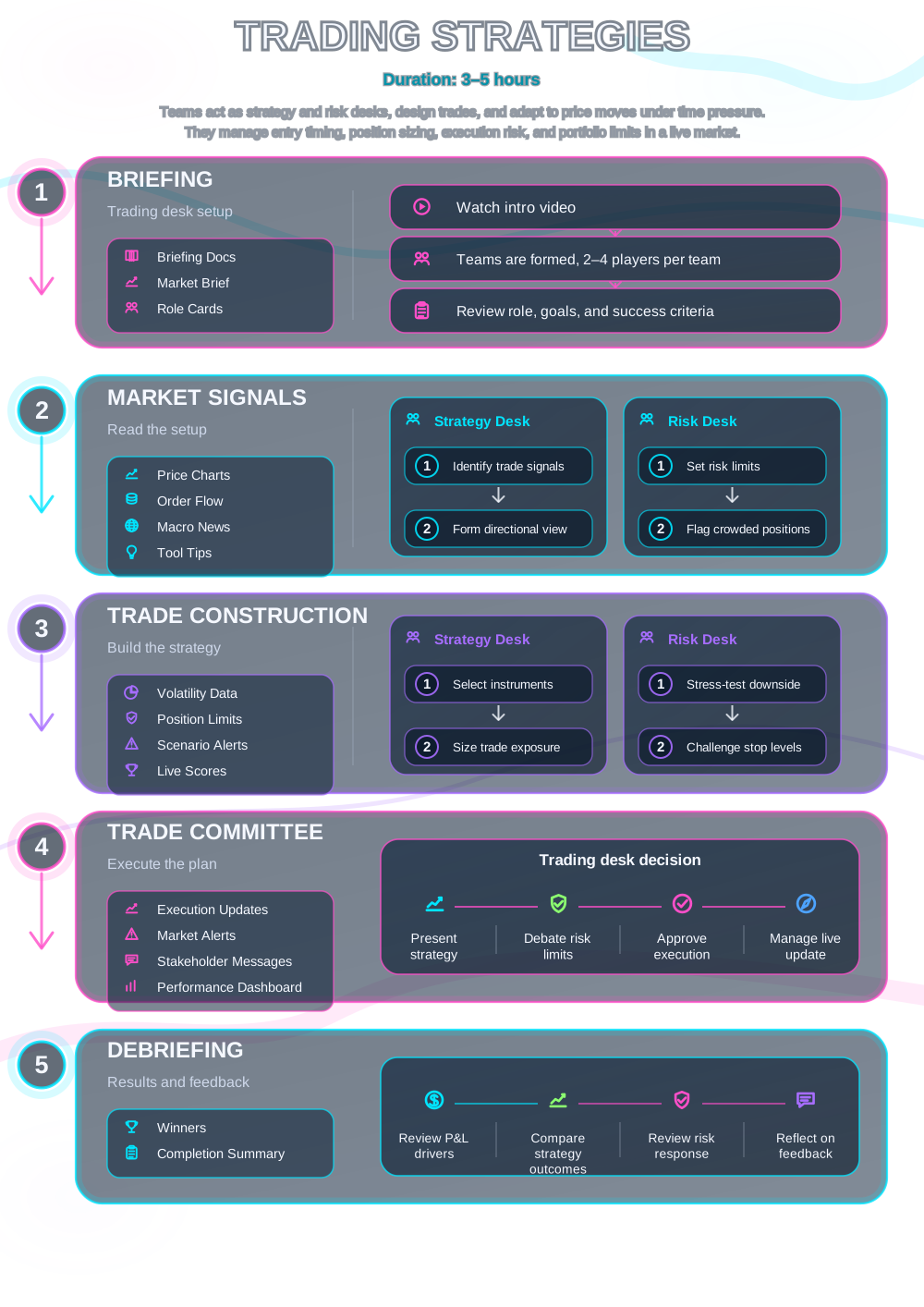

What Participants Do
In the simulation, participants will:
- Study simulated company profiles, economic data feeds, and real-time price charts.
- Develop discrete trading theses and test them against historical simulated data.
- Place market, limit, and stop orders across multiple asset classes.
- Actively monitor portfolio exposure, set stop-losses, and adjust positions in response to market moves.
- Compete against other teams on leaderboards, adapting strategies to evolving market regimes.
- Defend their strategy's rationale and risk-adjusted returns in a final debrief.

Learning Objectives
By the end of the simulation, participants will be able to:
- Design and articulate a structured trading strategy with clear entry and exit rules.
- Execute trades effectively using various order types within a simulated market.
- Apply core risk management techniques to protect capital and manage portfolio drawdowns.
- Calculate and interpret key performance metrics to evaluate the success of a strategy.
- Explain how behavioral biases can impact trading decisions and develop discipline to mitigate them.
- Analyze how scheduled news and unscheduled events drive market volatility and price action.
- Demonstrate the ability to adapt a trading approach in response to changing market conditions.
How the Trading Strategies Simulation Works
This simulation can be run individually or in teams in academic or corporate contexts. Each cycle represents a stage of getting through a pressing financial situation.
1. Team Formation and Capital Allocation Participants are grouped into trading desks and granted virtual capital.
** 2. Market Introduction** They access the trading platform, featuring live, simulated tickers, news feeds, and advanced charting tools.
3. Strategy Phase Teams research, develop, and optionally backtest their core strategy before the live session.
4. Live Trading Rounds The simulation runs in real-time across multiple "days" or "weeks," compressed into a workshop session. Economic reports are released, and markets move.
5. Active Management and Monitoring Teams trade actively, monitor their evolving P&L dashboard, and adjust tactics.
6. Performance Review and Debrief The session concludes with a ranking based on risk-adjusted returns, followed by an instructor-led debrief analyzing winning strategies and key learning moments.
Frequently Asked Questions
Assessment
Assessment of participant performance can be tailored according to the host institution’s objectives (business school, corporate training, assessment centre). Typical assessment criteria include:
- Ranking based on the Sharpe Ratio and overall return relative to maximum drawdown.
- Quality of the pre-trade strategy outline and the final defense of decisions, including adaptation to market events.
- Adherence to stated risk limits and quality of entries in a trading journal documenting rationale for key decisions.
- Team-based assessment of individual contribution to research, analysis, and trading execution.