The core simulation experience is designed to be completed in 2-3 hours, mimicking a few intense workdays. This can be integrated into a half-day or full-day workshop with the introduction and debrief.

Time Management Simulation
Time is not just money — it's your most valuable and finite resource. This simulation plunges participants into a high-pressure financial environment where effective time management is the critical differentiator between success and failure.

Time Management Simulation Overview
The Time Management in Finance Simulation is an immersive, online-based exercise that replicates the intense, multi-tasking driven reality of a financial analyst or associate. Participants are not judged solely on the financial outcomes of their decisions, but on their ability to strategically allocate their time across competing priorities.
Unlike traditional simulations that focus only on valuation or deal structure, this program adds a crucial layer of complexity: the 24-hour clock. Participants will be bombarded with a constant stream of tasks—from urgent client emails and VP requests to critical modeling assignments and last-minute meeting preparations.
Participants’ challenge is to prioritize, delegate (where possible), and execute with precision, all while maintaining the high quality of work expected in top-tier financial institutions. Success requires a blend of financial acumen, strategic planning, and personal efficiency.

Time Management Simulation Concepts
Participants work through realistic scenarios, which can be customized to emphasize or exclude specific topics depending on the learning goals. This modular structure allows the simulation to be tailored to any type of session. Key concepts include:
- Eisenhower Matrix
- Time Boxing
- The Pareto Principle (80/20 Rule)
- Cognitive Load Management
- Opportunity Cost of Time
- Delegation and Communication
- Workflow Batching

Gameflow
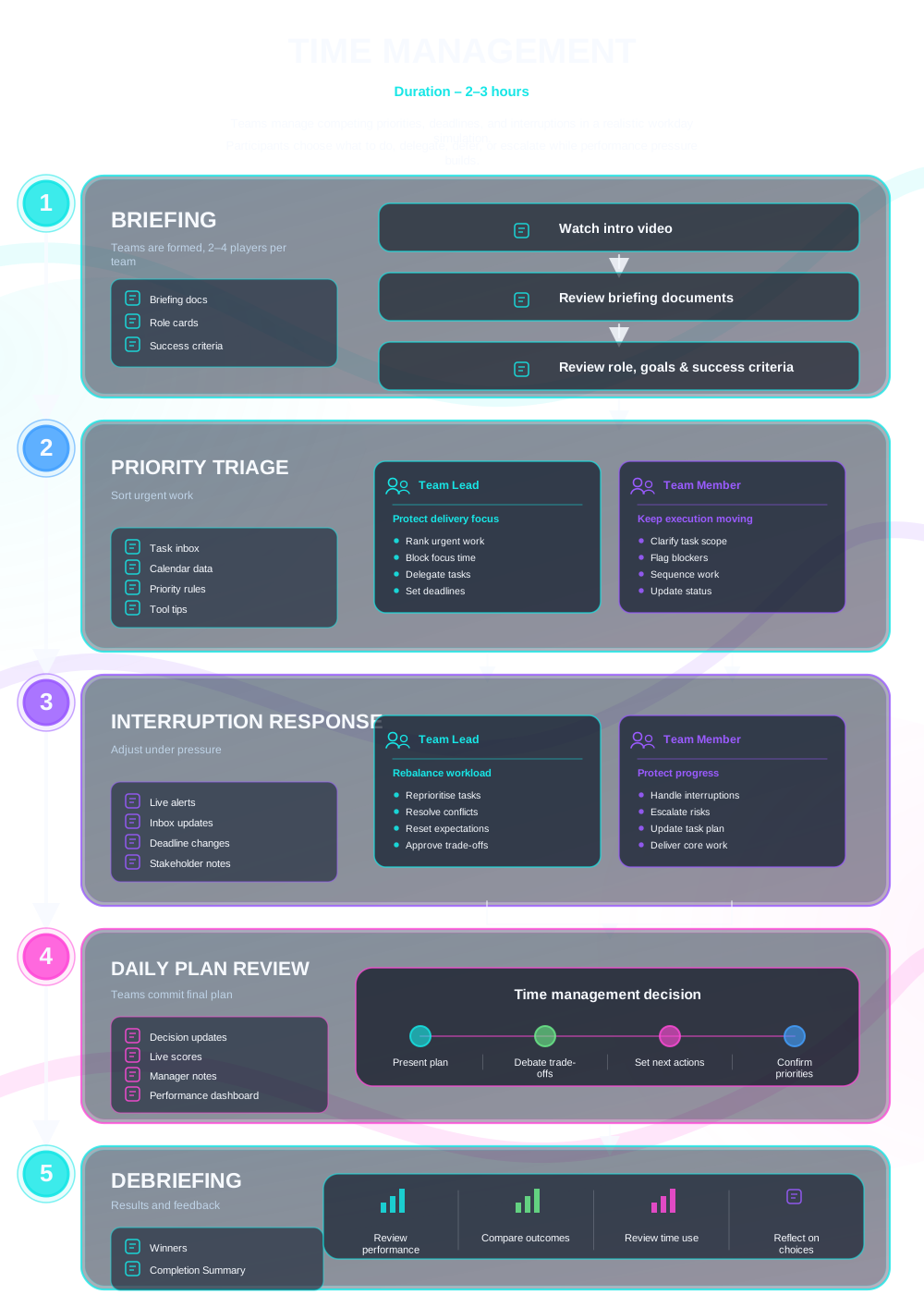

What Participants Do
In the simulation, participants will:
- Triage a dynamic inbox with emails of varying urgency and importance.
- Build and modify financial models under tight deadlines.
- Prepare executive summaries and client-facing presentations.
- Respond to real-time "interruptions" from senior management (simulated).
- Make strategic choices on which projects to advance, delay, or delegate to a virtual junior analyst.
- Track their time allocation and receive a detailed efficiency report.
- Balance long-term project goals against daily firefighting.

Learning Objectives
By the end of the simulation, participants will be able to:
- Develop a personalized and effective time management system for a high-pressure work environment.
- Apply prioritization frameworks to quickly assess and rank competing tasks.
- Enhance personal productivity and output quality by minimizing procrastination and context-switching.
- Improve decision-making under pressure by understanding the tangible costs of poor time allocation.
- Communicate more effectively with team members and superiors about workload, deadlines, and potential delays.
- Analyze their own performance data to identify personal productivity pitfalls and strengths.
How the Time Management Simulation Works
This simulation can be run individually or in teams in academic or corporate contexts. Each cycle represents a stage of getting through a pressing financial situation.
1. Introduction and Briefing Participants are introduced to their role as an analyst at a fictional asset management or investment banking firm.
2. The Simulation Hub They access a dashboard displaying their email, a to-do list, a calendar, and their energy meter.
3. Dynamic Scenario Unfolding Over several simulated days, tasks and requests are delivered in real-time. Each task has a stated deadline, importance level, and impact on the final score.
4. Strategic Execution Participants must decide what to work on, for how long, and in what order. Some tasks require deep focus, while others are quick wins.
5. Feedback and Scoring The platform provides a comprehensive Performance Report. This score is based not only on tasks completed but on the efficiency and strategic priority of their actions. Completing a low-priority task perfectly while missing a critical deadline results in a low score.
Frequently Asked Questions
Assessment
Assessment of participant performance can be tailored according to the host institution’s objectives (business school, corporate training, assessment centre). Typical assessment criteria include:
- Efficiency Score
- Priority Adherence Score
- Quality Assurance Metric
- Cognitive Load Report
Assessment may incorporate peer and self-review components, facilitator scoring, and debrief discussion. Results may feed into grades, executive feedback, certification or development plans.