It's ideal for students, aspiring traders, investors, and finance professionals who want to build or sharpen practical chart analysis and systematic trading skills.

Technical Analysis Simulation
In this Technical Analysis Simulation, participants analyzу charts, identify patterns, and executing trades based on technical indicators to capitalize on market movements and manage risk in dynamic financial markets.

Technical Analysis Simulation Overview
Participants step into the role of traders or analysts in fast-moving markets. Each round presents new price charts, volume data, and market conditions – from trending equities and volatile forex pairs to ranging commodities.
They must interpret technical signals, distinguish between genuine breakouts and false signals, time their entries and exits, and manage position sizing. The simulation emphasizes disciplined, rule-based trading, blending pattern recognition with real-time risk management.
This simulation is ideal for university finance courses, trading bootcamps, and corporate training workshops. It transforms theoretical charting concepts into practical, experiential learning, showing how technical analysis informs real-world trading decisions and portfolio performance.

Technical Analysis Simulation Concepts
Participants work through realistic scenarios, which can be customized to emphasize or exclude specific topics depending on the learning goals. This modular structure allows the simulation to be tailored to any type of session. Key concepts include:
- Chart Pattern Recognition (head and shoulders, triangles, flags)
- Candlestick Patterns and Price Action Analysis
- Key Technical Indicators (Moving Averages, RSI, MACD, Bollinger Bands)
- Support and Resistance Dynamics and Trendline Analysis
- Volume Analysis and Confirmation
- Market Trend Identification (uptrend, downtrend, sideways)
- Risk/Reward Calculation and Position Sizing
- Backtesting Strategies on Historical Data
- Psychology of Trading and Discipline
- Building a Technical Trading Plan

Gameflow
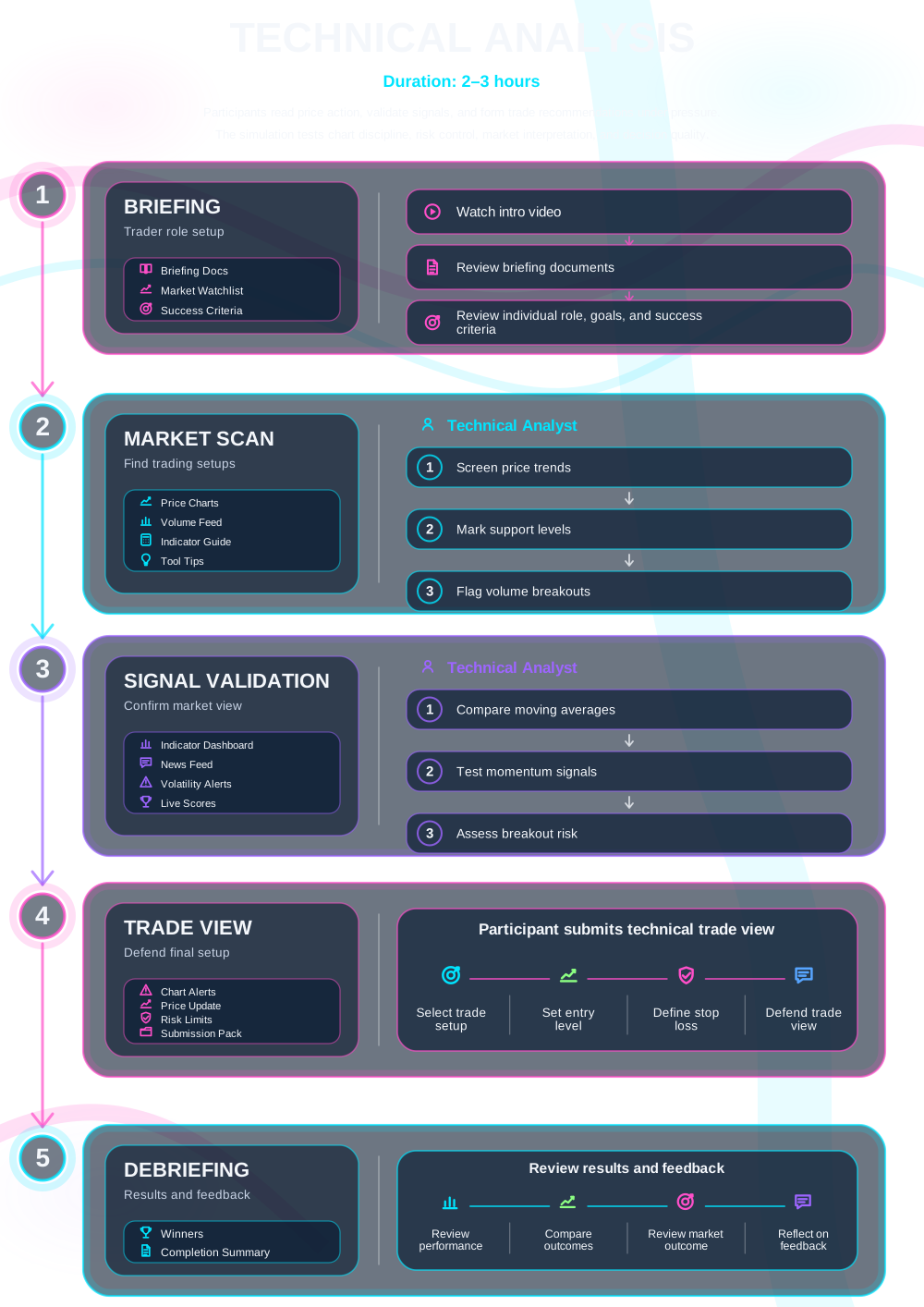

What Participants Do
In the simulation, participants will:
- Analyze live and historical price charts across different asset classes.
- Identify and interpret chart patterns and candlestick formations.
- Apply and configure technical indicators to generate trading signals.
- Execute simulated buy/sell orders based on their technical thesis.
- Manage open positions with stop-loss and take-profit orders.
- Adapt their strategy to shifting market volatility and trends.
- Present a trade rationale or end-of-session performance review.

Learning Objectives
By the end of the simulation, participants will be able to:
- Understand the core principles and assumptions of technical analysis.
- Accurately identify major chart and candlestick patterns.
- Apply common technical indicators to assess market momentum, trend, and overbought/oversold conditions.
- Formulate and execute a disciplined trading plan based on technical signals.
- Calculate and apply prudent risk management for every trade.
- Distinguish between high-probability and false technical signals.
- Build confidence in making trading decisions under realistic market conditions.
- Articulate the rationale behind technical trading decisions.
How the Technical Analysis Simulation Works
This simulation can be run individually or in teams in academic or corporate contexts. Each cycle represents a stage of getting through a pressing financial situation.
1. Receive Market Brief and Charts Participants access a simulated trading terminal with asset price histories and current data.
** 2. Analyze the Charts** They examine patterns, draw trendlines, and apply indicators to formulate a market view.
3. Make Trading Decisions Participants decide to go long, short, or stand aside, specifying entry, stop-loss, and take-profit levels.
4. Execute and Manage Trades are executed, and participants monitor open positions, deciding whether to hold, adjust, or exit.
5. Review Round Outcomes The simulation provides feedback on trade performance, P&L, and risk metrics.
6. Iterate and Adapt Over multiple rounds with new data, participants refine their strategies in response to different market regimes.
Frequently Asked Questions
Assessment
Assessment of participant performance can be tailored according to the host institution’s objectives (business school, corporate training, assessment centre). Typical assessment criteria include:
- Net profitability, win rate, and risk-adjusted return metrics.
- Appropriate use of stop-loss orders and consistent position sizing.
- Correct identification of patterns and logical use of indicators.
- Adherence to their predefined trading plan and ability to avoid emotional decisions.
- Clarity in presenting and defending a trade's technical rationale.