No. This is a professional development tool designed to enhance performance and resilience in high-pressure work environments. It is not a substitute for clinical therapy or treatment for anxiety disorders.

Stress Management Simulation
Navigate the delicate balance between performance and burnout. Learn to identify your stress triggers, apply real-time coping techniques, and observe the direct impact of your composure on both outcomes and team morale.

Stress Management Simulation Overview
The financial world is a high-stakes environment where pressure is a constant. Technical skills are essential, but the ability to perform under stress is what truly separates top performers. The Stress Management in Finance Simulation is a learning tool that moves beyond traditional theory. It immerses participants in a realistic, high-pressure financial environment where they must manage complex tasks, tight deadlines, and volatile market conditions, all while learning to recognize, manage, and mitigate the effects of stress.
This simulation bridges the gap between knowing stress management techniques and actually applying them under duress.
Participants don't just learn about emotional regulation and cognitive load; they experience them firsthand in a safe-to-fail environment. The result is not just theoretical knowledge, but tangible, practiced skills in maintaining composure, making sound decisions, and leading effectively when it matters most.

Stress Management Simulation Concepts
Participants work through realistic scenarios, which can be customized to emphasize or exclude specific topics depending on the learning goals. This modular structure allows the simulation to be tailored to any type of session. Key concepts include:
- Cognitive Load and Decision Fatigue
- Physiological Effects of Stress
- Emotional Regulation and Self-Awareness
- Biases Under Pressure
- Priority Management and Delegation
- Crisis Communication
- Team Cohesion in High-Stress Environments
- Resilience and Post-Stress Recovery

Gameflow
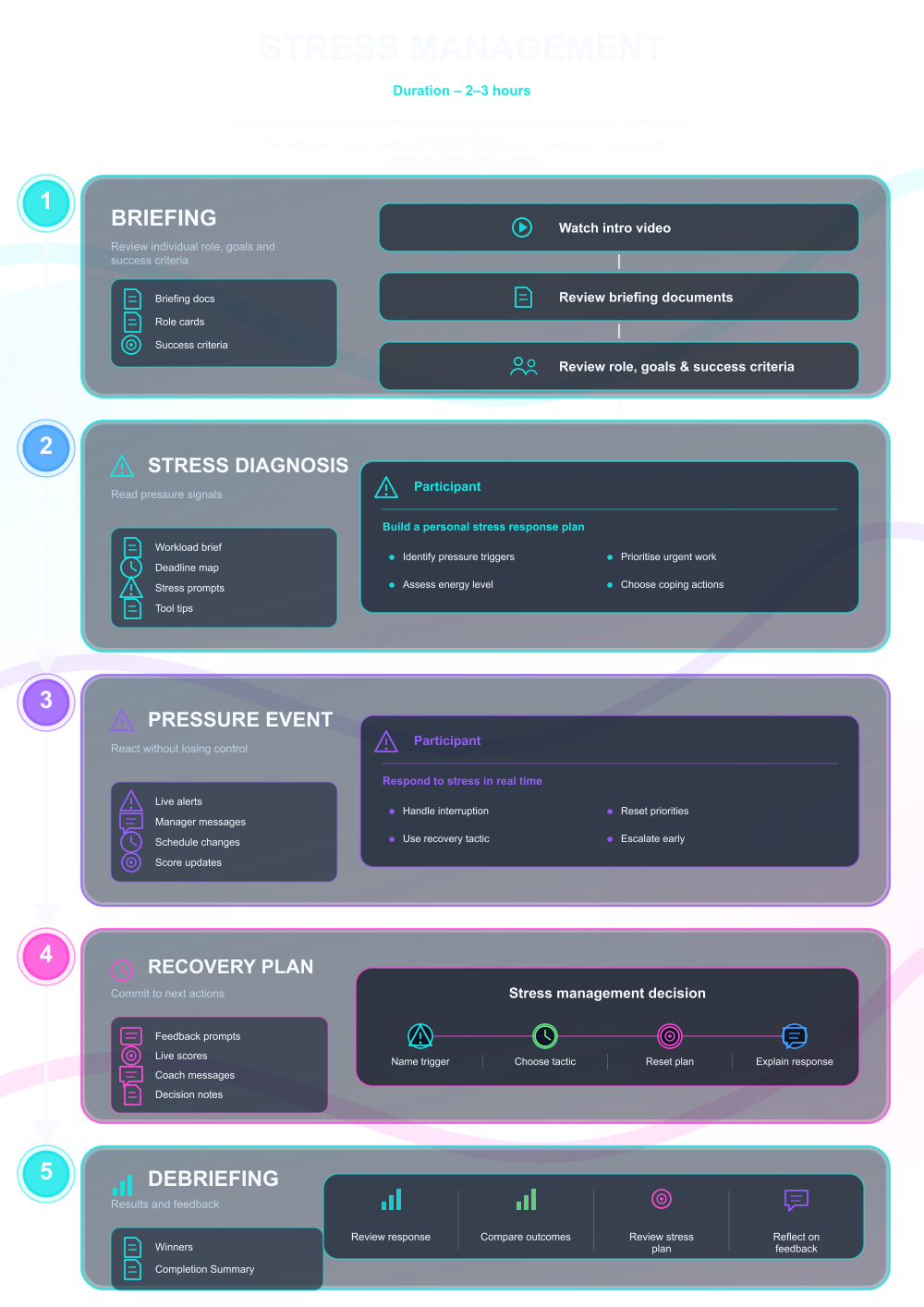

What Participants Do
In the simulation, participants will:
- Execute time-sensitive financial analyses with shifting deadlines.
- Manage a portfolio or deal flow amidst simulated market shocks and breaking news.
- Respond to urgent, conflicting demands from mock senior management and clients.
- Make critical investment or strategic decisions with incomplete information.
- Collaborate with team members while under collective pressure.
- Engage in guided reflection sessions to debrief on their performance and stress responses.

Learning Objectives
By the end of the simulation, participants will be able to:
- Identify their personal physical and mental triggers for stress in a professional context.
- Apply practical, in-the-moment techniques to regulate their stress response during critical tasks.
- Differentiate between optimal and impaired decision-making patterns under pressure.
- Develop a personalized toolkit of preventative and reactive stress management strategies.
- Enhance their communication and leadership effectiveness during a crisis.
- Build greater personal resilience and a mindset for sustained high performance.
How the Stress Management Simulation Works
This simulation can be run individually or in teams in academic or corporate contexts. Each cycle represents a stage of getting through a pressing financial situation.
1. Introduction and Baseline Assessment Participants are introduced to the simulation platform and complete a baseline assessment of their stress perceptions and coping styles.
2. Role Assignment and Briefing Teams are formed and assigned roles within a realistic financial scenario.
3. The Simulation Rounds The experience is divided into multiple rounds, each representing a period. Each round introduces new data, unexpected crises, and tightening deadlines, escalating the cognitive and emotional load.
4. Real-Time Feedback Participants receive feedback not only on their financial decisions but also on their management of the situation. This can include metrics on communication clarity, error rates, and (if used) physiological data.
5. Guided Debriefing and Reflection This is the most critical component. After each round, facilitators guide participants through a structured debrief to connect their in-simulation actions to stress management concepts, fostering powerful self-awareness and learning.
Frequently Asked Questions
Assessment
Assessment of participant performance can be tailored according to the host institution’s objectives (business school, corporate training, assessment centre). Typical assessment criteria include:
- Measure changes in participants' self-reported confidence in managing stress and their knowledge of relevant techniques.
- Quantitative analysis of decision quality, error rates, and communication effectiveness as pressure increases.
- Participants provide and receive feedback on team collaboration and leadership under stress.
- Each participant concludes the experience by creating a concrete plan to apply their learned strategies in their daily work.
Assessment may incorporate peer and self-review components, facilitator scoring, and debrief discussion. Results may feed into grades, executive feedback, certification or development plans.