This simulation is ideal for MBA students, finance professionals, corporate executives, and anyone seeking to deepen their practical understanding of corporate finance, capital allocation, and investor relations.

Stock Buyback Simulation
Navigate the high-stakes world of corporate finance.Step into the role of a CFO and management team to execute a strategic share repurchase program. Make critical decisions to maximize shareholder value and signal strength to the market.

Stock Buyback Simulation Overview
A stock buyback is a powerful, yet complex, financial tool used by companies to return capital to shareholders. This simulation plunges participants into a realistic, dynamic market environment where they must manage a publicly-traded company with excess cash. The goal is to design and execute an optimal share repurchase program.
Teams will analyze their company's financial health, assess the impact on key metrics like Earnings Per Share and Return on Equity, and decide how to finance the buyback (using cash reserves, debt, or a combination). They will choose between a fixed-price tender offer, an open market repurchase, or an accelerated share repurchase, each with its own strategic implications and market perceptions.
Throughout multiple rounds, participants will react to changing market conditions, competitor actions, and shareholder feedback, learning firsthand how buybacks can create — or destroy — value.

Stock Buyback Simulation Concepts
Participants work through realistic scenarios, which can be customized to emphasize or exclude specific topics depending on the learning goals. This modular structure allows the simulation to be tailored to any type of session. Key concepts include:
- Capital Allocation Strategy
- Earnings Per Share Accretion/Dilution
- Return on Equity Impact
- Undervaluation and Market Signaling
- Funding Methods (Cash vs. Debt)
- Buyback Methods: Open Market, Tender Offer, ASR
- Impact on Financial Ratios (P/E, Debt/Equity)
- Wealth Transfer and Agency Problems
- Market Reaction and Investor Perception
- Corporate Governance and Ethical Considerations

Gameflow

What Participants Do
In the simulation, participants will:
- Analyze the company's financial statements and valuation multiples.
- Determine the optimal size of the share repurchase program.
- Decide on the funding source: using idle cash, issuing new debt, or a hybrid approach.
- Select the execution method and set the offer price if applicable.
- Announce the buyback program to the market and manage the communication.
- Execute the buyback over multiple periods, adjusting strategy based on stock price movements.
- Compete against other teams managing rival companies.
- Present their final strategy and results, justifying their decisions based on financial outcomes and shareholder value creation.

Learning Objectives
By the end of the simulation, participants will be able to:
- Evaluate the financial and strategic rationale for initiating a share repurchase.
- Analyze the impact of a buyback on a company's financial statements and key performance indicators.
- Compare and contrast different buyback methods and funding options, understanding the trade-offs of each.
- Articulate how buybacks signal information to the market and influence investor perception.
- Develop a comprehensive capital allocation strategy that balances buybacks with other investment opportunities.
- Defend buyback decisions in the context of corporate governance and stakeholder management.
How the Stock Buyback Simulation Works
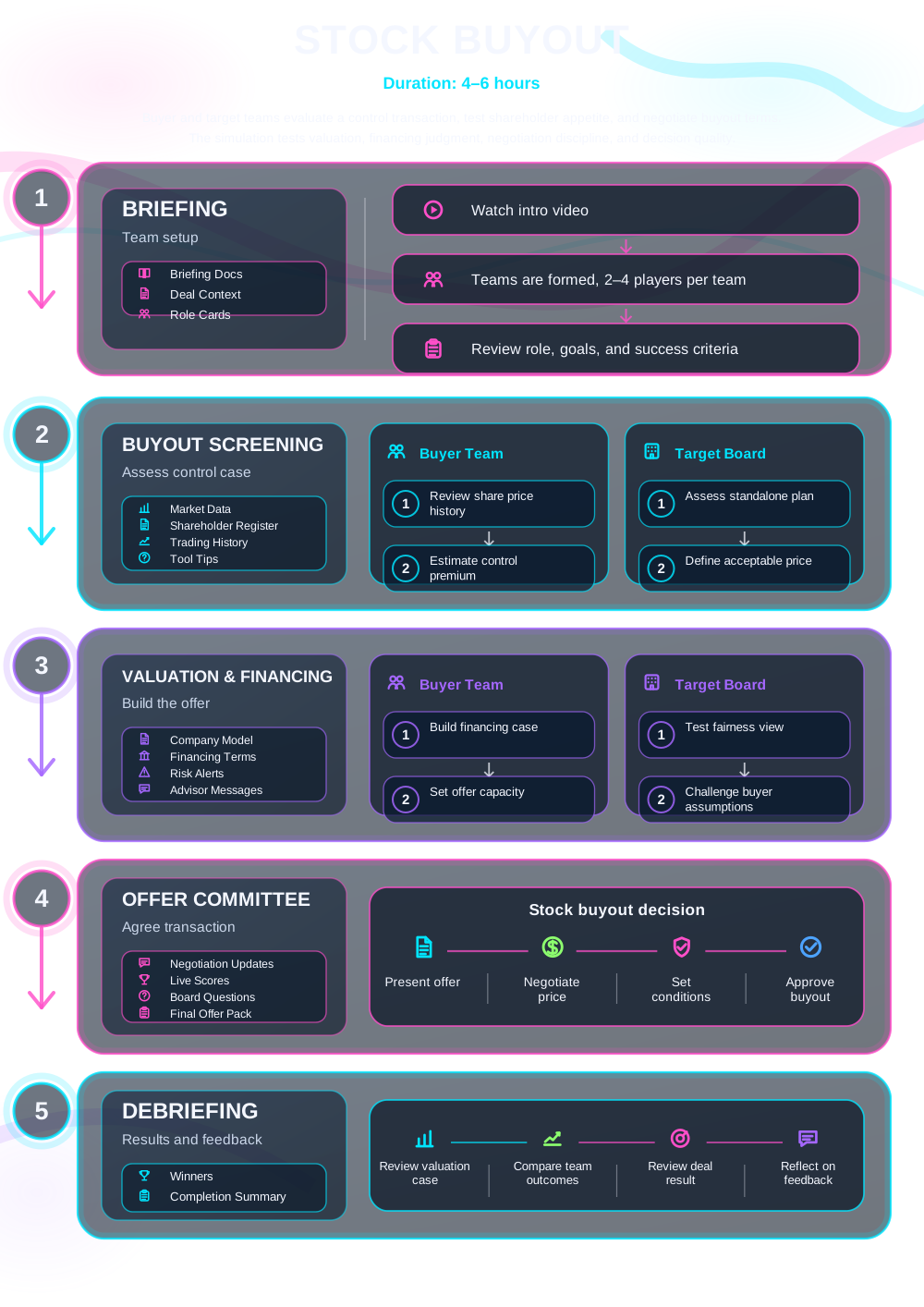
This simulation can be run individually or in teams in academic or corporate contexts. Each cycle represents a stage of getting through a pressing financial situation.
1. Introduction and Company Assignment Teams are assigned a publicly-traded company case study with a specific financial profile and strategic position.
2. Initial Analysis and Strategy Formulation Teams analyze their starting financials, market valuation, and peer data to draft their initial buyback plan.
3. Decision Rounds Each round represents a fiscal quarter, during which teams submit their buyback decisions: amount, funding, and method. The simulation engine processes all decisions, incorporating random market events (economic data, competitor buyback announcements). The stock price reacts dynamically based on the teams' actions and market events.
4. Feedback and Reporting After each round, teams receive an updated income statement, balance sheet, and market data dashboard showing the impact of their decisions.
5. Final Review and Presentation After the final round, teams review their overall performance in terms of shareholder return, EPS growth, and strategic positioning. They then prepare a brief presentation for the "Board of Directors" (the instructor) summarizing their strategy and results.
Frequently Asked Questions
Assessment
Assessment of participant performance can be tailored according to the host institution’s objectives (business school, corporate training, assessment centre). Typical assessment criteria include:
- Total Shareholder Return (TSR) vs. a benchmark index.
- Achievement of EPS and ROE targets.
- Efficient use of capital (value created per dollar spent on buybacks).
- Rationale for funding choices.
- Buyback methods.
- Adaptability of the strategy in response to market events.
- Coherency of the presentation of participants’ strategy.