Our SPAC Simulation is an immersive learning tool designed for business students, finance professionals, and executives. It provides hands-on experience in navigating the process of taking a company public via a Special Purpose Acquisition Company.

SPAC Simulation
Navigate the complex and high-stakes world of Special Purpose Acquisition Companies. Raise a blank-check fund, identify a target, negotiate the deal, and secure shareholder approval in a dynamic market environment.

SPAC Simulation Overview
Our SPAC Simulation plunges participants into the fast-paced world of Special Purpose Acquisition Companies, an innovative alternative to traditional IPOs. This hands-on exercise replicates the entire SPAC lifecycle over a compressed timeframe.
Teams will first act as sponsors, forming a SPAC by drafting a compelling pitch to institutional investors to raise capital in an Initial Public Offering. Once funded, the simulation advances to the critical acquisition phase. Teams must identify, value, and negotiate a merger with a promising private company. The final hurdle is the "De-SPAC" transaction, where teams must create a persuasive investor presentation to secure shareholder approval for the merger, all while managing regulatory constraints, market sentiment, and the ever-present clock of the 18-24 month deadline to complete a deal.
This simulation provides an end-to-end understanding of the mechanics, strategies, and intense pressures inherent in the SPAC ecosystem. Although ideal for undergraduate and graduate finance courses, executive training, and corporate finance skill workshops, the simulation is modular and scalable, allowing instructors to vary complexity.

SPAC Simulation Concepts
Participants work through realistic scenarios, which can be customized to emphasize or exclude specific topics depending on the learning goals. This modular structure allows the simulation to be tailored to any type of session. Key concepts include:
- Special Purpose Acquisition Company Structure
- Initial Public Offering for a Blank-Check Company
- Sponsor Promote and Founder Shares
- Trust Account and Redemption Rights
- Target Identification and Due Diligence
- Business Valuation
- Letter of Intent and Deal Negotiation
- Private Investment in Public Equity
- De-SPAC Transaction and Shareholder Approval
- Proxy Statement and Investor Presentation
- Warrant Structures and Dilution

Gameflow

What Participants Do
In the simulation, participants will:
- Develop an investment thesis and management team profile.
- Create and deliver a compelling IPO roadshow presentation to raise capital.
- Analyze a database of private companies to identify a suitable acquisition candidate.
- Scrutinize the target's financials, market position, and growth prospects.
- Build a financial model to determine a fair valuation for the target company.
- Engage in multi-round negotiations on valuation, sponsor promote, and PIPE investments.
- Craft a powerful De-SPAC presentation to persuade shareholders to vote in favor of the merger.
- Make strategic decisions under the pressure of the SPAC's mandatory completion deadline.

Learning Objectives
By the end of the simulation, participants will be able to:
- Articulate the complete life cycle of a SPAC, from formation to merger or liquidation.
- Analyze the incentives and potential conflicts of interest for sponsors, investors, and targets.
- Apply valuation methodologies to assess a potential acquisition target.
- Construct a viable deal structure that balances the interests of all parties involved.
- Evaluate the role of PIPEs and other financing tools in the De-SPAC process.
- Develop a strategic communication plan to secure both IPO funding and shareholder approval.
How the SPAC Simulation Works
This simulation can be run individually or in teams in academic or corporate contexts. Each cycle represents a stage of getting through a pressing financial situation.
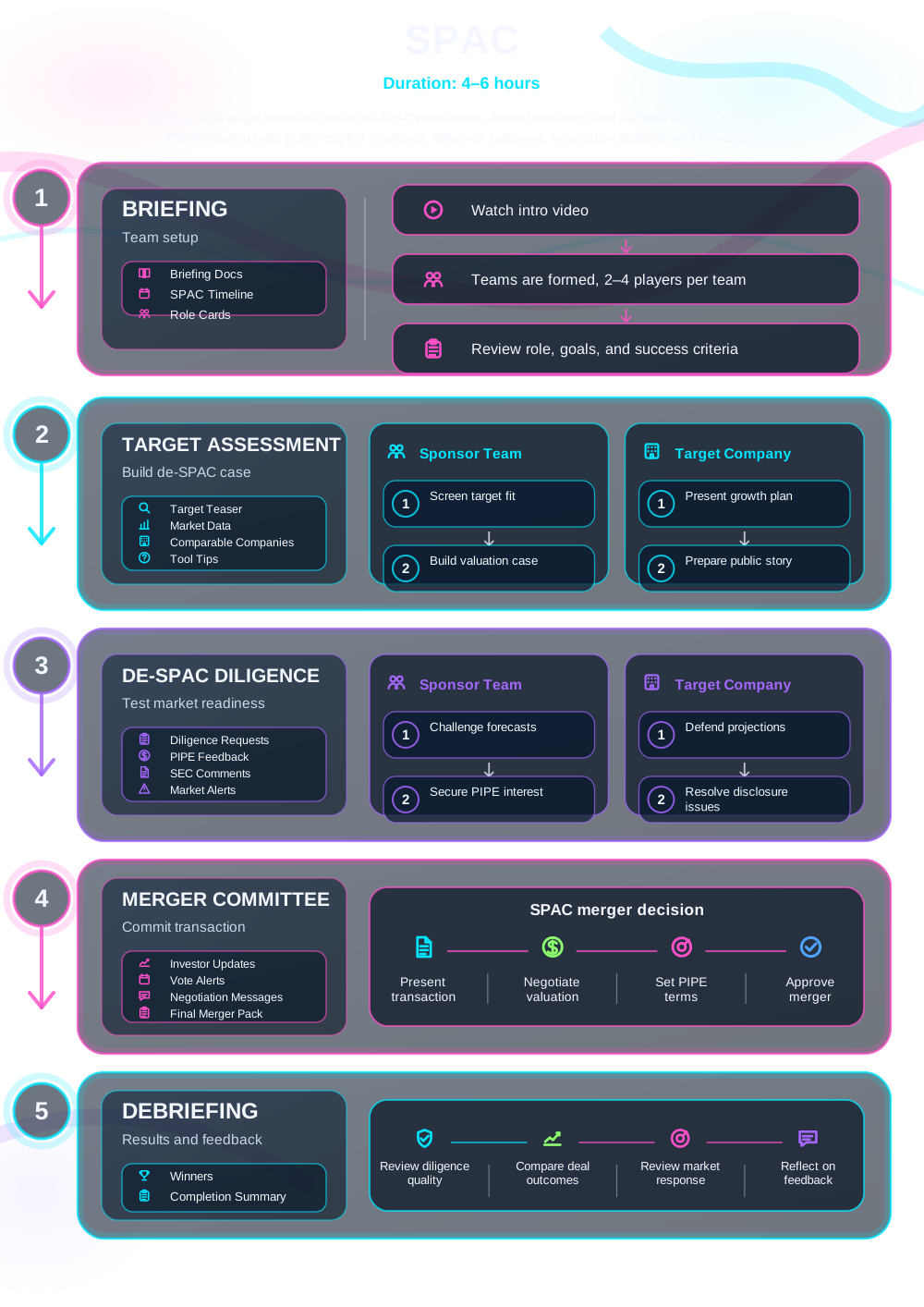
1. Setup and Team Formation Participants are divided into sponsor teams and introduced to the simulation platform, which contains company data, financial tools, and a dynamic market news feed.
2. The IPO and Capital Raise Teams prepare their SPAC pitch. They receive virtual capital from "investors" based on the strength of their strategy and management profile.
3. The Hunt and Negotiation With capital in trust, teams enter the acquisition phase. They shortlist targets, conduct due diligence, and enter negotiations. The platform provides a negotiation module where offers and counteroffers are exchanged.
4. The De-SPAC and Final Vote Teams that successfully secure a deal must create a final investor presentation. All participants then vote to approve or reject the merger based on the presented terms.
5. Debrief and Assessment The simulation concludes with a comprehensive debrief session. Instructors analyze the outcomes, highlight key strategic decisions, and link the experience back to real-world SPAC dynamics.
Frequently Asked Questions
Assessment
Assessment of participant performance can be tailored according to the host institution’s objectives (business school, corporate training, assessment centre). Typical assessment criteria include:
- Quality of the investment thesis, team credibility, and communication skills during the initial capital raise.
- Effectiveness in securing favorable terms with the target, measured by the final valuation, sponsor promote structure, and the inclusion of PIPE financing.
- Clarity, persuasiveness, and financial rigor of the presentation made to shareholders to secure the final vote.
- Contribution to the team's strategy, adaptability to market changes, and peer feedback on collaboration and effort.