We recommend teams of 3-5 participants to ensure everyone has an active role and a voice in each scenario.

Soft Skills Simulation
While technical prowess is the entry ticket, it's soft skills—communication, negotiation, and leadership—that define success in the fast-paced world of finance.

Soft Skills Simulation Overview
In today's complex financial landscape, analysts and associates are expected to be more than just number crunchers. They must be effective communicators, persuasive negotiators, and collaborative team players.
Participants are grouped into teams, representing different financial institutions or internal departments. Over multiple rounds, they are confronted with a series of realistic cases: delivering difficult feedback to a junior analyst, negotiating deal terms with a stubborn counterparty, presenting an M&A recommendation to a skeptical board, or managing cross-departmental conflicts during a tight deadline.
Although ideal for undergraduate and graduate finance courses, executive training, and corporate finance skill workshops, the simulation is modular and scalable, allowing instructors to vary complexity.

Soft Skills Simulation Concepts
Participants work through realistic scenarios, which can be customized to emphasize or exclude specific topics depending on the learning goals. This modular structure allows the simulation to be tailored to any type of session. Key concepts include:
- Persuasive Communication
- Advanced Negotiation
- Constructive Conflict Resolution
- Giving and Receiving Feedback
- Influence without Authority
- Executive Presence and Boardroom Presentation
- Emotional Intelligence
- Cross-Functional Collaboration

Gameflow
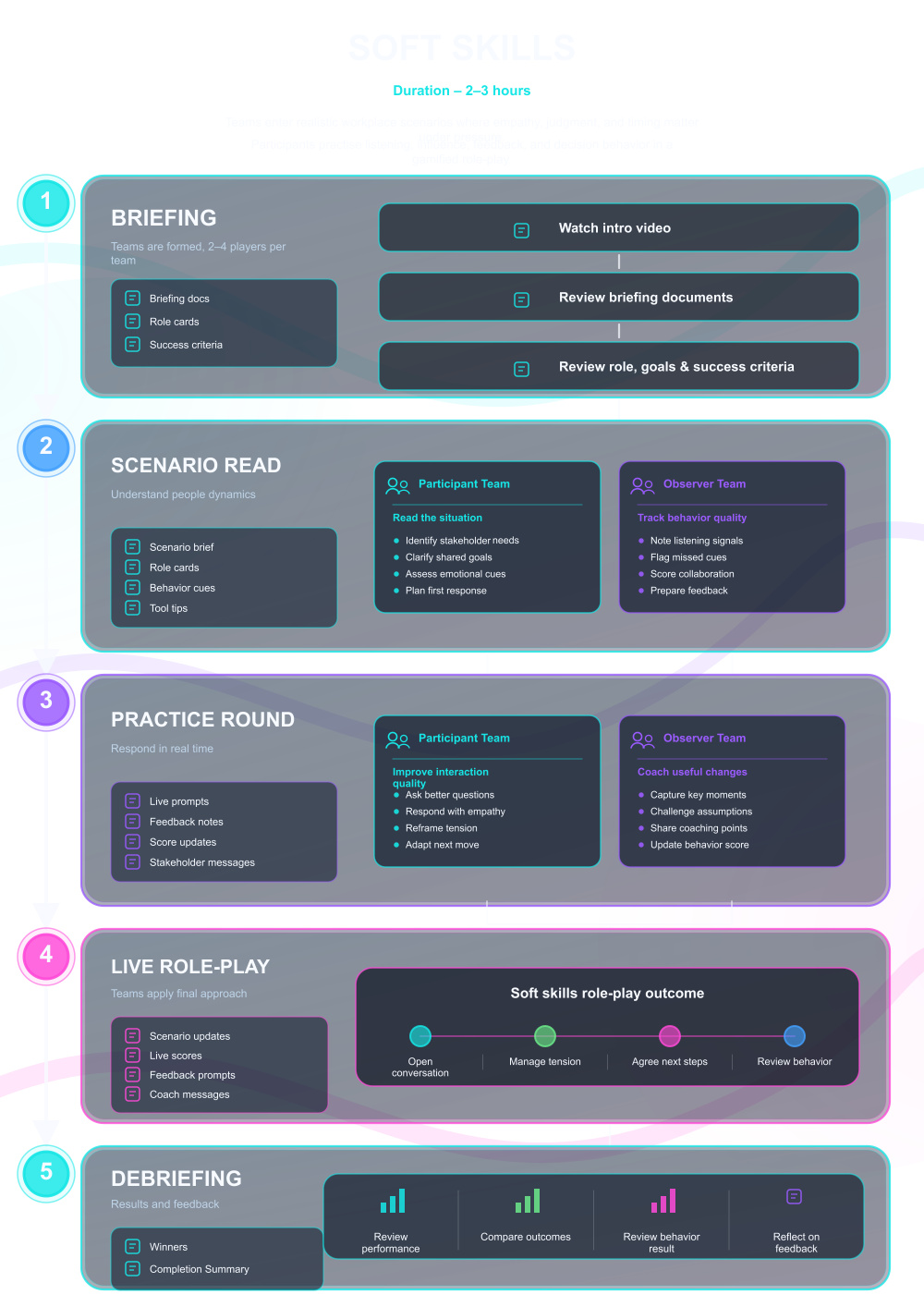

What Participants Do
In the simulation, participants will:
- Role-play as Associates, VPs, or Directors in various high-stakes finance scenarios.
- Deliver persuasive pitches to a mock "board of directors".
- Engage in live, multi-issue negotiations with other teams, balancing relationship and outcome.
- Draft clear and impactful emails and memos to communicate complex ideas.
- Analyze peer performance and provide structured, constructive feedback.
- Make critical strategic decisions where interpersonal dynamics are as important as the financials.
- Reflect on their own communication style and its effectiveness through scored rubrics and debriefs.

Learning Objectives
By the end of the simulation, participants will be able to:
- Articulate complex financial concepts clearly and persuasively to both expert and non-expert audiences.
- Develop and execute a negotiation strategy that achieves key objectives while preserving important relationships.
- Demonstrate active listening and empathy to better understand client and colleague motivations.
- Constructively manage disagreement and conflict within a team or with external partners.
- Enhance their professional presence and ability to influence decisions at a senior level.
- Critique their own and others' interpersonal approaches, identifying specific areas for improvement.
How the Soft Skills Simulation Works
This simulation can be run individually or in teams in academic or corporate contexts. Each cycle represents a stage of getting through a pressing financial situation.
1. Setup and Introduction Participants are assigned to teams and roles. The simulation platform and core scenarios are introduced.
2. Scenario Release Each round, a new scenario is released ("Client Demands Lower Fees", "Internal Resource Conflict", "M&A Deal Jeopardy").
3. Preparation Teams review briefing materials, define their strategy, and prepare their communication points.
4. Execution Teams engage in the live simulation—this could be a negotiation with another team, a presentation to the mock "board," or a collaborative problem-solving session.
5. Debrief and Reflection A guided debrief session helps teams analyze what worked, what didn't, and how to apply these lessons in the next round and in their careers.
Frequently Asked Questions
Assessment
Assessment of participant performance can be tailored according to the host institution’s objectives (business school, corporate training, assessment centre). Typical assessment criteria include:
- Portfolio Quality and Risk Management
- Simulation Outcomes
- Peer Evaluation
- Individual Reflection Submissions
- Final Capstone Presentation
Assessment may incorporate peer and self-review components, facilitator scoring, and debrief discussion. Results may feed into grades, executive feedback, certification or development plans.