It uses dynamic data and scenarios that include market volatility, investor behavior, and regulatory factors to create realistic decision-making environments.

Share Repurchase Simulation
The Share Repurchase Simulation immerses participants into the strategic decision-making process of corporate share buybacks. It enables them to understand the financial, market, and investor implications of executing share repurchase programs.

Share Repurchase Simulation Overview
This simulation presents realistic scenarios where participants act as company executives who must design and implement share repurchase strategies.
Assessing the timing, pricing, and method of repurchase—whether open market buys, tender offers, or other mechanisms—while balancing capital allocation, market signals, shareholder value, and regulatory considerations, participants become familiar with the share management process.
The simulation highlights how share repurchases affect stock price, earnings per share, shareholder composition, and financial metrics. It also integrates market volatility, investor sentiment, and competitive positioning.

Share Repurchase Simulation Concepts
Participants work through realistic scenarios, which can be customized to emphasize or exclude specific topics depending on the learning goals. This modular structure allows the simulation to be tailored to any type of session. Key concepts include:
- Share repurchase methods: open market, tender offers, Dutch auctions
- Impact on earnings per share and stock price valuation
- Corporate signaling and investor perception
- Capital structure and financial flexibility
- Regulatory compliance and governance in buybacks
- Market liquidity and timing considerations
- Shareholder base concentration and activism risks
- Optimization of repurchase execution strategies

Gameflow
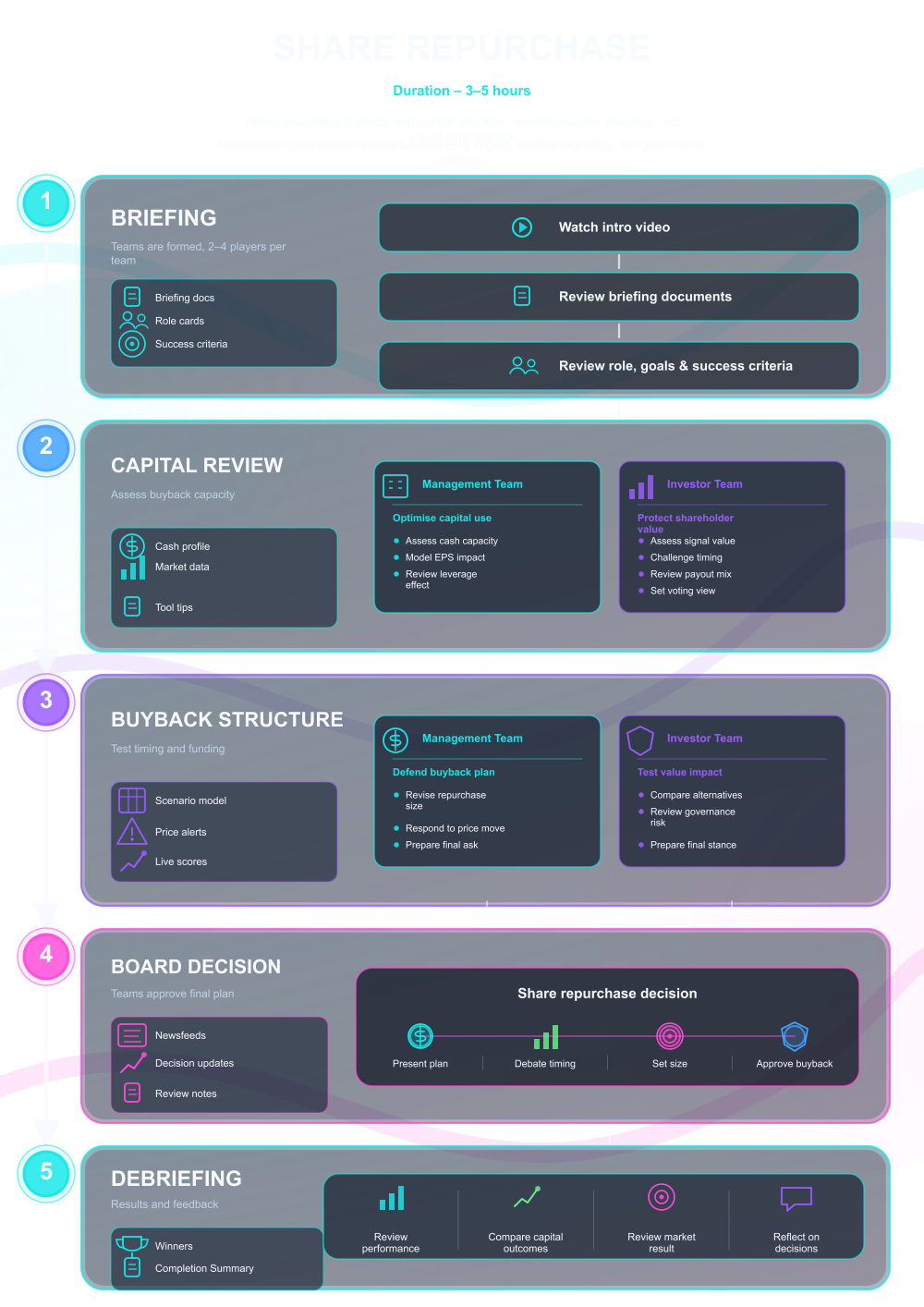

What Participants Do
In the simulation, participants will:
- Analyze company financials and stock market conditions
- Choose appropriate share repurchase methods and timing
- Model the financial and market effects of repurchase decisions
- Manage communication strategies to investors and stakeholders
- Respond to competitor actions and market volatility
- Adjust strategies in real-time based on incoming data and feedback

Learning Objectives
By the end of the simulation, participants will be able to:
- Understand the rationale and mechanics of corporate share repurchases
- Evaluate the effects of buybacks on company valuation and shareholder returns
- Develop skills in financial modeling and strategic decision-making
- Apply principles of capital structure management and investor relations
- Balance regulatory, market, and reputational risks in buyback programs
- Gain experience in real-time strategic adjustment under market uncertainties
- Communicate complex financial strategies effectively to stakeholders
How the Share Repurchase Simulation Works
This simulation can be run individually or in teams in academic or corporate contexts. Each cycle represents a stage of getting through a pressing financial situation.
1. Receive a Detailed Brief Participants begin by receiving a scenario describing the company’s current capital structure, market conditions, and objectives for the share repurchase program.
2. Analyze Key Data They review financial statements, stock performance metrics, cash flow positions, and market trends to understand the environment and constraints.
**3. Collaborate or Compete Work individually or in teams acting as angel investors negotiating co-investment terms or competing for deals.
4. Develop a Repurchase Strategy Participants decide on the timing, volume, and financing of share repurchases. They weigh options such as using cash reserves, issuing debt, or other funding sources while considering regulatory and market impacts.
5. Execute Decisions and Manage Portfolio They implement their repurchase plan in simulated market conditions, adjusting dynamically in response to price movements, liquidity, and shareholder reactions.
6. Collaborate Across Roles Teams may include finance officers, legal counsel, and investor relations roles to reflect real corporate collaboration and negotiation.
7. Report and Communicate Outcomes Participants prepare and deliver investor communications explaining their repurchase rationale, strategy adjustments, and financial impacts.
Frequently Asked Questions
Assessment
Assessment of participant performance can be tailored according to the host institution’s objectives (business school, corporate training, assessment centre). Typical assessment criteria include:
- Strategic use of available capital and financing methods for repurchases.
- Impact on key financial metrics such as EPS, ROE, and share price.
- Ability to manage regulatory and compliance risks associated with buybacks.
- Quality and clarity of investor communication and rationale explanation.
- Responsiveness and adaptability to market shocks or evolving shareholder sentiment.
- Collaboration and decision-making in team settings.
- Overall risk management and alignment with corporate financial strategy.