A training tool that simulates the process of conducting a secondary equity offering to teach strategic, financial, and operational skills.

Secondary Offering Simulation
The Secondary Offering Simulation immerses participants in the process of managing a secondary equity offering, providing hands-on experience in complex capital markets activities beyond an initial public offering.

Secondary Offering Simulation Overview
This simulation guides participants through the strategic and operational challenges of planning, structuring, pricing, and executing a secondary stock offering. Participants work in roles such as investment bankers, company executives, and equity investors, navigating market conditions, investor demand, regulatory constraints, and pricing strategies.
Through realistic scenarios, the simulation emphasizes teamwork, decision-making under uncertainty, and communication with stakeholders.
Although ideal for undergraduate and graduate finance courses, executive training, and corporate finance skill workshops, the simulation is modular and scalable, allowing instructors to vary complexity.

Secondary Offering Simulation Concepts
Participants work through realistic scenarios, which can be customized to emphasize or exclude specific topics depending on the learning goals. This modular structure allows the simulation to be tailored to any type of session. Key concepts include:
- Secondary equity offerings and market impact
- Role of underwriters and syndicates
- Pricing strategies for secondary offerings
- Investor demand assessment and bookbuilding
- Regulatory compliance and disclosure requirements
- Equity dilution and shareholder value considerations
- Timing market conditions and competitive positioning
- Communication strategies with investors and media

Gameflow
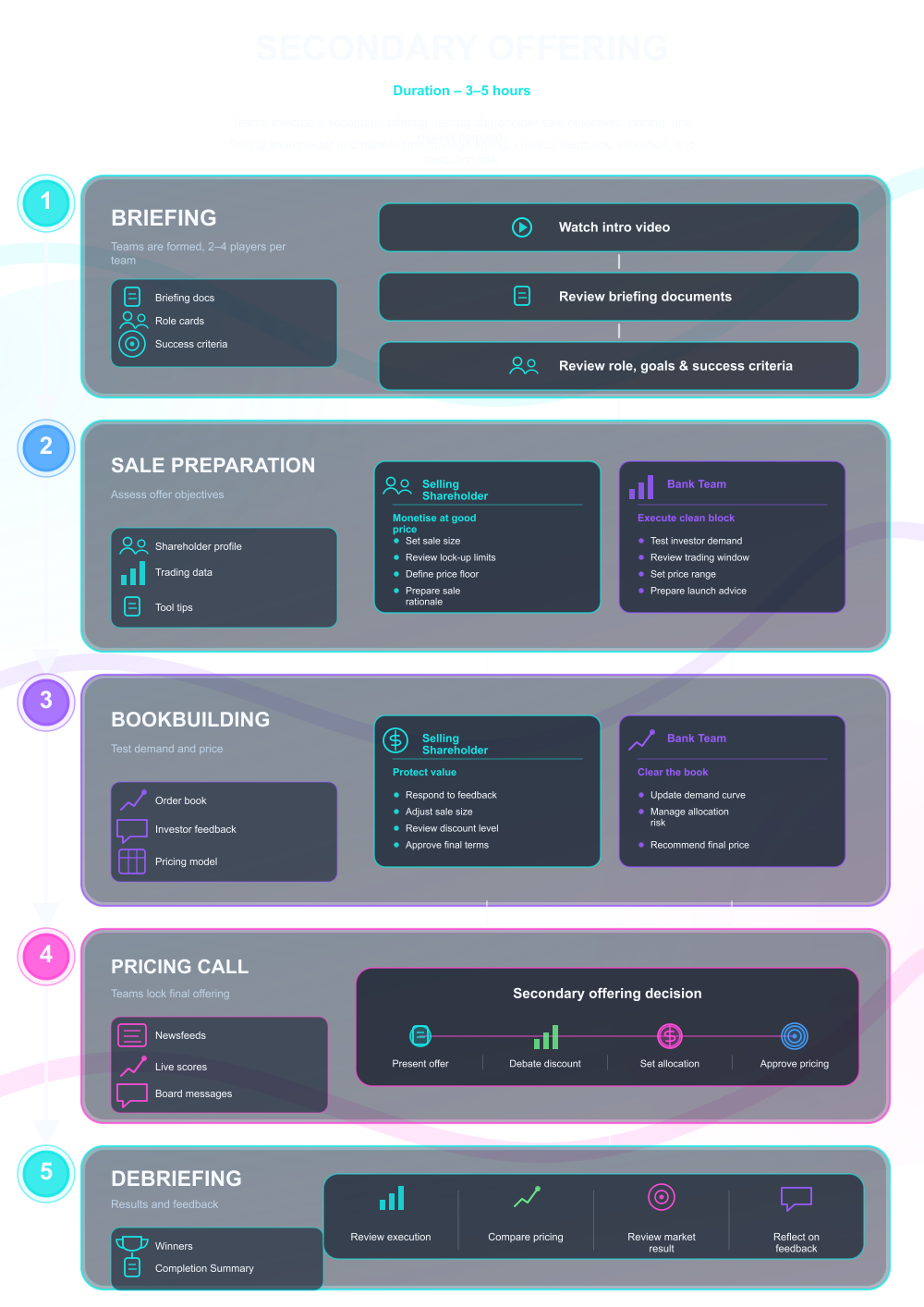

What Participants Do
In the simulation, participants will:
- Analyze client business fundamentals and market environment
- Develop secondary offering structure and size
- Collaborate on pricing and allocation strategies
- Manage investor relations and bookbuilding exercises
- React to market feedback and adjust offering approach
- Prepare and deliver investor pitches and public communications
- Coordinate with regulatory and compliance teams
- Debrief and reflect on offering outcomes and learning points

Learning Objectives
By the end of the simulation, participants will be able to:
- Understand the mechanics and roles in secondary equity offerings
- Apply strategic decision-making to optimize offering size and pricing
- Evaluate market sentiment and investor appetite effectively
- Navigate regulatory frameworks impacting secondary offerings
- Manage the trade-off between raising capital and shareholder dilution
- Communicate complex financial information to diverse stakeholders
- React adaptively to dynamic market conditions and investor feedback
- Build confidence in real-world capital markets transactions
How the Secondary Offering Simulation Works
This simulation can be run individually or in teams in academic or corporate contexts. Each cycle represents a stage of getting through a pressing financial situation.
1. Setup and briefing Participants are assigned roles (issuer, underwriting banks, legal/compliance, investor relations) and receive a market scenario, corporate context, and objectives for the secondary offering. Data includes current stock volatility, trading liquidity, and relevant regulatory considerations.
2. Analysis and planning Teams review baseline financials, existing capital structure, and market conditions. They determine offering type, size, pricing range, and timing. They simulate various scenarios including price volatility, demand shifts, and potential over-allotment options.
3. Structuring the deal Choosing Offering type (secondary offering vs. additional primary issuance), with or without greenshoe. Sizing as a percent of outstanding shares and the impact on dilution. Underwriting syndicate composition, fee structure, and allocation policy.
4. Investor engagement and pricing Roadshows or virtual presentations are conducted; investor feedback is translated into a final pricing decision. Roadshow materials, press releases, and Q&A scripts are prepared to address common investor inquiries.
5. Execution and risk controls Final pricing, book-building outcomes, and allocation decisions are executed. Potential risk events (underpricing, volatility spikes, unfavorable demand) trigger contingency plans and alternate timelines.
6. Post-deal review Immediate post-deal performance analysis compares expected versus actual proceeds, dilution, and market reaction. Team debriefs identify learnings for future transactions and update the learning objectives accordingly.
Frequently Asked Questions
Assessment
Assessment of participant performance can be tailored according to the host institution’s objectives (business school, corporate training, assessment centre). Typical assessment criteria include:
- Timeliness and accuracy in preparing and communicating a secondary offering plan, including regulatory disclosures, prospectus updates, and pricing mechanics.
- Choice of offering type (primary vs. secondary, with/without over-allotment options), allocation strategy, and alignment with issuer objectives
- Adherence to securities laws, disclosure requirements, and exchange rules; handling of risk factors, legal opinions, and underwriting agreements
- Assessment of market windows, investor demand signals, pricing discipline, and execution risk under volatility; use of roadshows and investor meetings