This simulation is ideal for finance professionals, business students, strategic planners, risk managers, and executives who need to make decisions in uncertain environments. It's particularly valuable for those in banking, investment management, corporate finance, and financial consulting roles.

Scenario Planning Simulation
In this scenario planning simulation, you'll learn to craft resilient strategies for any financial future by anticipating risks and seizing opportunities in dynamic markets.

Scenario Planning Simulation Overview
The Scenario Planning in Finance Simulation is an immersive learning experience where participants step into strategic roles at a fictional financial institution facing volatile market conditions. Through multiple rounds of decision-making, you'll develop and test financial strategies against various plausible future scenarios. They range from economic booms to geopolitical crises, technological disruptions to regulatory changes.
This simulation emphasizes practical decision-making under uncertainty, forcing participants to move beyond single-point forecasts and develop flexible, resilient strategies that can adapt to changing circumstances. Experience how different assumptions about interest rates, market growth, competitor actions, and regulatory environments impact your financial outcomes, learning to balance risk and opportunity in real-time.
The simulation replicates the actual pressures faced by financial professionals: analyzing complex data, making strategic allocations with incomplete information, adjusting to unexpected market shocks, and communicating your rationale to stakeholders. Designed for university programs, corporate training, and executive workshops, this hands-on approach transforms abstract scenario planning concepts into memorable, practical skills that participants can immediately apply in their careers.

Scenario Planning Simulation Concepts
Participants work through realistic scenarios, which can be customized to emphasize or exclude specific topics depending on the learning goals. This modular structure allows the simulation to be tailored to any type of session. Key concepts include:
- Scenario development methodologies and financial modeling
- Risk identification and vulnerability assessment
- Strategic flexibility and option value analysis
- Stress testing and contingency planning
- Leading indicators and early warning systems
- Resource allocation under uncertainty
- Communicating scenarios to stakeholders and decision-makers
- Integrating macroeconomic variables into financial planning
- Competitive response anticipation in volatile markets
- Regulatory compliance across different economic environments
- Digital transformation impacts on financial services
- ESG (Environmental, Social, and Governance) scenario integration
- Portfolio resilience and diversification strategies

Gameflow
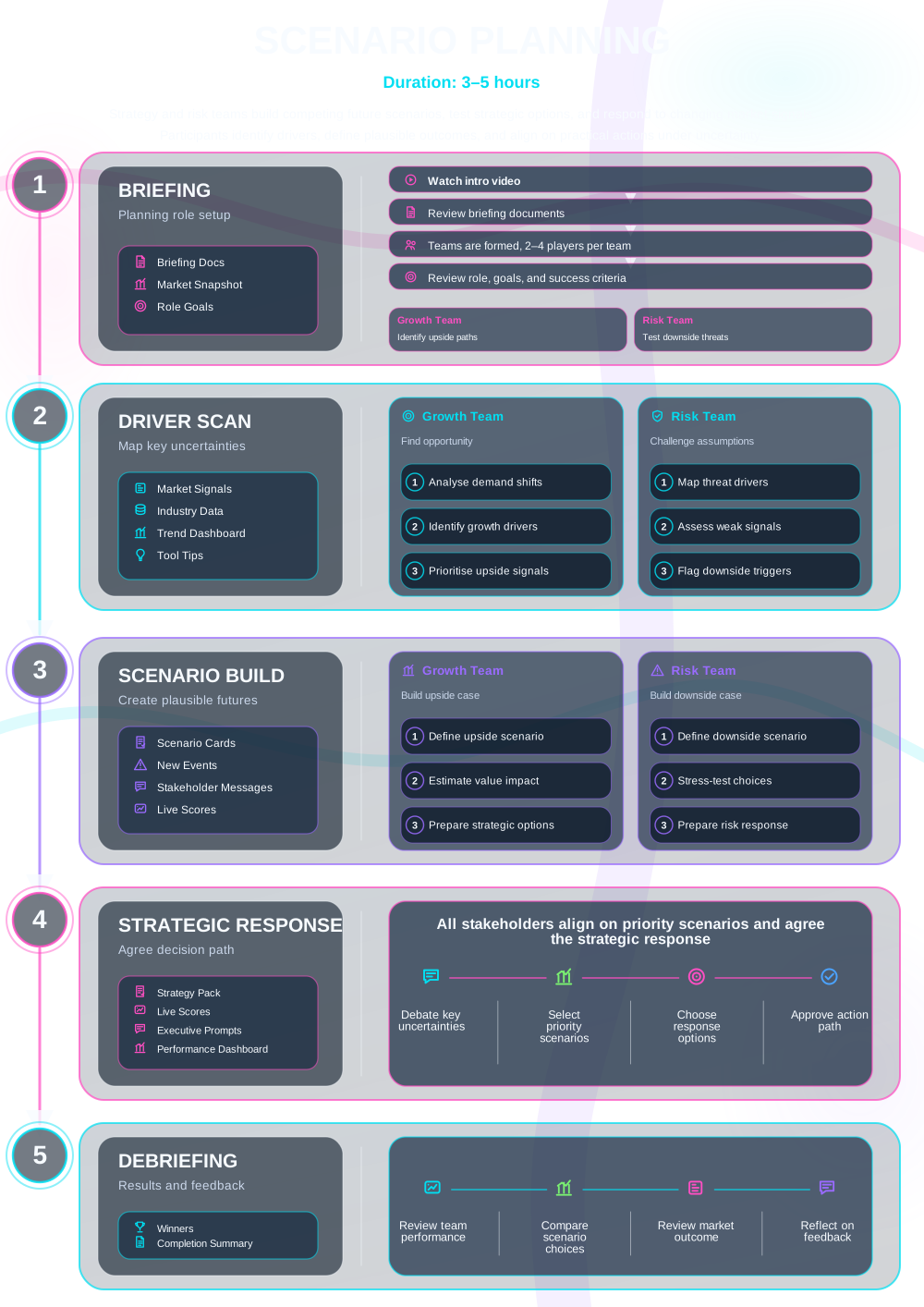

What Participants Do
In the simulation, participants will:
- Analyze current financial positions and market conditions
- Develop multiple plausible future scenarios with varying assumptions
- Create financial models projecting outcomes across different scenarios
- Allocate resources and capital based on scenario probabilities and impacts
- Adjust strategies in response to simulated market shocks and disruptions
- Present scenario-based recommendations to a simulated board of directors
- Revise plans as new information becomes available across rounds
- Balance short-term performance pressures with long-term resilience

Learning Objectives
By the end of the simulation, participants will be able to:
- Understand and apply systematic scenario planning methodologies
- Identify key uncertainties and their potential impact on financial performance
- Develop flexible strategies that perform adequately across multiple futures
- Create financial models that incorporate scenario variables and assumptions
- Communicate scenario-based strategies effectively to diverse stakeholders
- Balance risk management with growth opportunities in uncertain environments
- Recognize early warning indicators that signal scenario unfolding
- Build organizational resilience through contingency planning
- Integrate quantitative analysis with qualitative strategic thinking
- Make confident decisions despite incomplete information and uncertainty
How the Scenario Planning Simulation Works
This simulation can be run individually or in teams in academic or corporate contexts. Each cycle represents a stage of getting through a pressing financial situation.
1. Briefing Phase Participants receive background on their financial institution, current market context, and strategic challenges.
** 2. Scenario Development** Teams research trends, identify critical uncertainties, and develop 3-4 plausible future scenarios.
3. Financial Modeling Participants build models projecting financial performance across different scenarios using provided templates and tools.
4. Strategic Decision-Making Teams allocate resources, set strategic priorities, and develop contingency plans based on their scenario analysis.
5. Implementation Round Initial decisions are implemented, and teams receive market feedback and results.
6. Disruption Injection Unexpected events test the resilience of participants' strategies.
7. Adjustment Phase Teams revise their approaches based on new information and changing conditions.
8. Presentation and Debrief Participants present their scenario strategies and receive detailed feedback on their decisions and outcomes.
Frequently Asked Questions
Assessment
Assessment of participant performance can be tailored according to the host institution’s objectives (business school, corporate training, assessment centre). Typical assessment criteria include:
- Quality and plausibility of developed scenarios
- Analytical depth of financial models across scenarios
- Strategic adaptability and resilience of chosen approaches
- Effectiveness of contingency planning for disruptions
- Clarity and persuasiveness of scenario communications
- Collaborative decision-making and team dynamics
- Learning agility and adjustment based on feedback