No extensive prior experience is required. The simulation provides introductory material and guided facilitation. However, familiarity with insurance concepts (underwriting, exposure, capital) will enhance the learning experience.

Reinsurance Strategy Simulation
In the Reinsurance Strategy Simulation participants make strategic choices around treaty design, capacity allocation, reinsurance purchasing, underwriting retention and capital optimisation in a dynamic market and risk environment.

Reinsurance Strategy Simulation Overview
In this simulation, participants assume the role of either a primary insurer or reinsurer (or both across different rounds) depending on the programme design. They must design or evaluate reinsurance programmes (quota share, surplus, excess-of-loss, catastrophe layers), negotiate terms, allocate capacity, manage retention and decide how much risk to retain vs transfer.
Each team is confronted with a changing risk-landscape: shifts in catastrophe exposure, emerging perils, competitive pressure, regulatory or rating-agency signals, and capital constraints. The simulation emphasises the interplay between underwriting profit, reinsurance cost, capital relief, risk appetite, and competitive positioning.
Participants learn to analyse exposure accumulations, evaluate treaty cost vs benefit (both financially and strategically), and steer their organisation through the reinsurance cycle.

Reinsurance Strategy Simulation Concepts
Participants work through realistic scenarios, which can be customized to emphasize or exclude specific topics depending on the learning goals. This modular structure allows the simulation to be tailored to any type of session. Key concepts include:
- Reinsurance treaty structures
- Cedant vs reinsurer roles
- Risk retention and transfer strategies
- Capital relief and solvency impact through reinsurance decisions
- Portfolio construction and accumulation control: managing exposures, peril diversification, aggregation risk
- Cost-efficiency of reinsurance
- Reinsurance market cycles and negotiation
- Catastrophe modelling, dynamic financial analysis
- Communication of reinsurance strategy

Gameflow
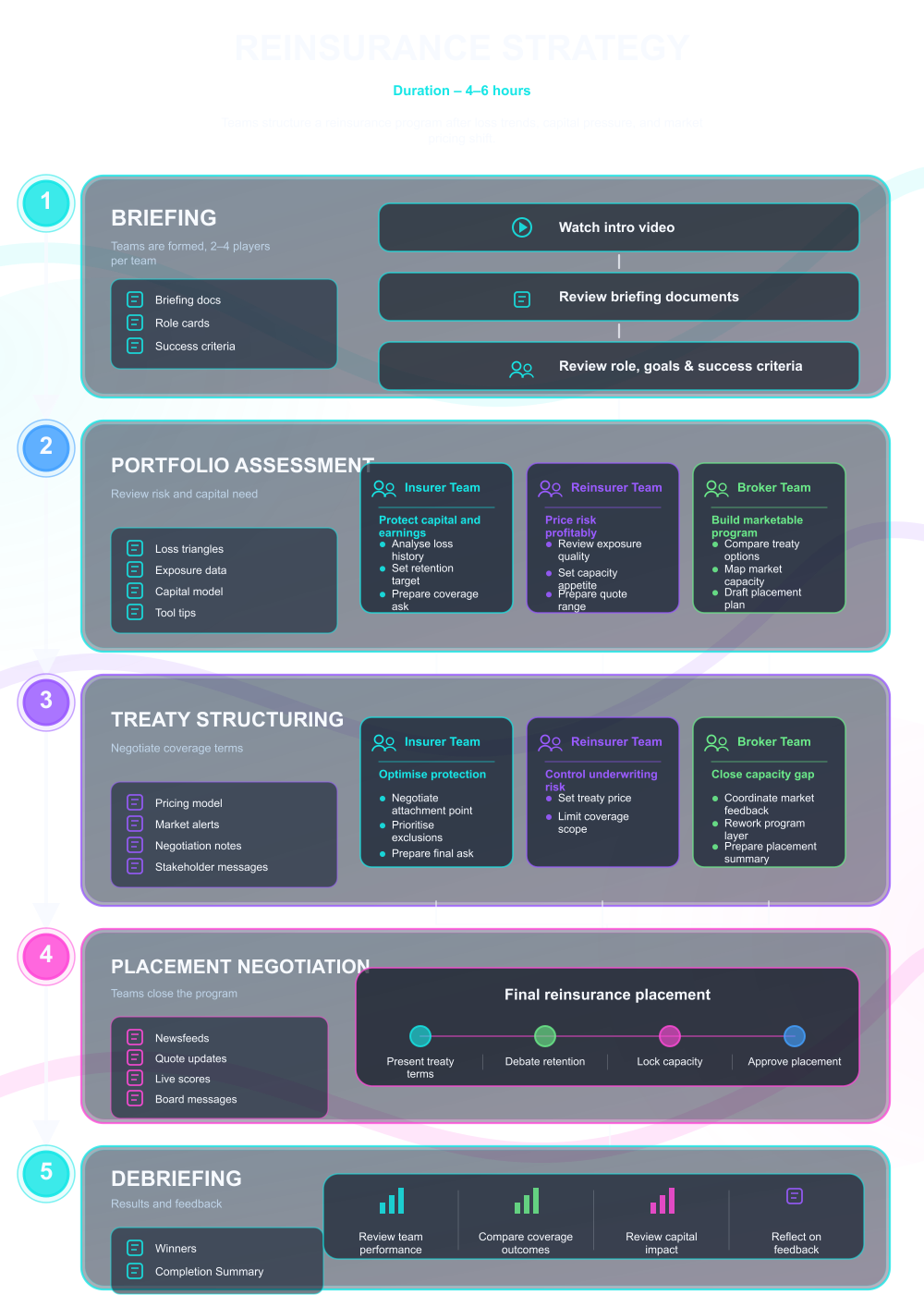

What Participants Do
In the simulation, participants will:
- Analyse an initial scenario and brief: current exposure profiles, business mix, capital base, strategic objectives
- Review historical and projected loss data, catastrophe scenarios, accumulation maps, treaty pricing
- Choose and design reinsurance programms: determine retention levels, layer structure, limits, attachments, type of treaty
- Decide on capacity sourcing: whether to retain more risk or transfer it — and at what cost
- Adjust underwriting/retention across lines of business to reflect reinsurance decisions and risk appetite
- Monitor risk-return and solvency metrics
- Collaborate and negotiate: teams may act as cedent, reinsurer or broker; they may negotiate treaty terms, capacity offers, or bid for risk
- Prepare and deliver strategy presentations or memos

Learning Objectives
By the end of the simulation, participants will be able to:
- Understand the fundamental behaviours and structures of reinsurance markets and treaties
- Evaluate reinsurance strategies (proportional vs non-proportional, retention levels, layer design) in the context of business objectives and risk appetite
- Analyse the cost and benefit trade-off of reinsurance: premium cost, recoveries, capital relief, profitability impact
- Manage accumulation risk and exposure concentrations across lines of business and perils
- Understand how reinsurance decisions affect capital, solvency, underwriting volatility and shareholder value
- Respond dynamically to market cycles, catastrophe losses and competitive pressure in a reinsurance context
- Collaborate across functions to design coherent reinsurance strategy
- Communicate reinsurance strategy clearly to stakeholders and justify the trade-offs made
- Build confidence in making strategic decisions under uncertainty, constrained resources and competitive tension
The simulation’s flexible structure ensures that these objectives can be calibrated to match the depth, duration, and focus areas of each program, whether in higher education or corporate learning.
How the Reinsurance Strategy Simulation Works
This simulation can be run individually or in teams in academic or corporate contexts.
1. Get into the Role Participants receive a scenario, team-roles (cedant, reinsurer, or mixed), background materials (portfolio mix, exposure maps, market data).
2. Analyze the Situation, Make Propositions Teams review the current exposure and risk-profile, decide their strategy for reinsurance placement/retention. They submit their decisions: treaty types, retention, layers, capacity, etc.
3. Review the Results Simulation provides the outcomes of the decisions made beforehand. Participants judge the success of their actions and must adapt to changes.
4. Implement New Strategy While taking into account new events provided by the simulation, participants must make decisions again, this time with their experience to guide them.
5. Review and Reflect Feedback highlights defensibility, consistency, risk assessment, and clarity of narrative.
Frequently Asked Questions
Assessment
Assessment of participant performance can be tailored according to the host institution’s objectives (business school, corporate training, assessment centre). Typical assessment criteria include:
- Strategic soundness, quality and logic of reinsurance programme decisions
- Financial performance: net underwriting result, cost of reinsurance, volatility of retained losses, return on retention
- Efficiency in use of capital, solvency/rating-agency metrics, impact of reinsurance on capital relief
- Control of accumulation risk, exposure concentrations, responsiveness to shock events
- Clarity and persuasiveness of presentations/memos explaining strategy, trade-offs and outcomes
- Team interaction, responding to evolving scenarios, learning from earlier rounds and adjusting strategy
Assessment may incorporate peer and self-review components, facilitator scoring, and debrief discussion. Results may feed into grades, executive feedback, certification or development plans.