It's ideal for students and professionals in finance, compliance, risk management, fintech, and business law who want to understand the practical fusion of regulation and technology.

RegTech Simulation
In the RegTech Simulation, participants navigate the complex intersection of finance, regulation, and technology. They must implement solutions, manage risks, and ensure compliance in a dynamic, fast-paced financial environment.

RegTech Simulation Overview
Participants step into the critical role of compliance professionals at a modern financial institution facing escalating regulatory demands. Each simulation round introduces new challenges: from implementing new Anti-Money Laundering (AML) directives and navigating data privacy laws like GDPR to managing operational risk and responding to regulatory audits.
Teams must analyze regulatory requirements, evaluate and deploy appropriate RegTech solutions, and balance compliance costs with strategic business objectives. The simulation captures the real-world pressure of protecting the firm's reputation and financial standing while enabling innovation and growth.
This simulation is ideal for university programs in finance, law, and technology, as well as for executive training in banks, fintech firms, and corporate compliance departments. It brings the burgeoning field of Regulatory Technology to life, demonstrating how technology transforms compliance from a cost center into a strategic advantage.

RegTech Simulation Concepts
Participants work through realistic scenarios, which can be customized to emphasize or exclude specific topics depending on the learning goals. This modular structure allows the simulation to be tailored to any type of session. Key concepts include:
- Regulatory frameworks and compliance obligations
- RegTech solution identification and implementation
- Operational risk management and control frameworks
- Data governance, privacy, and cybersecurity in compliance
- Cost-benefit analysis of compliance technology investments
- Managing regulatory audits and supervisory relationships
- Ethics and corporate governance in financial services
- Reporting and disclosure requirements
- The impact of regulatory change on business strategy

Gameflow
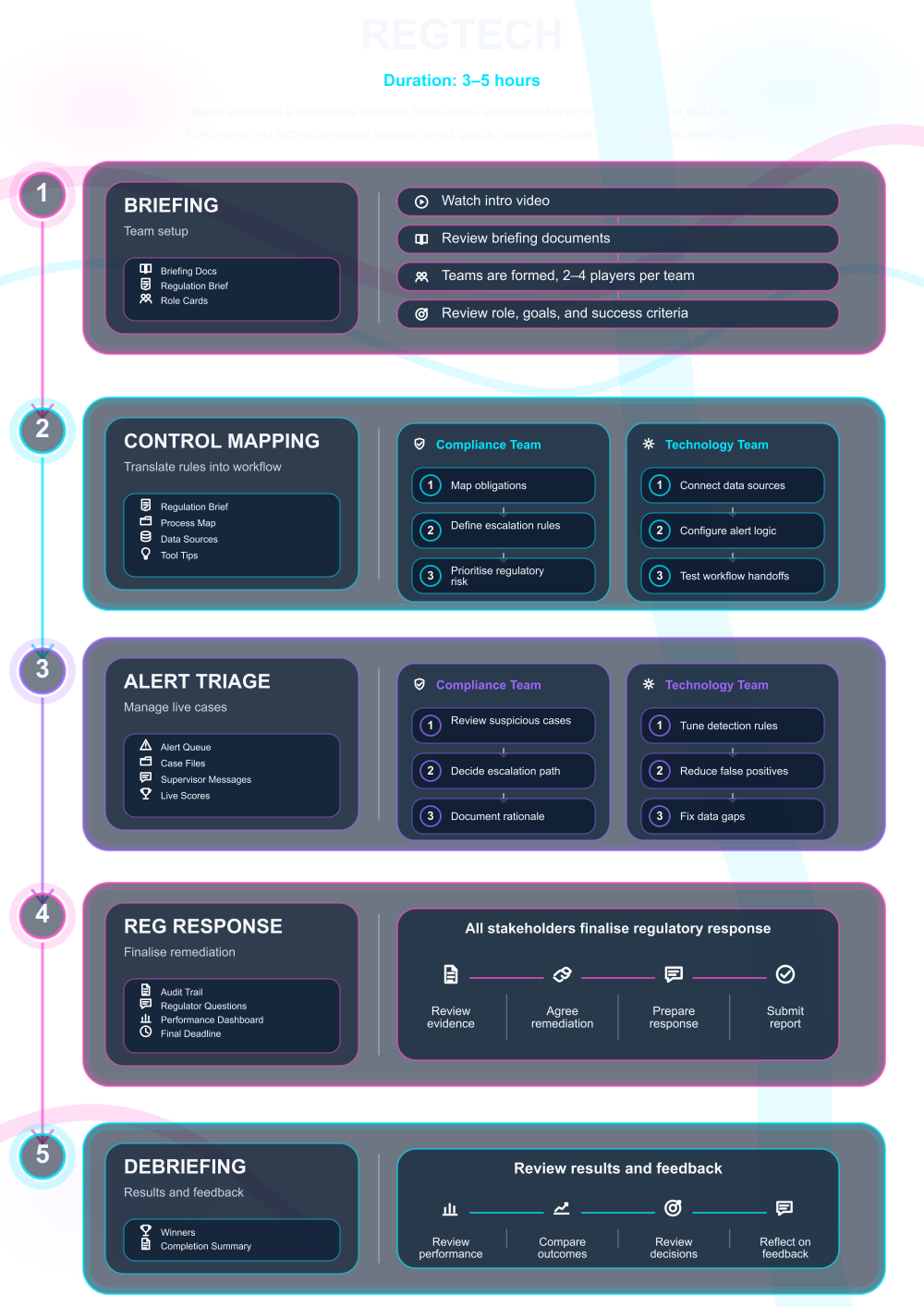

What Participants Do
In the simulation, participants will:
- Analyze incoming regulatory directives and assess their impact on the firm.
- Research, select, and propose RegTech tools to address specific compliance gaps.
- Allocate budgets and resources to manage compliance operations and technology projects.
- Respond to crisis scenarios, such as data breaches or regulatory investigations.
- Present compliance strategies and ROI justifications to the board (simulated stakeholders).
- Adapt strategies based on feedback, audit results, and changing regulatory landscapes.

Learning Objectives
By the end of the simulation, participants will be able to:
- Understand core financial regulations and the operational challenges of compliance.
- Evaluate different categories of RegTech solutions and their practical applications.
- Develop a strategic approach to integrating technology into compliance workflows.
- Communicate the business case for RegTech investments to senior management.
- Navigate ethical dilemmas and balance regulatory demands with business objectives.
- Build confidence in making high-stakes compliance decisions under pressure.
How the RegTech Simulation Works
This simulation can be run individually or in teams in academic or corporate contexts. Each cycle represents a stage of getting through a pressing financial situation.
1. Receive a Regulatory Brief Teams are introduced to their firm's profile and a new set of regulatory challenges.
** 2. Analyze and Research** They review regulatory texts, internal risk data, and a catalog of available RegTech solutions.
3. Make Strategic Decisions Participants decide which technologies to pilot, how to allocate their budget, and where to focus manual oversight.
4. Collaborate Across Roles Teams may divide into roles such as Chief Compliance Officer, RegTech Architect, and Risk Analyst.
5. Communicate Outcomes Teams prepare and deliver a brief board presentation outlining their strategy, spending, and risk mitigation plan.
6. Review and Reflect The simulation provides feedback on their compliance effectiveness, cost efficiency, and any incurred penalties. Strategies are refined in subsequent rounds.
Frequently Asked Questions
Assessment
Assessment of participant performance can be tailored according to the host institution’s objectives (business school, corporate training, assessment centre). Typical assessment criteria include:
- The effectiveness and efficiency of their chosen compliance program.
- Strategic alignment of technology investments with regulatory risks.
- Clarity, persuasiveness, and business acumen demonstrated in board presentations.
- Team collaboration and adaptability in response to new regulatory information.