The simulation typically features a mature, healthy company with existing debt that is nearing maturity or a company seeking to capitalize on favorable market conditions to optimize its balance sheet. Scenarios may include refinancing a corporate bond, renegotiating a syndicated loan, or navigating a leveraged recapitalization post-LBO.

Refinancing Simulation
The Refinancing Simulation replicates real-world lender-borrower negotiations and capital structure adjustments to provide a practical, hands-on learning experience in managing debt financing effectively.

Refinancing Simulation Overview
Immersing participants in the strategic and financial decision-making processes involved in loan refinancing, this simulation is designed as a highly realistic and interactive financial exercise where participants analyze company financials and market conditions to optimize refinancing strategies.
Participants engage in critical evaluation of existing debt structures, balancing costs, risks, and company goals to restructure debt under varying economic scenarios. It emphasizes the importance of thoughtful financial analysis, lender relationships, and negotiation skills.
The simulation facilitates deep understanding of refinancing mechanisms, capital management, and how refinancing can improve company valuation and liquidity.

Refinancing Simulation Concepts
Participants work through realistic scenarios, which can be customized to emphasize or exclude specific topics depending on the learning goals. This modular structure allows the simulation to be tailored to any type of session. Key concepts include:
- Debt and capital structures
- Loan refinancing types and terms
- Interest rate negotiation and cost of capital
- Credit risk assessment and lender dynamics
- Capital structure optimization
- Financial covenants and compliance
- Amortization and refinancing schedules
- Impact of economic conditions on refinancing
- Negotiation and communication with lenders
- Refinancing as a strategic financial tool

Gameflow
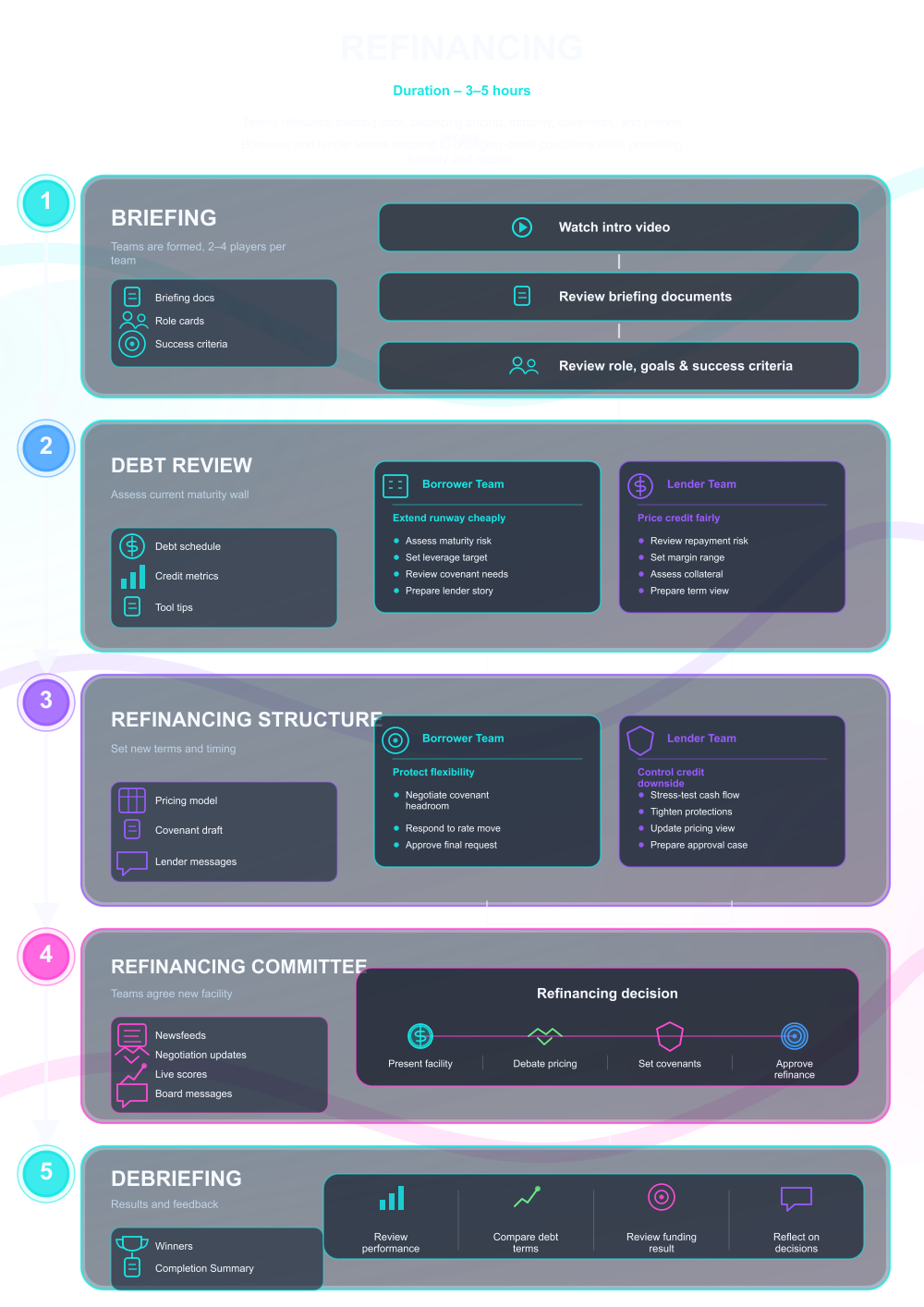

What Participants Do
In the simulation, participants will:
- Analyze company financial status and current debt
- Assess refinancing needs and objectives
- Evaluate different refinancing options and scenarios
- Negotiate terms with simulated lender counterparts
- Construct and present refinancing proposals
- Manage refinancing execution and compliance
- Monitor post-refinancing impact on financial metrics
- Collaborate within teams acting as borrower and lender
- Deliver investor or stakeholder updates on refinancing outcomes
- Reflect on strategy effectiveness and decision impacts

Learning Objectives
By the end of the simulation, participants will be able to:
- Understand different debt structures and refinancing instruments
- Master analysis of refinancing benefits and risks
- Develop negotiation and communication skills with lenders
- Apply financial modeling to refinancing decisions
- Manage refinancing under real-world constraints and volatility
- Assess refinancing impact on company financial health
- Balance liquidity, cost of capital, and creditworthiness
- Interpret refinancing-related covenants and compliance issues
- Improve critical thinking in dynamic financial environments
- Gain confidence in refinancing strategy formulation and execution
How the Refinancing Simulation Works
This simulation can be run individually or in teams in academic or corporate contexts. Each cycle represents a stage of getting through a pressing financial situation.
1. Scenario setup Participants begin with a realistic refinancing need, such as maturing debt, covenant constraints, or liquidity pressure, and receive a borrower profile, current capital structure, and market context.
2. Data and tools Access is granted to a data room containing financial statements, debt terms, market rates, and covenants. Built-in modeling tools enable cash flow forecasting, debt scheduling, and refinancing analyses.
3. Decision points Teams propose refinancing options (tenor, rate type, amortization, covenants) and decide on use of proceeds. Internal memos and lender-facing presentations are prepared to justify the chosen path.
4. Execution and feedback The rounds simulate evolving market conditions, rate shifts, and covenant tests. Immediate feedback focuses on financial outcomes, risk management, and communication quality.
5. Assessment and coaching Performance is graded on quantitative results (DSCR, leverage, NPV of refinancing) and qualitative judgment (risk rationale, stakeholder communications, teamwork). Post-round debriefs highlight strengths, gaps, and transferability to real-world scenarios.
Frequently Asked Questions
Assessment
Assessment of participant performance can be tailored according to the host institution’s objectives (business school, corporate training, assessment centre). Typical assessment criteria include:
- Strategic selection of repurchase methods and timing aligned with market conditions and company goals Financial analysis and assessment of share repurchase impact on earnings per share (EPS), return on equity (ROE), and valuation metrics
- Scenario analysis including rate shocks, credit spreads widening, and liquidity constraints.
- Assessment of leverage limits, debt capacity, and refinancing risk under varying market conditions.
- Ability to defend chosen refinancing paths with data-driven rationale.
- Alignment with regulatory requirements, reporting standards, and governance processes.