Exactly. This simulation is specifically designed for professionals who are technical experts but want to enhance their communication and executive presence. We provide a supportive environment to practice and build confidence.

Public Speaking Simulation
Your ideas are only as powerful as your ability to communicate them. Bridge the gap between financial expertise and executive presence and transform technical analysts into compelling and confident communicators.

Public Speaking Simulation Overview
The Public Speaking in Finance Simulation is an intensive, hands-on program designed to equip finance professionals, analysts, and students with the critical soft skills needed to excel. Participants are immersed in realistic financial scenarios where they must distill complex data, defend their analyses, and persuade senior management and investors.
Moving beyond traditional presentation courses, this simulation focuses specifically on the unique challenges of the financial industry: handling aggressive Q&A, explaining market downturns, pitching under pressure, and conveying confidence during earnings calls or crisis communications.
Through repeated practice in a safe-to-fail environment and personalized feedback, participants build the muscle memory and confidence required for high-impact financial communication.

Public Speaking Simulation Concepts
Participants work through realistic scenarios, which can be customized to emphasize or exclude specific topics depending on the learning goals. This modular structure allows the simulation to be tailored to any type of session. Key concepts include:
- Stakeholder Communication
- Storytelling with Data
- Handling Hostile Q&A
- Non-Verbal Communication and Executive Presence
- Crisis Communication
- Persuasion and Influence
- Managing Presentation Anxiety
- Visual Aid Design

Gameflow

What Participants Do
In the simulation, participants will:
- Deliver a series of timed, impromptu and prepared speeches on financial topics.
- Pitch an investment opportunity to a skeptical panel of "investors."
- Simulate an earnings call, presenting results and facing rigorous Q&A.
- Role-play a crisis scenario, such as explaining a significant trading loss or a credit downgrade.
- Analyze and provide constructive feedback on peers' communication styles.
- Receive individualized, expert coaching on both content and delivery.
- Revise and re-deliver presentations based on feedback, demonstrating tangible improvement.

Learning Objectives
By the end of the simulation, participants will be able to:
- Structure a financial presentation with a clear, persuasive narrative arc.
- Confidently articulate complex financial concepts to non-expert audiences.
- Effectively handle challenging and unexpected questions without losing poise.
- Utilize vocal variety and body language to enhance message impact and project leadership.
- Design and use visual aids that support, rather than hinder, the presentation.
- Manage physiological symptoms of public speaking anxiety.
- Critically evaluate their own and others' communication performances to foster continuous improvement.
How the Public Speaking Simulation Works
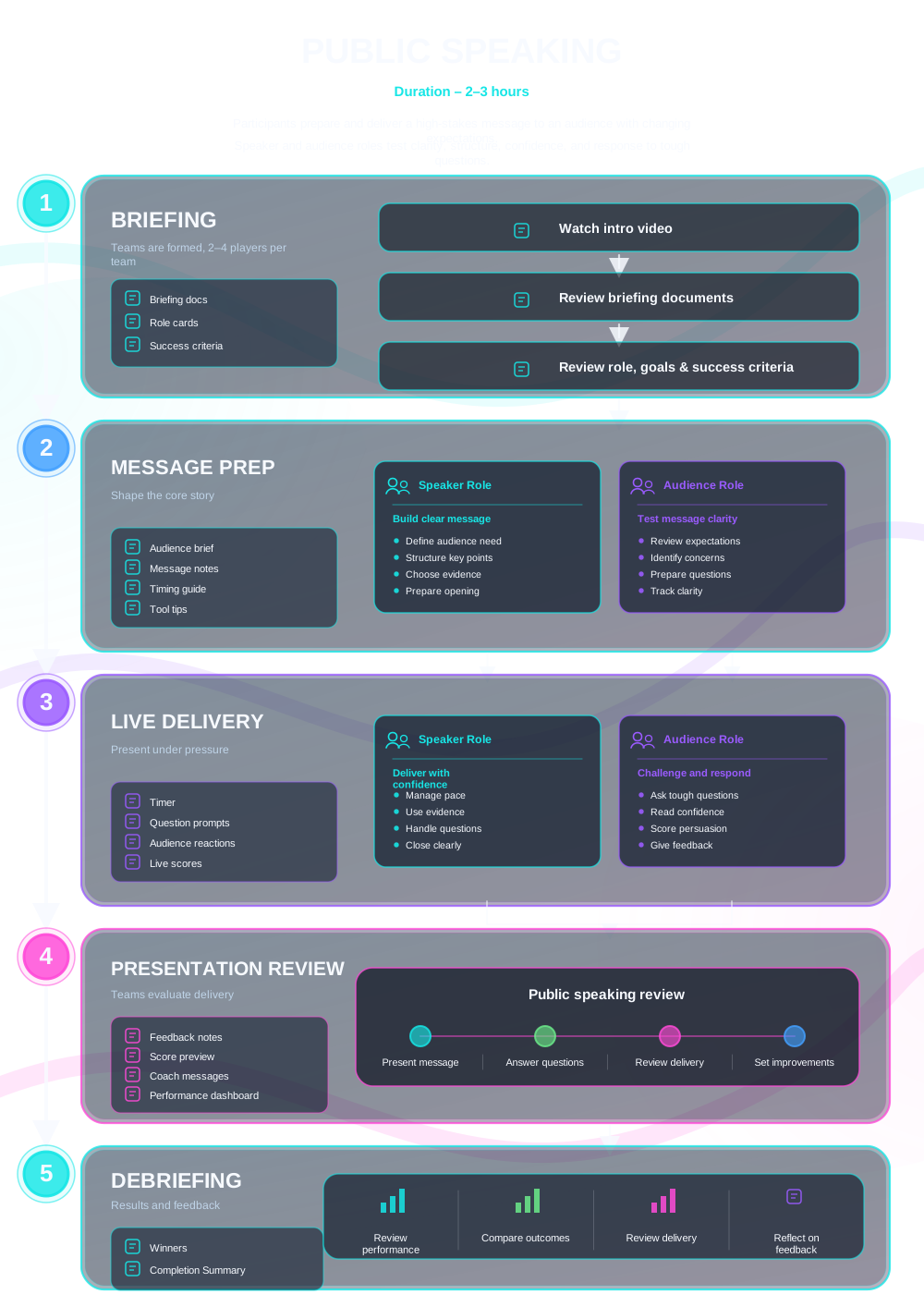
This simulation can be run individually or in teams in academic or corporate contexts. Each cycle represents a stage of getting through a pressing financial situation.
1. Briefing and Concept Introduction Participants are introduced to the core communication concepts and receive their first scenario brief.
2. Preparation A short, timed preparation period forces participants to focus on key messages rather than memorizing a script.
3. The Presentation Participants deliver their presentation to the group and a facilitator, who acts as both audience and evaluator.
4. Intensive Q&A The presentation is immediately followed by a rigorous Q&A session, where the facilitator and other participants challenge the speaker's assumptions, data, and conclusions.
5. Peer and Expert Feedback The group provides structured feedback on both strengths and areas for development.
6. Video Review and Coaching Participants review video recordings of their performance with a facilitator to identify specific, actionable improvements.
7. Iterative Rounds The cycle repeats with new, increasingly complex scenarios, allowing participants to apply feedback and refine their skills in real-time.
Frequently Asked Questions
Assessment
Assessment of participant performance can be tailored according to the host institution’s objectives (business school, corporate training, assessment centre). Typical assessment criteria include:
- Pre- and Post-Simulation Self-Assessment
- Clarity and Structure
- Content and Analysis
- Delivery and Presence
- Q&A Handling
- Peer Feedback
- Final Integrated Presentation
Assessment may incorporate peer and self-review components, facilitator scoring, and debrief discussion. Results may feed into grades, executive feedback, certification or development plans.