A basic understanding of financial concepts is beneficial, but not always mandatory. The simulation includes briefing materials and is designed as a practical learning tool for various experience levels.

Private Banking Simulation
Master the art of wealth management and become the trusted advisor to your ultra-high-net-worth clients. Navigate volatile markets, build bespoke portfolios, and learn the delicate balance of risk, return, and client relationships.

Private Banking Simulation Overview
In the high-stakes world of private banking, success is measured not just by portfolio returns, but by the strength of client relationships and the ability to provide holistic, long-term financial stewardship. This simulation places participants in the role of a Private Banker, responsible for managing the complex and multifaceted wealth of demanding ultra-high-net-worth clients.
Over multiple simulation rounds, participants will analyze client risk profiles and life goals, construct and adjust sophisticated investment portfolios across various asset classes, and respond to dynamic economic events.
Participants will compete not only on financial performance but also on client satisfaction, requiring participants to master communication, strategic asset allocation, and the nuanced advisory skills essential for a top-tier private banker.

Private Banking Simulation Concepts
Participants work through realistic scenarios, which can be customized to emphasize or exclude specific topics depending on the learning goals. This modular structure allows the simulation to be tailored to any type of session. Key concepts include:
-Asset Allocation and Portfolio Construction
- Risk Profiling and Client Profiling
- Modern Portfolio Theory and Efficient Frontier
- Alternative Investments
- Liquidity Management
- Tax-Efficient Investing
- Behavioral Finance and Client Bias
- Performance Reporting and Client Communication
- Wealth Preservation and Intergenerational Wealth Transfer
- Ethical Considerations and Fiduciary Duty

Gameflow
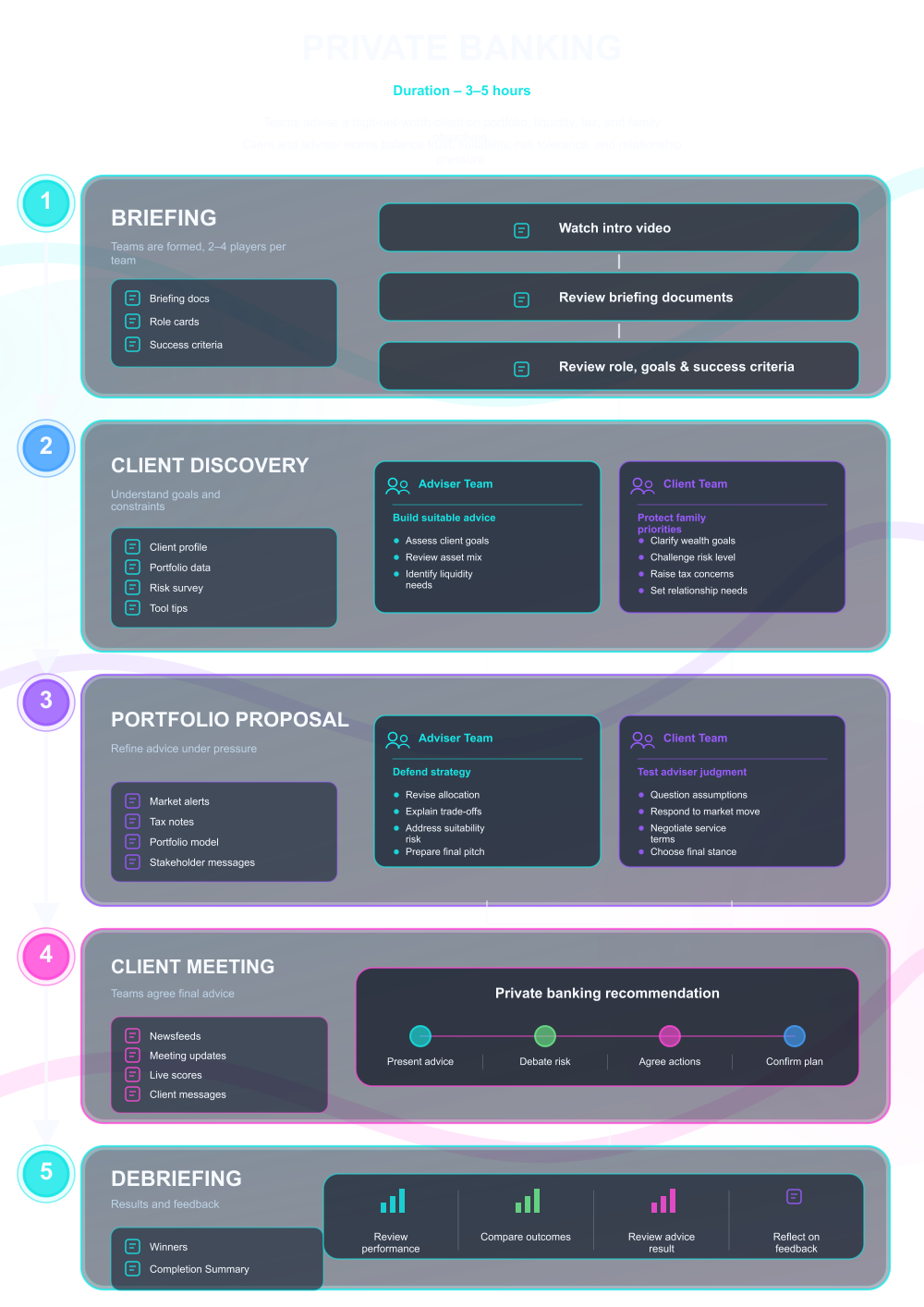

What Participants Do
In the simulation, participants will:
- Conduct in-depth interviews to understand client risk tolerance, cash flow needs, and long-term objectives.
- Create a formal, customized IPS for each client to guide all investment decisions.
- Allocate capital across a wide universe of assets including equities, fixed income, commodities, and alternative investments.
- React to market news, economic data, and changing client circumstances by executing trades and strategically rebalancing portfolios.
- Use advanced analytics and dashboards to monitor portfolio performance, risk metrics and attribution.
- Present performance reports, justify strategic decisions, and manage client emotions during periods of market stress.

Learning Objectives
By the end of the simulation, participants will be able to:
- Construct a diversified, multi-asset class investment portfolio tailored to a specific client's risk and return objectives.
- Evaluate the risk/return characteristics of various asset classes and their role within a UHNW portfolio.
- Apply the principles of Modern Portfolio Theory to optimize asset allocation.
- Demonstrate the ability to communicate complex investment strategies and performance results effectively to clients.
- Manage client relationships by aligning financial advice with stated and unstated life goals.
- Adapt investment strategies dynamically in response to changing market conditions and client needs.
How the Private Banking Simulation Works
This simulation can be run individually or in teams in academic or corporate contexts. Each cycle represents a stage of getting through a pressing financial situation.
1. Team Formation and Client Assignment Participants are divided into teams, each assigned a unique ultra-high-net-worth client with a detailed profile.
2. Initial Strategy Teams analyze their client, draft an Investment Policy Statement, and make their initial asset allocation decisions.
3. Decision Input Teams input their trading and allocation decisions into the online platform.
4. Scenario and Market Resolution The simulation engine processes all decisions, incorporating real-world market data and random economic/business events.
5. Results and Reporting Teams receive detailed performance reports for their portfolios, including key metrics and updated client satisfaction scores.
6. Client Interaction Teams review feedback from their "client" and must prepare a communication or report addressing their performance.
Frequently Asked Questions
Assessment
Assessment of participant performance can be tailored according to the host institution’s objectives (business school, corporate training, assessment centre). Typical assessment criteria include:
- Portfolio Perfomance Score
- Net Worth Growth
- Client Satisfaction Score
- Final Strategic Report and Presentation
- Peer Evaluation and Participation
Assessment may incorporate peer and self-review components, facilitator scoring, and debrief discussion. Results may feed into grades, executive feedback, certification or development plans.