Traditional lectures teach the "what," but simulations teach the "how." This experiential learning approach builds muscle memory for complex decision-making, risk assessment, and strategic thinking in a safe, consequence-free environment.

Prime Brokerage Simulation
Master the engine room of the hedge fund industry. Far from a theoretical exercise, the Prime Brokerage Simulation replicates the dynamic interplay between a prime broker and its hedge fund clients.

Prime Brokerage Simulation Overview
The Prime Brokerage Simulation plunges participants into the high-stakes, multi-faceted world of prime brokerage, the critical service division that supports the operations of hedge funds and other sophisticated financial institutions.
Participants will step into the roles of prime brokerage professionals, tasked with managing relationships, mitigating risk, and driving profitability. They will grapple with real-world scenarios including margin calls, securities lending decisions, capital introduction, and the intense competition for lucrative client mandates.
This hands-on experience reveals how prime brokers act as the central nervous system for hedge funds, providing the leverage, infrastructure, and strategic services that enable complex trading strategies.

Prime Brokerage Simulation Concepts
Participants work through realistic scenarios, which can be customized to emphasize or exclude specific topics depending on the learning goals. This modular structure allows the simulation to be tailored to any type of session. Key concepts include:
- Prime Brokerage Services and Ecosystem
- Margin Financing and Haircuts
- Securities Lending and Rebate Rates
- Counterparty Risk Management
- Hedge Fund Lifecycle and Strategy Analysis
- Capital Introduction
- Portfolio Margining (VAR-based, Reg T)
- Collateral Management
- Profit and Loss Drivers for a Prime Broker
- Client Onboarding and Due Diligence

Gameflow

What Participants Do
In the simulation, participants will:
- Evaluate the risk and profitability of potential hedge fund clients based on their strategy, track record, and portfolio.
- Negotiate and set margin requirements, financing rates, and cuts on various asset classes.
- Decide which client securities to lend out to short sellers and manage the associated risks and rebate fees.
- Act decisively during market volatility by issuing and managing margin calls to protect the firm from counterparty default.
- Prepare and present compelling proposals to win new hedge fund business in a competitive RFP process.
- Balance the trade-off between risk and return to maximize the prime brokerage desk's revenue and manage its balance sheet efficiently.

Learning Objectives
By the end of the simulation, participants will be able to:
- Articulate the full suite of services provided by a prime broker and their value proposition to hedge funds.
- Calculate margin requirements using different methodologies and understand the impact of leverage on a client's portfolio.
- Evaluate the creditworthiness and risk profile of a hedge fund client.
- Manage the key revenue streams of a prime broker, including financing spreads and securities lending fees.
- Respond effectively to a simulated market crisis by managing counterparty risk and liquidity.
- Develop a strategic client acquisition plan, leveraging capital introduction and competitive pricing.
How the Prime Brokerage Simulation Works
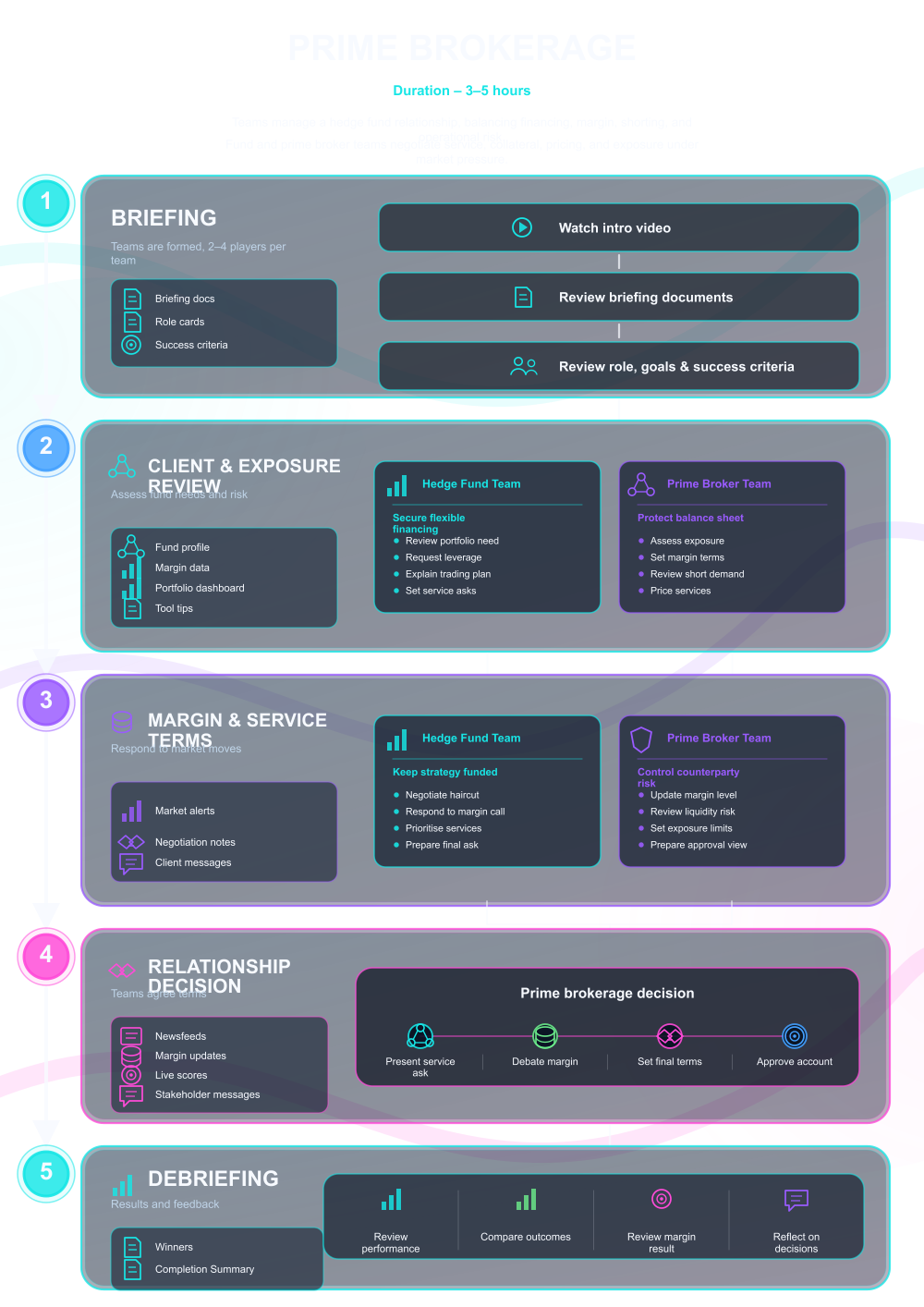
This simulation can be run individually or in teams in academic or corporate contexts. Each cycle represents a stage of getting through a pressing financial situation.
1. Setup and Briefing Teams are introduced to their starting portfolio of hedge fund clients and the simulation platform.
2. Analyze New RFPs Review and bid on new hedge fund mandates.
3. Manage Existing Clients Monitor client portfolios, adjust financing terms, and handle securities lending opportunities.
4. React to Market Shocks Navigate random economic events that trigger volatility and margin calls.
5. Review P&L Analyze their desk's performance, understanding what drove revenue and losses.
6. Debrief The simulation concludes with an instructor-led debrief linking the teams' in-game decisions to real-world prime brokerage operations and strategic challenges.
Frequently Asked Questions
Assessment
Assessment of participant performance can be tailored according to the host institution’s objectives (business school, corporate training, assessment centre). Typical assessment criteria include:
- Hypothesis clarity and testing logic
- Investor communication and pitch delivery
- Reflection on failure and resilience
- Iterative improvement across rounds
Assessment may incorporate peer and self-review components, facilitator scoring, and debrief discussion. Results may feed into grades, executive feedback, certification or development plans.