Not at all. The simulation is designed to be intuitive for beginners, with built-in tutorials and glossaries to explain key concepts as you go.

Personal Development Simulation
Move beyond theory and make critical financial decisions in a dynamic, risk-free environment that mirrors real-life economic challenges and opportunities.

Personal Development Simulation Overview
This Personal Development Simulation places participants in the driver's seat of their own financial life. They will navigate a simulated career path, making real-world decisions about budgeting, saving, investing, debt management, and major life purchases.
The platform reacts to participants' choices with market fluctuations, unexpected expenses, and income changes, teaching them the cause-and-effect relationships that govern personal finance.
Unlike a static course, this simulation provides a sandbox to experiment, make mistakes, and develop the financial intuition and confidence needed to build long-term wealth and security. It’s not just about learning what a 401(k) is—it’s about experiencing the impact of contributing to one over a 20-year period in just a few hours.

Personal Development Simulation Concepts
Participants work through realistic scenarios, which can be customized to emphasize or exclude specific topics depending on the learning goals. This modular structure allows the simulation to be tailored to any type of session. Key concepts include:
- Cash Flow Management
- Debt Strategy
- Investment Fundamentals
- Emergency Fund Planning
- Retirement Planning
- Major Lifecycle Financing
- Credit Health
- Behavioral Finance

Gameflow

What Participants Do
In the simulation, participants will:
- Create and manage a detailed monthly budget based on a simulated salary.
- Allocate savings across various investment vehicles (stocks, bonds, ETFs, mutual funds).
- Take on and pay down different types of debt, observing the impact of interest rates.
- Navigate random "Life Events" such as a job loss, medical emergency, or unexpected windfall.
- Make strategic decisions about major purchases like a car or a house.
- Adjust their financial plan in response to simulated bull and bear markets.
- Compete with peers to see who can achieve the highest net worth and financial health score.

Learning Objectives
By the end of the simulation, participants will be able to:
- Construct a sustainable personal budget that balances income, expenses, and savings goals.
- Evaluate different debt instruments and create an effective plan for debt repayment.
- Design a diversified investment portfolio aligned with personal risk tolerance and time horizon.
- Analyze the long-term impact of compounding returns and regular savings on net worth.
- Develop a proactive financial plan that accounts for both expected and unexpected life events.
- Apply behavioral finance principles to avoid common financial decision-making pitfalls.
How the Personal Development Simulation Works
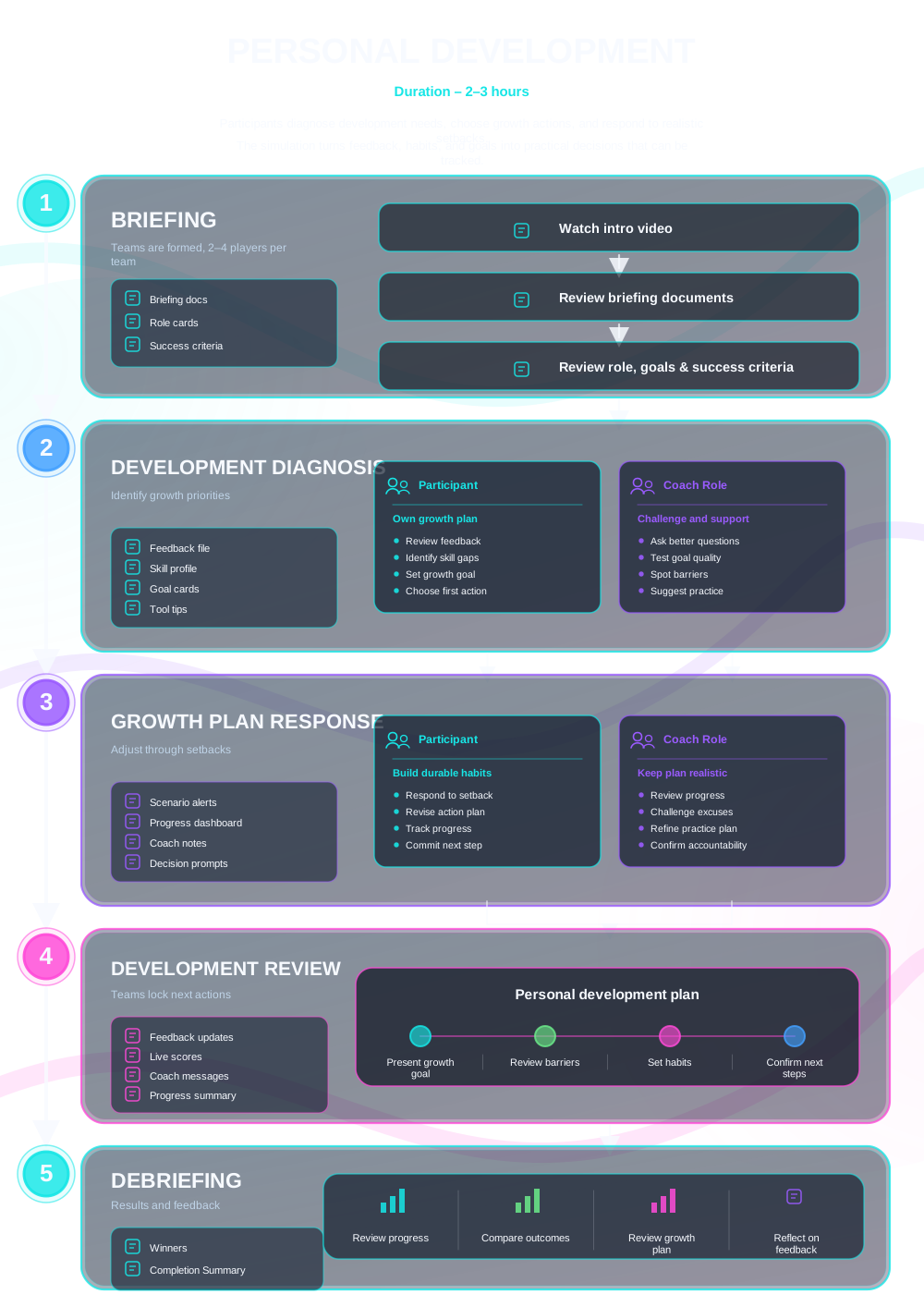
This simulation can be run individually or in teams in academic or corporate contexts. Each cycle represents a stage of getting through a pressing financial situation.
1. Setup and Briefing Participants are assigned a profile (age, career starter, initial savings, student debt) and introduced to the simulation dashboard.
2. Descision-Making Each simulated "period" participants receive a paycheck and must allocate funds towards expenses, debt repayment, investments, and the emergency fund.
3. Experience Consequences The simulation engine processes participants’ decisions, updating their net worth, credit score, and investment balances. Market performance and random life events are introduced, forcing them to adapt.
4. Review and Adapt Detailed reports and dashboards provide instant feedback on participants’ financial health. Participants see the direct results of their strategies and can adjust their approach for the next period.
5. Debrief At the conclusion, a comprehensive summary report highlights participants’ financial journey, key decisions, and final outcomes, facilitating powerful group discussion and self-reflection.
Frequently Asked Questions
Assessment
Assessment of participant performance can be tailored according to the host institution’s objectives (business school, corporate training, assessment centre). Typical assessment criteria include:
- After completing a simulation the data generated from participant’s decisions is constructed into the final Financial Health
- Score based on key metrics like Net Worth, Debt-to-Income Ratio, Credit Score, and Savings Rate. This provides a clear, numerical assessment of the participant's strategic success.
- A short knowledge check before and after the simulation measures the growth in understanding of core financial concepts. Instructors or facilitators can review the participant's journey, evaluating the quality and consistency of their budgeting, investing, and debt management choices.
Assessment may incorporate peer and self-review components, facilitator scoring, and debrief discussion. Results may feed into grades, executive feedback, certification or development plans.