It is ideal for business students, aspiring managers, and current professionals in roles such as business analysis, operations, finance, and general management who need to understand how to manage and improve organizational performance.

Performance Management Simulation
In the Performance Management Simulation, participants master the art of driving organizational success through strategic KPIs, data-driven decisions, and cross-functional alignment in a dynamic, competitive environment.

Performance Management Simulation Overview
This simulation immerses participants in the high-stakes world of corporate performance management. Acting as the executive team of a simulated company, you are tasked with steering the organization toward its strategic goals in a volatile market.
Each decision round represents a fiscal period where you must analyze performance data, allocate resources, and initiate initiatives that impact key metrics across finance, operations, marketing, and human resources. You will encounter realistic business challenges: shifting consumer demand, supply chain disruptions, competitive threats, and internal capability gaps.
The simulation emphasizes the critical link between strategic vision, operational execution, and performance measurement.It is designed for university courses, MBA programs, and corporate leadership training, bringing to life the pressures and trade-offs executives face when translating strategy into measurable results.

Performance Management Simulation Concepts
Participants work through realistic scenarios, which can be customized to emphasize or exclude specific topics depending on the learning goals. This modular structure allows the simulation to be tailored to any type of session. Key concepts include:
- Strategic Goal Setting and Cascade
- Key Performance Indicator Selection and Design
- Balanced Scorecard Perspectives
- Data-Driven Decision Making and Performance Analysis
- Budgeting and Resource Allocation for Strategic Initiatives
- Cross-Functional Collaboration and Alignment
- Leading vs. Lagging Indicators
- Performance Review Cycles and Feedback
- Incentive Structures and Motivational Alignment
- Adapting Strategy in Response to Market Volatility

Gameflow

What Participants Do
In the simulation, participants will:
- Analyze comprehensive company performance dashboards and market reports.
- Set and prioritize strategic objectives for the upcoming period.
- Allocate finite financial and human resources across competing departments and projects.
- Define, track, and interpret KPIs to gauge the health of the business.
- Make tactical decisions to address operational inefficiencies, market opportunities, or internal crises.
- Present performance results and strategic rationale to a simulated "Board of Directors".
- Collaborate in teams to align different functional perspectives on company strategy.
- Pivot strategies based on feedback and changing market conditions.

Learning Objectives
By the end of the simulation, participants will be able to:
- Design a coherent performance management framework aligned with business strategy.
- Critique and select meaningful KPIs that drive desired behaviors and outcomes.
- Interpret complex performance data to diagnose business health and root causes of issues.
- Make informed resource allocation decisions that balance short-term pressures with long-term strategic goals.
- Effectively communicate performance stories and strategic recommendations to stakeholders.
- Foster organizational alignment by linking departmental goals to overarching company objectives.
- Develop agility in adjusting performance targets and initiatives in response to external shocks.
- Build confidence in executive-level decision-making under conditions of uncertainty and incomplete information.
How the Performance Management Simulation Works
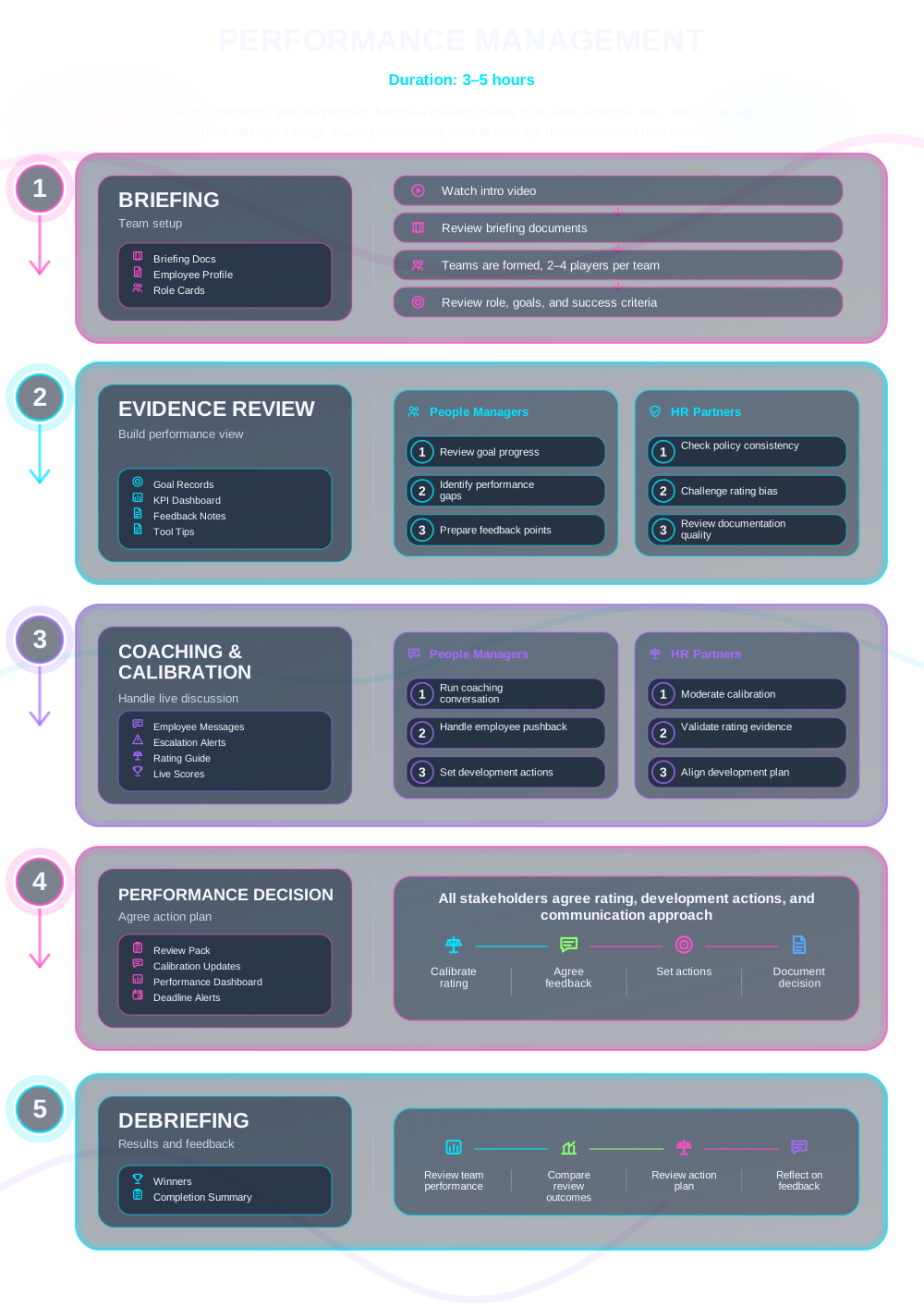
This simulation can be run individually or in teams in academic or corporate contexts. Each cycle represents a stage of getting through a pressing financial situation.
1. Strategic Briefing Teams receive their company's mission, strategic position, and market data.
** 2. Analysis and Planning** Participants review past performance dashboards, conduct SWOT analysis, and set strategic priorities for the next period.
3. Decision Input Teams allocate budgets, launch initiatives, set target KPIs, and make operational adjustments via the simulation platform.
4. Collaborative Negotiation Team members debate priorities, representing different functional viewpoints to reach a consensus plan.
5. Execution and Review The simulator processes decisions, generating new financial statements, KPI scores, and market feedback.
6. Reporting and Reflection Teams analyze their results, prepare management reports, and present their performance narrative. Instructors lead debriefs to connect outcomes to core concepts before the next round begins.
Frequently Asked Questions
Assessment
Assessment of participant performance can be tailored according to the host institution’s objectives (business school, corporate training, assessment centre). Typical assessment criteria include:
- Achievement of set targets, profitability, and sustainable growth.
- Quality of performance diagnosis and data interpretation.
- Coherence and justification of resource allocation and strategic choices.
- Clarity and persuasiveness of written reports and executive presentations.
- Ability to work effectively in a team to synthesize different perspectives.