It is ideal for MBA students, finance masters candidates, aspiring asset managers, investment consultants, and corporate finance professionals seeking to understand institutional investing.

Pension Fund Management Simulation
Our Pension Fund Management Simulation places your team in the role of trustees and CIOs of a large pension fund, tasked with fulfilling long-term liabilities while managing risk, stakeholder expectations, and volatile markets.

Pension Fund Management Simulation Overview
This dynamic, turn-based simulation immerses participants in the holistic management of a defined benefit pension fund. Teams start with a fund facing specific demographic liabilities, a current asset portfolio, and a deficit/surplus status.
Over multiple simulated years, they must make strategic asset allocation decisions, select specific investment managers or vehicles, manage cash flows for benefit payments, and respond to stochastic market events, regulatory changes, and sponsor contribution negotiations.
The core challenge is balancing the triple constraint of pension management: seeking return to improve funding status, managing risk, and controlling costs. Participants experience firsthand the tension between chasing high returns and securing liabilities, the impact of duration matching, and the critical importance of governance and communication with a Board of Trustees.

Pension Fund Management Simulation Concepts
Participants work through realistic scenarios, which can be customized to emphasize or exclude specific topics depending on the learning goals. This modular structure allows the simulation to be tailored to any type of session. Key concepts include:
- Funding Ratio and Solvency
- Asset-Liability Management
- Strategic Asset Allocation
- Liability-Driven Investing
- Risk Budgeting
- Stakeholder Management
- Total Fund Cost Management
- Fiduciary Duty and Governance

Gameflow

What Participants Do
In the simulation, participants will:
- Analyze the fund’s current financial and demographic status.
- Develop and approve a Statement of Investment Principles.
- Decide on strategic and tactical asset allocation.
- Choose specific investment products.
- Manage annual cash flows, including benefit payouts and sponsor contributions.
- Rebalance the portfolio in response to market movements.
- Present quarterly reports to the “Board of Trustees,” justifying performance and strategy.
- Respond to stochastic crises (market crashes, inflation spikes, sponsor bankruptcy risk).

Learning Objectives
By the end of the simulation, participants will be able to:
- Explain the primary objectives and constraints of a pension fund.
- Construct a strategic asset allocation aligned with a fund’s liability profile and risk tolerance.
- Evaluate the risk-return-impact trade-offs of different asset classes, including alternative investments.
- Implement basic LDI principles to hedge key liability risks.
- Interpret a fund’s performance relative to its benchmark and funding status.
- Articulate investment decisions and performance clearly to a fiduciary board.
- Assess the impact of costs, fees, and turnover on long-term net returns.
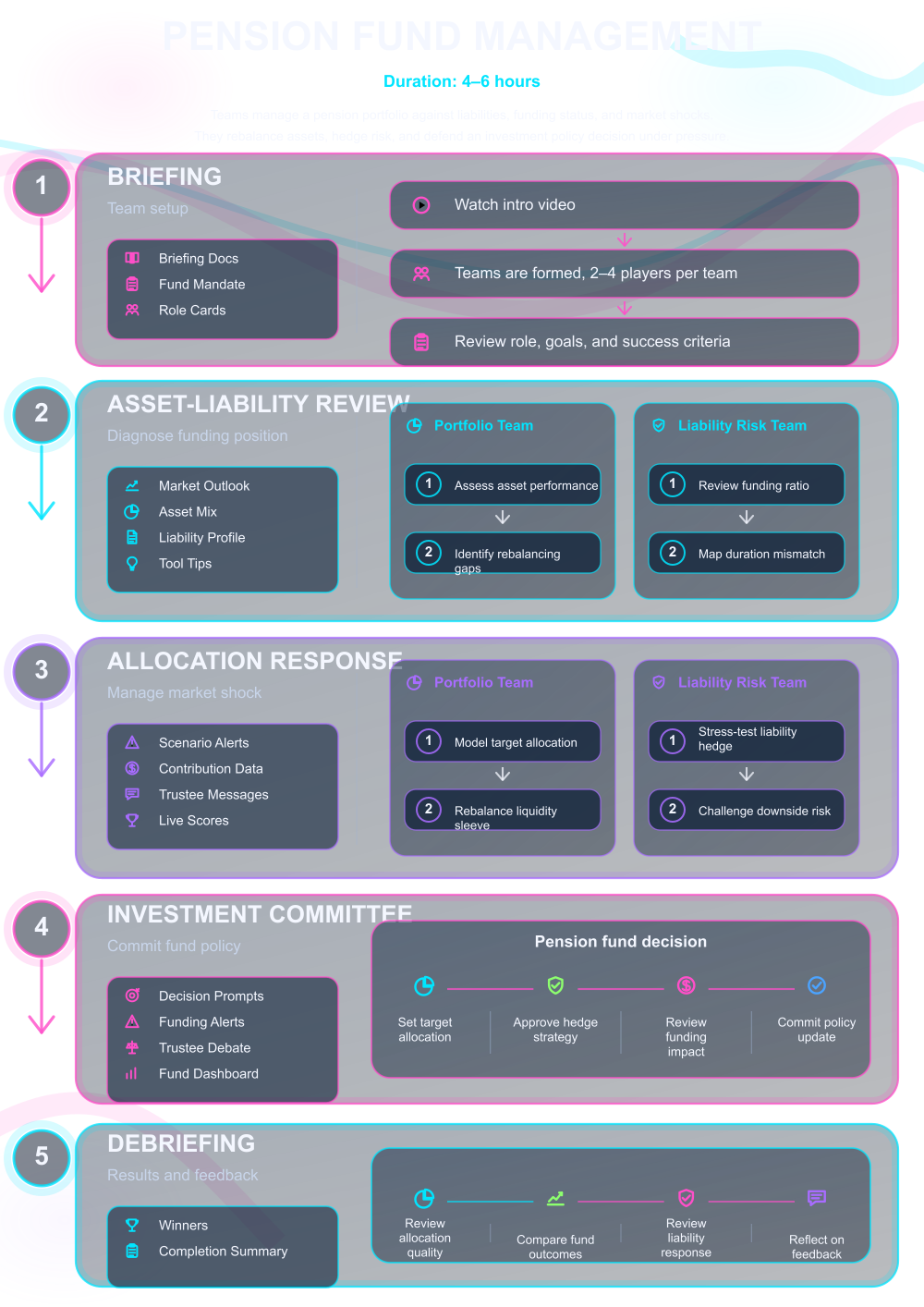
How the Pension Fund Management Simulation Works
This simulation can be run individually or in teams in academic or corporate contexts. Each cycle represents a stage of getting through a pressing financial situation.
1. Team Formation and Briefing Teams of 3-5 are appointed as the investment committee. They receive the fund’s charter, current portfolio, liability study, and market data.
2. Decision Rounds Each round represents a fiscal quarter. Teams submit their investment decisions.
3. Simulation Engine The platform processes decisions using sophisticated financial models and stochastic event generators, producing updated portfolio valuations, funding ratios, and risk metrics.
4. Trustee Board Meetings Teams present their results and strategy, receiving feedback and facing challenging questions from the simulated Board (instructors/facilitators).
5. Market and Event Updates Each round includes new economic data, market movements, and potential “surprise” events that teams must incorporate into their strategy.
6. Final Review The simulation concludes with a multi-year performance debrief, analyzing which strategies succeeded in improving the fund’s long-term health.
Frequently Asked Questions
Assessment
Assessment of participant performance can be tailored according to the host institution’s objectives (business school, corporate training, assessment centre). Typical assessment criteria include:
- Did the team’s decisions improve the fund’s solvency over the simulation period, net of costs?
- Adherence to policy limits, effectiveness of hedging, and management of drawdowns and volatility.
- Quality of the Statement of Investment Principles, clarity and justification of decisions in Trustee presentations, and response to stakeholder concerns.
- Assessment of individual contribution and collaboration within the investment committee team.