It's ideal for finance students, aspiring traders, portfolio managers, and any professional seeking to understand derivative instruments and their practical application in markets.

Options Trading Simulation
Step into the high-stakes world of derivatives to manage risk, speculate on price movements, and navigate market volatility.

Options Trading Simulation Overview
In this Options Trading Simulation, participants immerse themselves in the role of traders or portfolio managers, tasked with constructing and managing sophisticated options strategies in a dynamic market environment. They are presented with realistic financial scenarios - such as earnings announcements, geopolitical events, or volatility shocks—that require rapid analysis and decisive action.
Using a simulated trading platform, they must interpret market data, manage the unique risks of derivatives (like the Greeks: Delta, Gamma, Theta, Vega), and make strategic decisions to hedge existing positions or pursue profit.
This simulation is ideal for university finance courses, MBA programs, and professional training workshops, bringing the complex theory of options pricing and strategy into a tangible, hands-on learning experience. It demonstrates how theoretical knowledge must be applied under pressure, balancing potential returns against the asymmetric risks inherent in options trading.

Options Trading Simulation Concepts
Participants work through realistic scenarios, which can be customized to emphasize or exclude specific topics depending on the learning goals. This modular structure allows the simulation to be tailored to any type of session. Key concepts include:
- Fundamentals of call and put options
- Options pricing models and the Black-Scholes framework
- The Greeks: Delta, Gamma, Theta, Vega, and Rho for risk management
- Basic and advanced options strategies
- Using options for hedging versus speculation
- Volatility trading and the implications of implied vs. historical volatility
- Margin requirements and capital management for derivatives
- The impact of corporate actions on options positions
- Portfolio-level risk assessment with options overlays

Gameflow
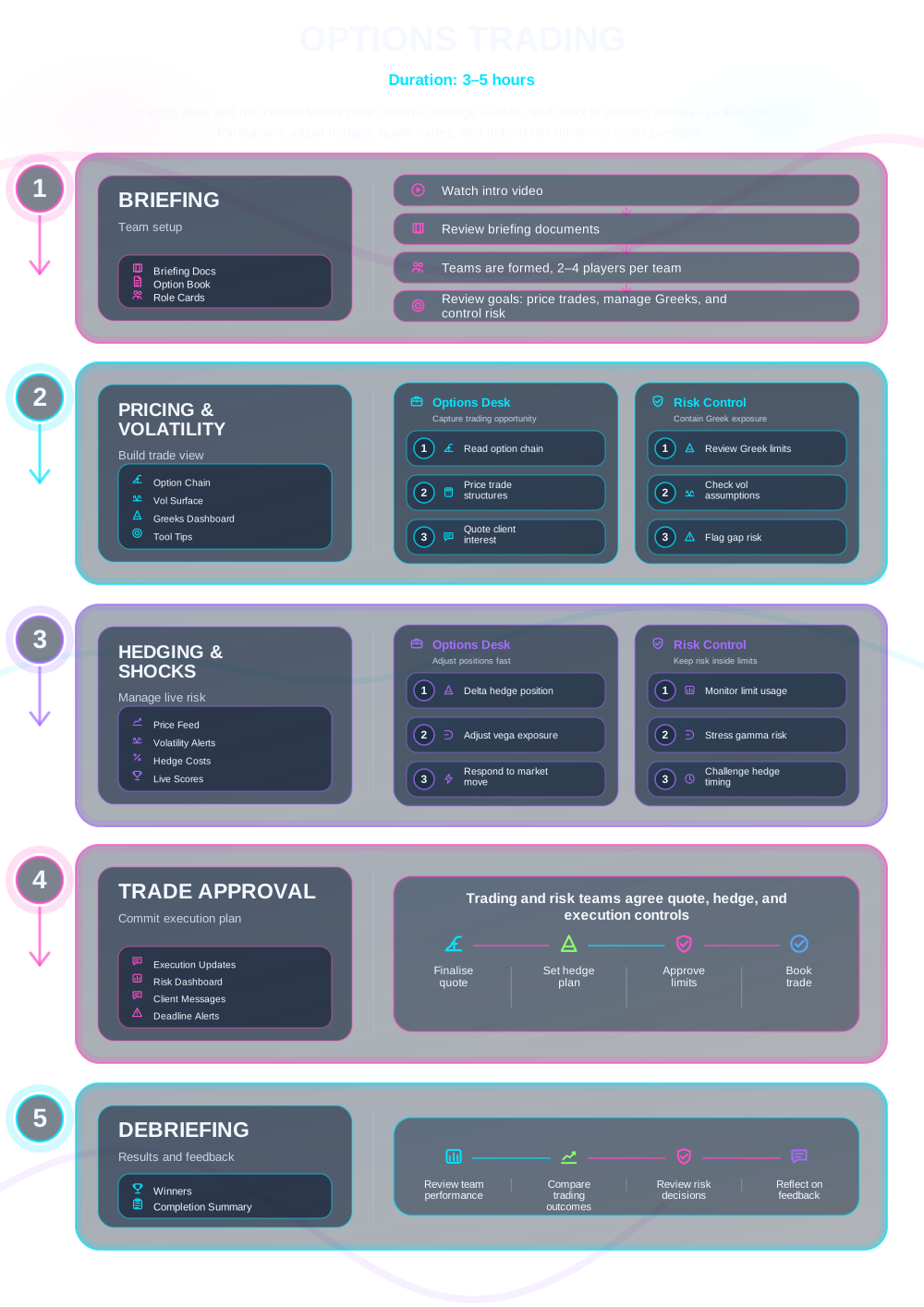

What Participants Do
In the simulation, participants will:
- Analyze market conditions and volatility forecasts to identify trading opportunities.
- Price options and construct basic and complex multi-leg strategies to achieve specific goals.
- Actively manage a portfolio of options positions, monitoring and adjusting for the Greeks.
- Respond to simulated market shocks and news events that affect underlying asset prices and volatility.
- Decide when to realize profits, cut losses, or roll positions forward in time.
- Reflect on the performance of their strategies and the key drivers of their P&L.

Learning Objectives
By the end of the simulation, participants will be able to:
- Understand the core mechanics, terminology, and uses of options contracts.
- Apply the Black-Scholes framework and interpret the Greeks for risk management.
- Design and execute appropriate options strategies for hedging, income generation, and directional speculation.
- Manage a portfolio of derivatives under conditions of market stress and changing volatility.
- Articulate the risk-reward profile of various options positions.
- Build confidence in making trading decisions based on quantitative analysis and market sentiment.
How the Options Trading Simulation Works
This simulation can be run individually or in teams in academic or corporate contexts. Each cycle represents a stage of getting through a pressing financial situation.
1. Receive a Scenario or Brief Participants are introduced to a specific market environment, a portfolio mandate, and relevant data.
** 2. Analyze the Situation** They review live simulated market data, charts, volatility surfaces, and news feeds to assess opportunities and risks.
3. Make Strategic Decisions Participants choose and execute options strategies, set position sizes, and define risk parameters like stop-loss levels.
4. Collaborate Across Roles Teams may divide functions such as market analysis, risk monitoring, and execution, mirroring a trading desk.
5. Communicate Outcomes Participants justify their trading decisions and portfolio performance in a brief summary or "trader's commentary."
6. Review and Reflect The simulator provides detailed feedback on P&L, risk exposure (Greeks), and benchmarking against peers or indices. Strategies are refined in subsequent rounds.
Frequently Asked Questions
Assessment
Assessment of participant performance can be tailored according to the host institution’s objectives (business school, corporate training, assessment centre). Typical assessment criteria include:
- Risk-adjusted returns and overall P&L performance
- Effective application and management of options strategies
- Adherence to risk limits and efficient use of the Greeks for monitoring
- Clarity and logic of trade justifications and strategy notes
- Adaptability and decision-making in response to market events