This simulation is ideal for MBA students, advanced finance undergraduates, junior analysts at banks and funds, and corporate treasurers seeking practical, hands-on experience with derivatives beyond textbook theory.

Options and Swaps Simulation
Our Options and Swaps Simulation plunges participants into the heart of the over-the-counter and exchange-traded markets, where they will learn to use these powerful instruments for hedging, speculation, and arbitrage.

Options and Swaps Simulation Overview
This simulation replicates the fast-paced environment of a bank's derivatives desk or an asset manager's hedging unit.
Participants move beyond theoretical pricing models to actively structure, price, and trade options and swaps in response to live market data, corporate client requests, and evolving risk scenarios. They will manage a derivatives book, experiencing firsthand how gamma, vega, and delta hedging work in practice, and how interest rate and currency swaps are negotiated to transform corporate risk profiles.
The simulation emphasizes the strategic use of derivatives within a broader portfolio context, teaching the critical balance between risk mitigation and profit generation.

Fixed Options and Swaps Simulation Concepts
Participants work through realistic scenarios, which can be customized to emphasize or exclude specific topics depending on the learning goals. This modular structure allows the simulation to be tailored to any type of session. Key concepts include:
- Option Valuation and Greeks
- Trading Strategies
- Risk Management
- Swap Mechanics
- Arbitrage
- Market Making

Gameflow

What Participants Do
In the simulation, participants will:
- Trade Options on multiple underlying assets in a live order-book environment.
- Structure and Negotiate Swaps with simulated corporate clients to meet specific hedging or financing needs.
- Manage a Derivatives Book, actively hedging the Greeks to maintain a desired risk profile.
- Price Derivatives using models, adjusting for dividends, interest rates, and implied volatility.
- Develop Client Pitches for derivative solutions tailored to hypothetical corporate scenarios.
- Respond to Market Shocks and adjust their positions accordingly.
- Compete or Collaborate in teams to achieve the best risk-adjusted return or most profitable client book.

Learning Objectives
By the end of the simulation, participants will be able to:
- Explain the payoff structures and practical applications of common options strategies and swaps.
- Price vanilla options and interest rate swaps using standard financial models.
- Implement dynamic hedging strategies to manage the market risk (Greeks) of a derivatives portfolio.
- Structure appropriate derivative-based solutions for corporate hedging and speculative needs.
- Analyze the risk/return profile of complex positions and understand their margin requirements.
- Articulate the role of derivatives in financial markets and their impact on overall financial stability.
How the Options and Swaps Simulation Works
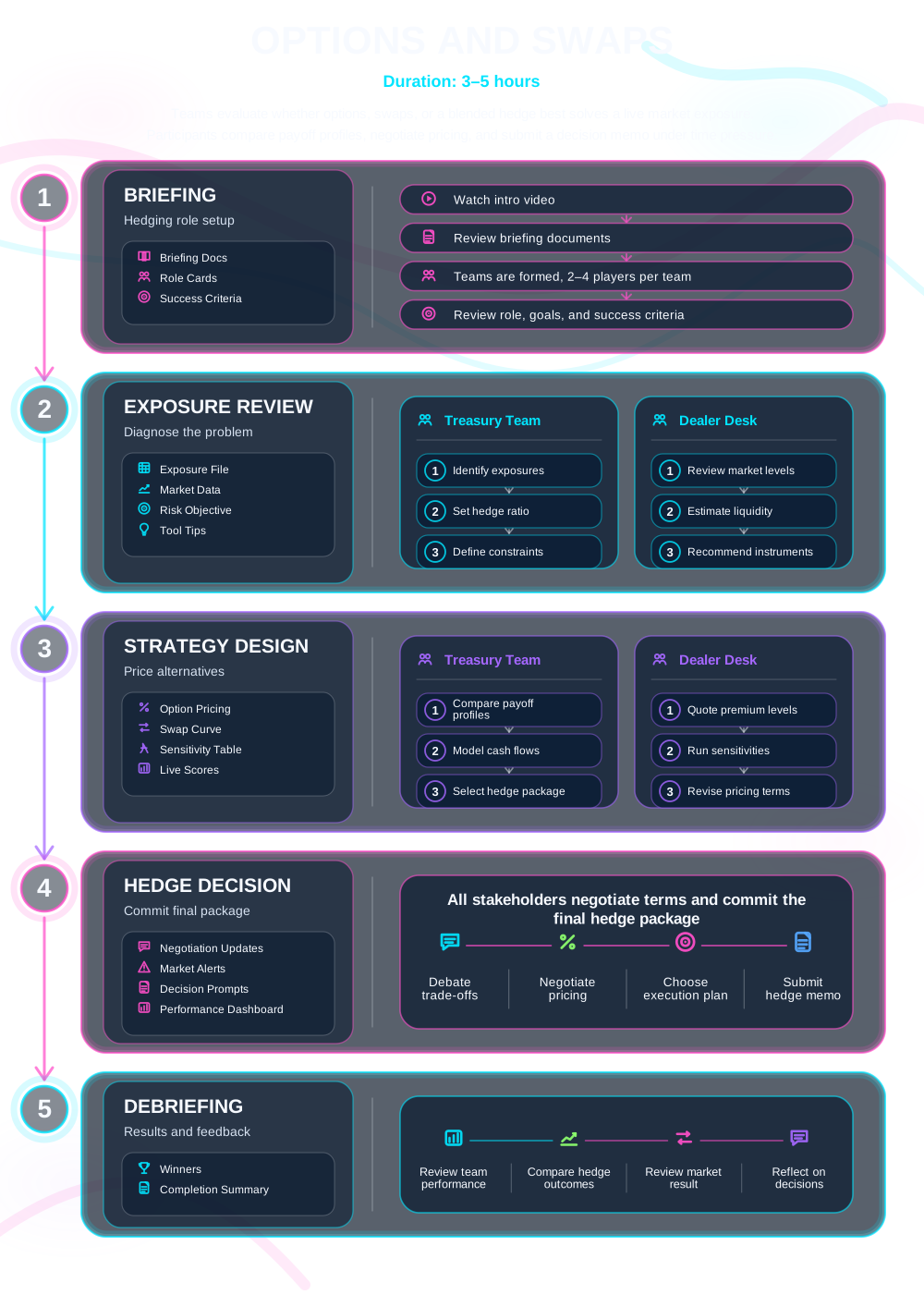
This simulation can be run individually or in teams in academic or corporate contexts. Each cycle represents a stage of getting through a pressing financial situation.
1. Launch and Training Participants are assigned roles and given initial capital. A guided tutorial introduces the trading platform.
** 2. Live Market Rounds** The simulation progresses through multiple rounds, each representing a trading day or week. Each round features new market data, client RFPs, and macro-economic events.
3. Trading and Execution Participants execute trades on a realistic platform with live quotes, order books, and P&L dashboards. For swaps, they negotiate terms via a structured chat/RFP system.
4. Hedging and Risk Management After taking positions, participants must use the hedging module to manage their exposure, buying/selling underlying assets or other derivatives to neutralize risk.
5. Analysis and Reporting At the end of each round, teams review their P&L, risk metrics, and receive feedback on their hedging efficiency and strategy profitability.
6. Debrief A comprehensive final review compares team performance, analyzes key market events, and solidifies the connection between theory and practice.
Frequently Asked Questions
Assessment
Assessment of participant performance can be tailored according to the host institution’s objectives (business school, corporate training, assessment centre). Typical assessment criteria include:
- Risk-adjusted return on capital, accuracy of derivative pricing, efficiency of Greek hedging.
- Quality and appropriateness of proposed swap structures and hedging strategies for client RFPs, profitability of negotiated deals.
- Ability to maintain positions within pre-set risk limits, adherence to simulated regulatory requirements.
- A concise report explaining the team's overall strategy, key decisions, lessons learned from losses, and an analysis of the final portfolio's risk profile.