The simulation is typically run for 3 to 4 hours, or optionally over a full day including extended debrief and reflection. It can also be adapted to shorter or modular formats.

Negotiation Tactics in Corporate Deals Simulation
Participants partake in mergers, acquisitions, divestitures, joint ventures and strategic partnerships, employing advanced negotiation tactics to drive value, manage conflicts and secure favourable terms.

Behavioral Biases in Investment Decisions Simulation Overview
In this simulation, participants are placed in a realistic corporate-deals context where multiple parties interact with each other under pressure, time constraints and competing priorities.
The objective is not simply “making a deal” but making the deal that balances financial returns, strategic fit, risk mitigation, stakeholder alignment and ethical considerations.
Drawing on best practices from negotiation theory and corporate transaction process the exercise walks participants through the entire lifecycle of a deal negotiation.

Comparable Negotiation Tactics in Corporate Deals Concepts
Participants work through realistic scenarios, which can be customized to emphasize or exclude specific topics depending on the learning goals. This modular structure allows the simulation to be tailored to any type of session. Key concepts include:
- BATNA (Best Alternative to a Negotiated Agreement)
- ZOPA (Zone of Possible Agreement)
- Anchoring and framing
- Concession strategies
- Multi-issue bargaining
- Stakeholder alignment
- Power asymmetry and dynamics
- Communication & persuasion tactics
- Deal structuring & risk mitigation
- Impasse management
- Post-deal relational thinking

Gameflow
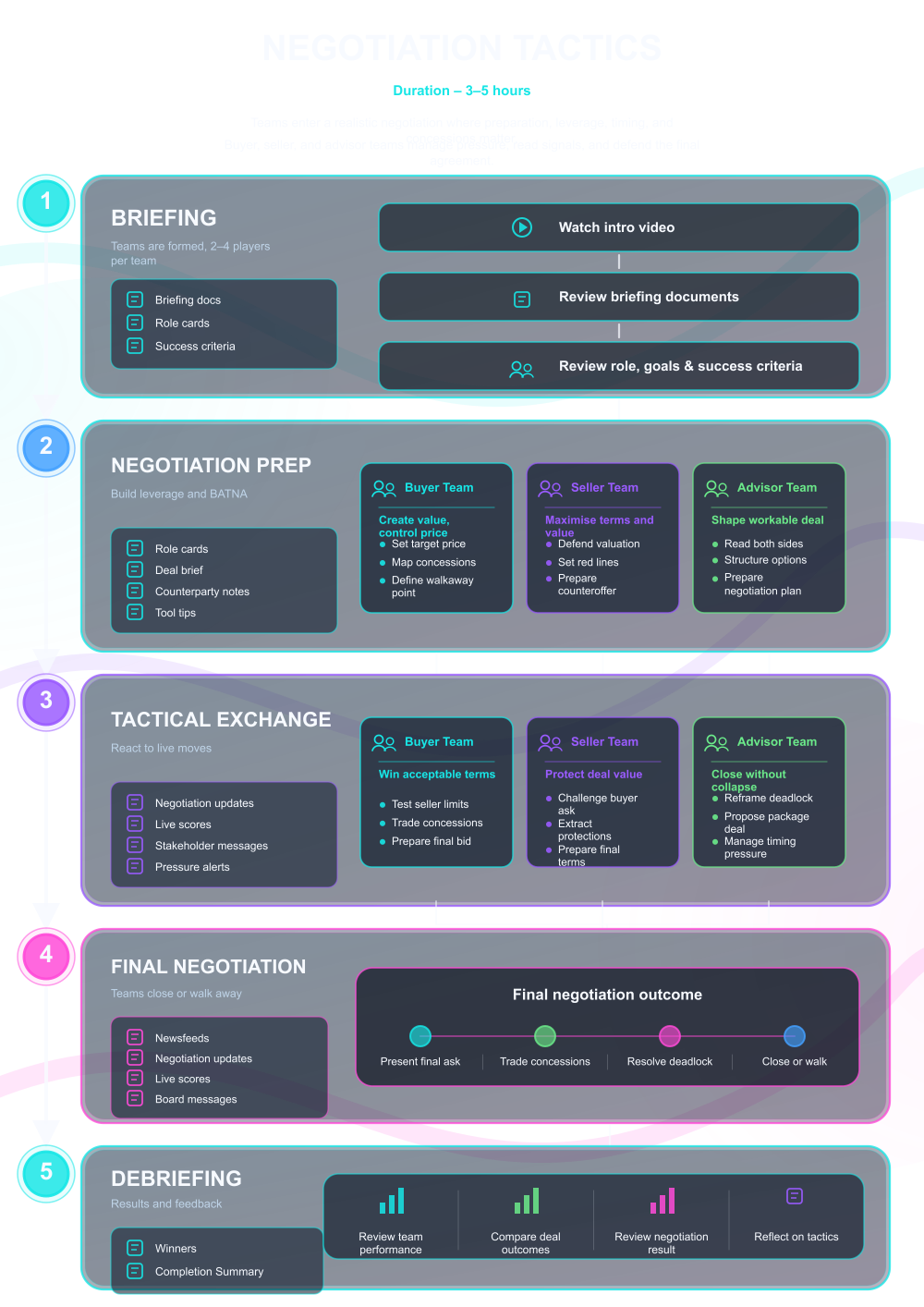

What Participants Do
In the simulation, participants will:
- Analyze the brief: company profiles, strategic rationale, valuation metrics, stakeholder interests, risk maps.
- Conduct preparatory work: analyze alternatives, set objectives, identify BATNA, map interests of counter-party.
- Engage in negotiation rounds: exchange offers, respond to counter-offers, make tactical decisions about timing, information sharing, concessions.
- Manage multiple issues simultaneously: price, payment terms, transitional support, governance, integration commitments.
- Monitor and adapt to counterpart behaviour and evolving information
- Work as a team – coordinate internal strategy, review negotiation progress, make mid-course corrections.
- Reach either an agreement, an impasse, or a temporary stalemate (and then decide next steps).
- Review outcomes, reflect on tactics, compare to peers, extract lessons learned and prepare an action plan for future negotiations.

Learning Objectives
By the end of the simulation, participants will be able to:
- Define and apply their BATNA and estimate the counterpart’s BATNA.
- Identify the ZOPA and negotiate within and around its boundaries.
- Develop and execute a negotiation strategy that balances value creation, risk allocation and stakeholder alignment.
- Use anchoring, concessions, framing and timing effectively to influence outcomes.
- Manage multi-issue bargaining: trade price, structure and governance to optimise deal terms.
- Adapt negotiation tactics in response to evolving information, counterpart moves and power asymmetries.
- Communicate clearly and persuasively, leveraging active listening, questioning and emotional intelligence.
- Interpret when to walk away, pause, restructure the negotiation or revisit underlying assumptions.
- Translate negotiation outcomes into actionable deal structure components (agreements, governance, integration planning).
- Reflect on negotiation performance, draw lessons, and embed improved behaviour in future corporate deals.
How the Negotiation Tactics in Corporate Deals Works
This simulation can be run individually or in teams in academic or corporate contexts.
1. Receive the Brief Participants receive role assignments and briefing documents ahead of time. These include strategic context, objectives, risk profile and initial information.
2. Preparation Participants formulate their negotiation strategy, define their priorities (must-haves vs nice-to-haves), estimate the counterpart’s agenda, discuss internal team alignment (if applicable).
3. Negotiation Dynamics The negotiation begins. The buyer and seller (and advisors) make their initial offers, exchange information, open with anchoring proposals, set tone and cadence.
4. Adjusting the Negotiation Strategy Participants evaluate responses and counter-offers across price, structure, terms, governance. New information may be introduced (e.g., surprising diligence result, regulatory snag) to test adaptability.
5. Finalization Teams attempt to close the deal (or decide to walk away). They formalise agreement terms, commit to next-steps or recognise an impasse.
6. Review and Reflect Feedback highlights participants’ flexibility, ability to communicate clearly, and strategic thinking under the pressure.
Frequently Asked Questions
Assessment
Assessment can be tailored to focus on analytical accuracy, ethical judgment, and communication. Participants may be evaluated on:
- Return generated, risk-adjusted return, drawdown, volatility relative to benchmark.
- Quality of asset allocation choices, alignment with mandate, responsiveness to unexpected events.
- Clarity of decision rationale, investor-update presentations or memos, team collaboration and role clarity.
- Submission of a short post-simulation reflection or memo: “which biases did I fall victim to? What will I do differently next time?”
- Participants rate their own and their teammates’ contribution, highlighting negotiation strengths and blind spots.
Assessment can combine numeric scoring, qualitative feedback, peer review, and instructor debriefing. This flexibility allows the simulation to serve both graded university courses and corporate finance training environments.