A strong understanding of accounting, corporate finance, and financial modeling is recommended. No specific software coding knowledge is required as the simulation runs on a proprietary web-based platform.

Leveraged Finance Simulation
This simulation places you at the heart of a leading investment bank, challenging you to structure and syndicate debt for a major Leveraged Buyout. Can you balance the competing demands of clients, investors, and market forces to close a profitable deal?

Leveraged Finance Simulation Overview
In the Leveraged Finance Simulation participants form teams acting as the LBO group of a premier investment bank. Participants are tasked with advising a private equity firm on the acquisition of a target company.
The core challenge is to design the optimal debt package, while comprising senior secured loans, high-yield bonds, and mezzanine debt. That package should maximize leverage while ensuring the deal is financeable and marketable to institutional investors.
Participants will navigate volatile credit markets, negotiate covenants, and manage the syndication process, and compete against other banks for the mandate.

Leveraged Finance Simulation Concepts
Participants work through realistic scenarios, which can be customized to emphasize or exclude specific topics depending on the learning goals. This modular structure allows the simulation to be tailored to any type of session. Key concepts include:
- Capital Structure Optimization
- Leveraged Buyout Modeling
- Debt Capacity Analysis
- Senior Secured Loans
- High-Yield Bonds
- Mezzanine Financing and PIK Instruments
- Debt Covenants and Credit Agreements
- Credit Ratings and Spreads
- Loan Syndication and Distribution
- Fee Structuring and Economics
- Market Timing and Investor Appetite
- Risk Assessment and Mitigation

Gameflow

What Participants Do
In the simulation, participants will:
- Assess the target company's cash flows, debt capacity, and ability to service debt.
- Determine the right mix of senior loans, high-yield bonds, and subordinated debt.
- Set appropriate interest rates and yields based on credit risk and market conditions.
- Draft and negotiate financial maintenance and incurrence covenants with the sponsor.
- Develop a book-building strategy, interact with virtual investors, and allocate the debt.
- Present your financing proposal to the private equity sponsor (simulated by the instructor).
- React to dynamic market events that impact investor demand and pricing.
- Review the final syndication results, fees earned, and the performance of the capital structure.

Learning Objectives
By the end of the simulation, participants will be able to:
- Analyze a company's financial profile to determine its optimal debt capacity for an LBO.
- Design a multi-layered leveraged finance structure that balances risk and return.
- Evaluate the impact of different debt instruments (loans, bonds, mezzanine) on a company's cost of capital and financial flexibility.
- Interpret key debt covenants and understand their role in protecting lenders.
- Execute a syndication strategy in a dynamic market, adjusting pricing and allocation to ensure a successful deal.
- Articulate the economic trade-offs in a leveraged finance transaction to both clients and internal stakeholders.
How the Leveraged Finance Simulation Works
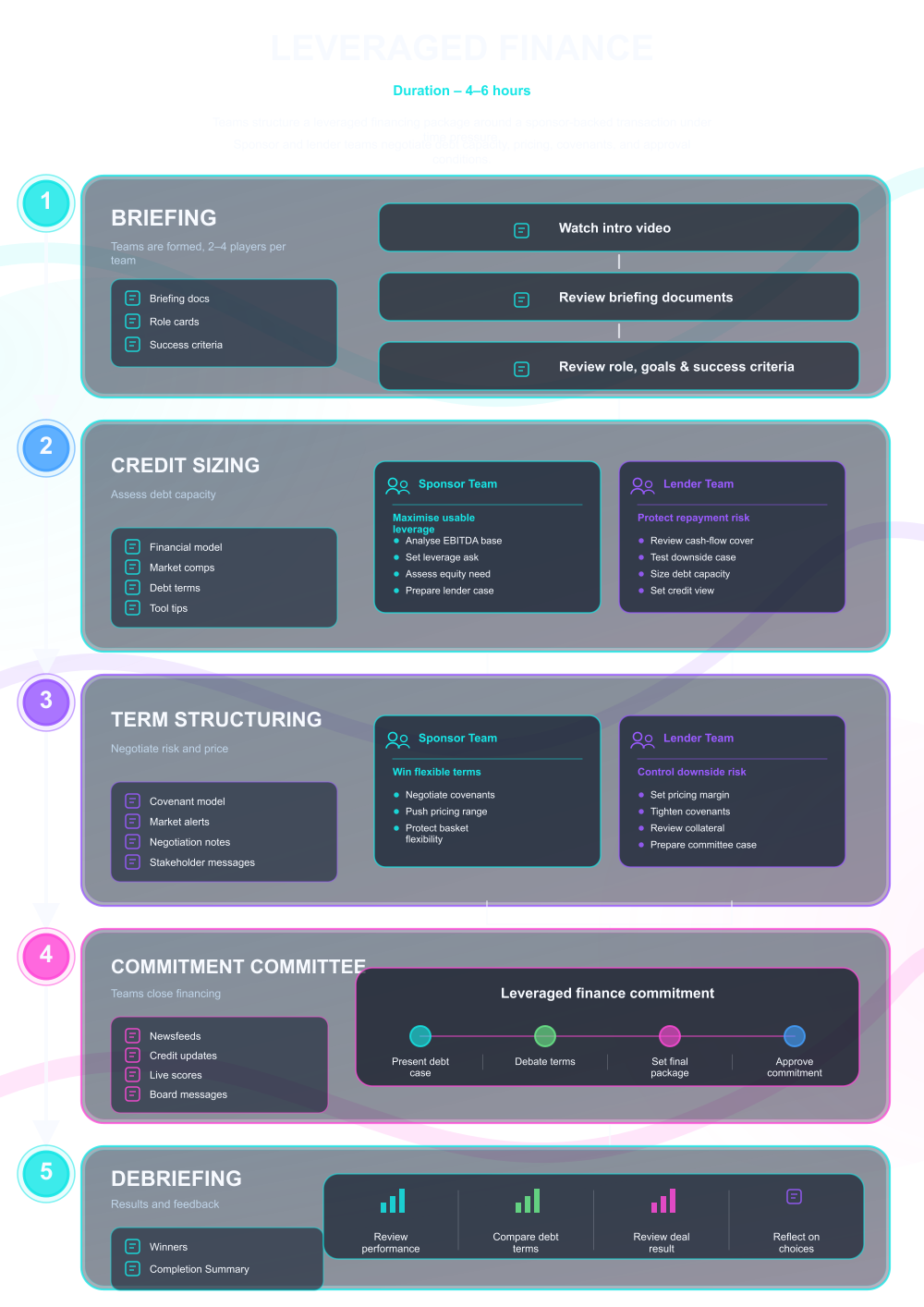
This simulation can be run individually or in teams in academic or corporate contexts. Each cycle represents a stage of getting through a pressing financial situation.
1. Team Formation and Role Assignment Participants are divided into teams, each representing a competing investment bank. Roles such as Deal Captain, Syndicate Manager, and Structuring Analyst may be assigned.
2. Deal Kick-off and Initial Analysis Teams receive a confidential information memorandum detailing the LBO target, the sponsor's equity contribution, and financial projections.
3. Structuring and Pricing Phase Using the simulation's financial engine, teams build their capital structure, select debt instruments, set initial price talk, and draft term sheets.
4. Sponsor Negotiation and Mandate Award Teams present their proposals to the private equity sponsor. The most compelling structure and terms may be awarded a "lead mandate".
5. Syndication Phase Teams enter the virtual market to sell their debt to institutional investors. They must adjust pricing based on real-time feedback and demand.
6. Market Dynamics and Closing Random economic events and competitor actions force teams to adapt their strategy. The simulation concludes when the debt is fully allocated or the deal is pulled.
Frequently Asked Questions
Assessment
Assessment of participant performance can be tailored according to the host institution’s objectives (business school, corporate training, assessment centre). Typical assessment criteria include:
- Final Syndication Results
- Capital Structure Memo
- Sponsor Presentation and Negotiation
- Simulation Performance
- Strategic Review Report
- Peer Evaluation
Assessment may incorporate peer and self-review components, facilitator scoring, and debrief discussion. Results may feed into grades, executive feedback, certification or development plans.