It’s ideal for professionals and students in operations, manufacturing, supply chain, healthcare, and business process management, as well as anyone pursuing Yellow, Green, or Black Belt training.

Lean Six Sigma Simulation
In this Lean Six Sigma Simulation, participants diagnose inefficiencies, apply DMAIC methodology, and use data-driven tools to optimize operations, reduce waste, and drive measurable business impact in a competitive, realistic environment.

Lean Six Sigma Simulation Overview
This dynamic, hands-on simulation immerses participants in the real-world challenges of continuous improvement. Teams take on the roles of Lean Six Sigma project leaders tasked with transforming a struggling operational process. Over multiple rounds, they navigate through the Define, Measure, Analyze, Improve, and Control (DMAIC) phases, making critical decisions based on real-time data, stakeholder input, and resource constraints.
The simulation introduces realistic complications such as shifting customer demands, unexpected process bottlenecks, budget limitations, and cross-functional team dynamics. Participants must prioritize projects, select appropriate Lean and Six Sigma tools, and communicate their progress and results to leadership.
Designed for corporate training, university courses, and professional certification programs, this simulation bridges theory and practice, turning abstract concepts into tangible skills. It demonstrates how disciplined process analysis, waste elimination, and statistical thinking directly link to bottom-line results like cost savings, cycle time reduction, and quality improvement.

Lean Six Sigma Simulation Concepts
Participants work through realistic scenarios, which can be customized to emphasize or exclude specific topics depending on the learning goals. This modular structure allows the simulation to be tailored to any type of session. Key concepts include:
- The DMAIC methodology
- Voice of the Customer and Critical-to-Quality metrics
- Value Stream Mapping and process flow analysis
- Root cause analysis tools (Fishbone diagrams, 5 Whys)
- Data-driven decision-making and basic statistical analysis
- Waste identification and elimination (The 8 Wastes of Lean)
- Kaizen (continuous improvement) and rapid improvement events
- Control plans and sustaining improvements
- Project selection, scoping, and chartering
- Change management and stakeholder communication

Gameflow
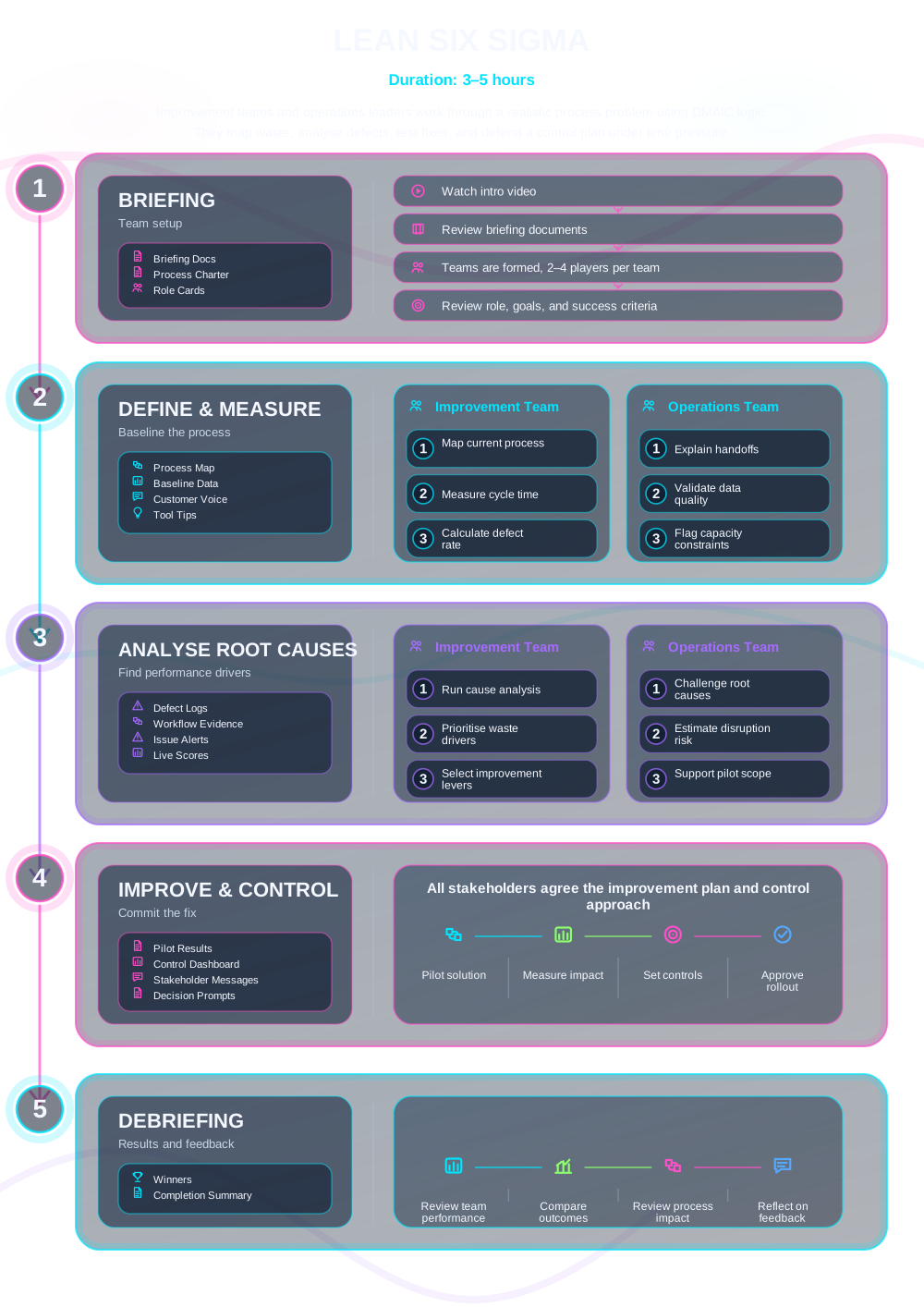

What Participants Do
In the simulation, participants will:
- Define a project charter based on business goals and customer needs.
- Measure current process performance using key metrics and data collection plans.
- Analyze data to identify root causes of defects, waste, and delay.
- Improve the process by generating, selecting, and testing potential solutions.
- Control the new process by developing monitoring plans to sustain gains.
- Manage project resources, timelines, and team dynamics.
- Present findings and justify recommendations to a simulated leadership team.
- Compete or collaborate with other teams to achieve the best operational and financial outcomes.

Learning Objectives
By the end of the simulation, participants will be able to:
- Apply a structured, hypothesis-driven approach to solve ambiguous business problems.
- Utilize key consulting frameworks to analyze competitive landscapes and internal capabilities.
- Transform data analysis into coherent, actionable business insights.
- Craft and deliver a compelling, client-focused narrative.
- Manage team workflow and dynamics under time pressure.
- Confidently present recommendations and handle pointed stakeholder questions.
- Understand the core drivers of value and impact in a consulting engagement.
How the Lean Six Sigma Simulation Works
This simulation can be run individually or in teams in academic or corporate contexts. Each cycle represents a stage of getting through a pressing financial situation.
1. Receive the Project Brief Teams are introduced to a problematic operational process (e.g., order fulfillment, manufacturing line) with baseline data.
2. Diagnose and Analyze They review process maps, collect additional data, and use tools to identify the largest sources of waste and variation.
3. Make Strategic Decisions Teams decide which improvement strategies to fund, which tools to apply, and how to manage stakeholder expectations.
4. Collaborate and Negotiate Participants may assume different roles (Black Belt, Sponsor, Process Owner) and must work together to align on priorities.
5. Implement and Monitor Teams roll out their solutions, face unplanned consequences, and adjust their control plans.
6. Review and Reflect Instant feedback shows the impact of their decisions on key metrics (cycle time, cost, defect rate). Teams refine their approach in subsequent rounds.
Frequently Asked Questions
Assessment
Assessment of participant performance can be tailored according to the host institution’s objectives (business school, corporate training, assessment centre). Typical assessment criteria include:
- Adherence to and mastery of the DMAIC methodology.
- Improvement in key process performance metrics.
- Effective application of Lean and Six Sigma tools.
- Financial impact and return on investment of their project.
- Clarity and persuasiveness of their final project presentation.
- Team collaboration and adaptability in response to challenges.