Unlike passive workshops, our simulation is experiential and hands-on. You practice skills in realistic, high-pressure finance scenarios and receive objective, data-driven feedback, not just subjective opinions.

Interpersonal Skills Simulation
Master the human element of high-stakes finance. Interpersonal skills are what defines career trajectories as deals are not won on spreadsheets alone.

Interpersonal Skills Simulation Overview
The Interpersonal Skills in Finance Simulation bridges this critical gap in traditional finance education. This immersive, online platform places participants in a series of realistic financial scenarios—from M&A negotiations and fundraising pitches to managing team conflicts and client relationships.
Participants are not just crunching numbers; they are actively communicating, persuading, and negotiating with other players. Deals are closed through persuasive negotiation, clear communication, trusted relationships, and effective collaboration.
This simulation moves beyond theory, providing a safe-to-fail environment to practice and hone the soft skills that are fundamental to success in investment banking, private equity, asset management, and corporate finance.

Interpersonal Skills Simulation Concepts
Participants work through realistic scenarios, which can be customized to emphasize or exclude specific topics depending on the learning goals. This modular structure allows the simulation to be tailored to any type of session. Key concepts include:
- Persuasive Communication
- Influence and Negotiation
- Client Relationship Management
- Cross-Cultural Communication
- Constructive Feedback
- Emotional Intelligence
- Conflict Resolution
- Team Leadership and Dynamics

Gameflow
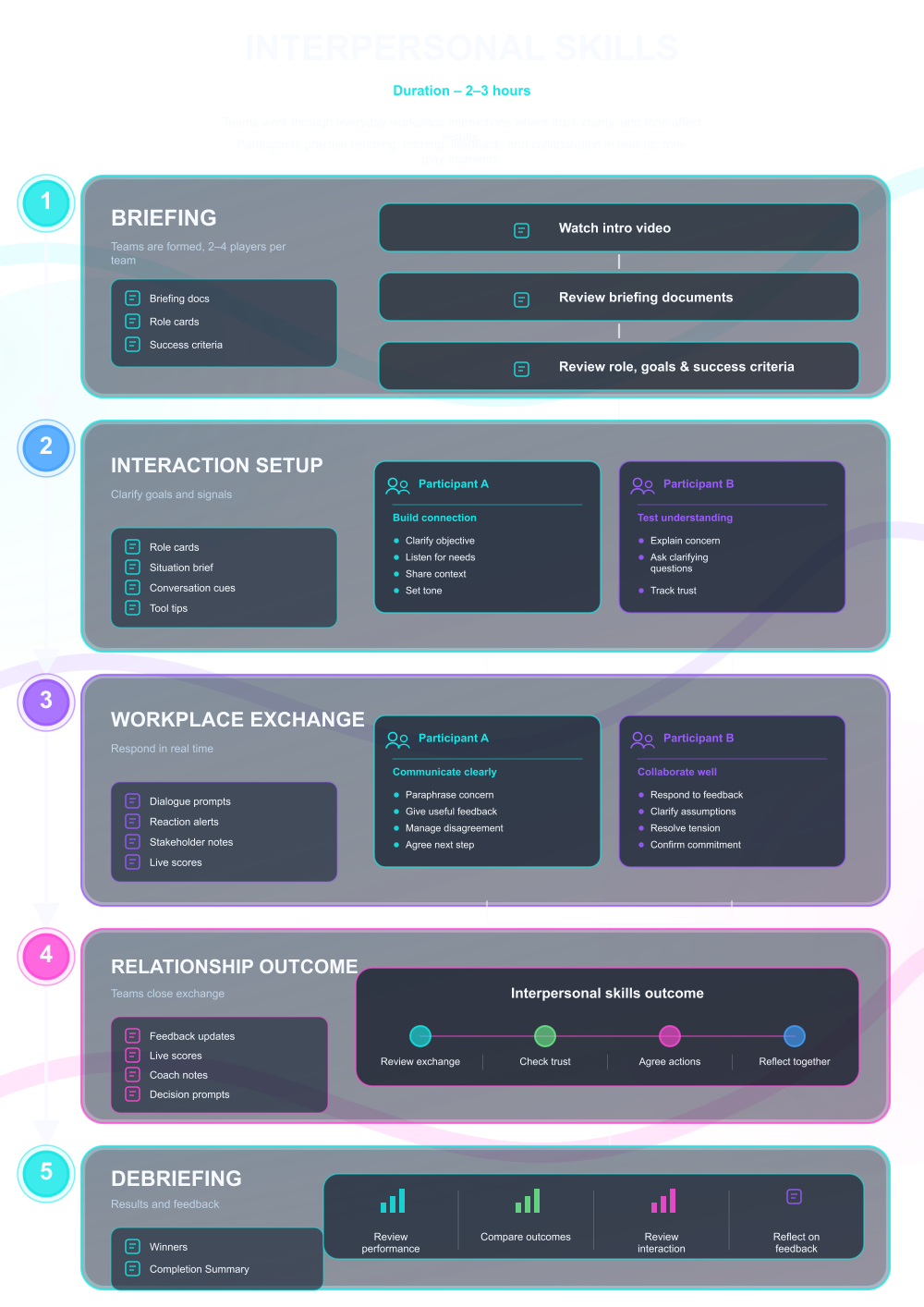

What Participants Do
In the simulation, participants will:
- Role-play complex scenarios as a banker, fund manager, or corporate executive.
- Negotiate term sheets with potential investors, balancing assertiveness with cooperation.
- Pitch a deal to a skeptical board of directors, adapting messaging on the fly.
- Manage an underperforming team member through a difficult feedback conversation.
- Navigate a cross-border M&A negotiation, being mindful of cultural and communication differences.
- Analyze detailed feedback reports on their communication style, persuasion effectiveness, and emotional perception.
- Debrief with peers and instructors to solidify learning and develop personal action plans.

Learning Objectives
By the end of the simulation, participants will be able to:
- Articulate complex financial concepts clearly and persuasively to both technical and non-technical audiences.
- Employ advanced negotiation strategies to achieve better outcomes in deals and internal discussions.
- Demonstrate heightened emotional intelligence by recognizing emotional cues and adapting communication accordingly.
- Construct and deliver constructive feedback that fosters development and maintains positive relationships.
- Navigate interpersonal conflicts and challenging conversations with confidence and professionalism.
- Build stronger, more trusted relationships with clients, colleagues, and counterparts.
How the Interpersonal Skills Simulation Works
This simulation can be run individually or in teams in academic or corporate contexts. Each cycle represents a stage of getting through a pressing financial situation.
1. Introduction and Briefing Participants are introduced to the simulation platform and receive their first scenario brief, outlining their role, objectives, and constraints.
2. Role-Play and Interaction Through the online platform, participants engage in dynamic conversations. This involves live multiplayer negotiations with other participants.
3. Real-Time Feedback During interactions, the platform provides subtle cues and metrics (trust meter, persuasion score).
4. Comprehensive Debrief After each scenario, participants receive a feedback report analyzing their performance across key interpersonal dimensions, such as clarity, empathy, assertiveness, and influence.
5. Guided Reflection Instructors lead a structured debriefing session, allowing participants to share experiences, discuss alternative approaches, and solidify key learnings.
Frequently Asked Questions
Assessment
Assessment of participant performance can be tailored according to the host institution’s objectives (business school, corporate training, assessment centre). Typical assessment criteria include:
- Performance Analytics
- Peer Feedback
- Pre- and Post-Simulation Self-Assessment
- Final Integrated Project
Assessment may incorporate peer and self-review components, facilitator scoring, and debrief discussion. Results may feed into grades, executive feedback, certification or development plans.