A basic understanding of finance concepts like time value of money, bonds, and interest rates is helpful. The simulation includes a primer to get everyone up to speed on swap fundamentals.

Interest Rate Swaps Simulation
The Interest Rate Swaps Simulation plunges participants into the world of over-the-counter derivatives. Move beyond textbook definitions and manage interest rate risk, devise trading strategies, and negotiate terms in a dynamic market environment.

Interest Rate Swaps Simulation Overview
Interest Rate Swaps are the most ubiquitous derivative contract in the world, fundamental to corporate treasury, investment management, and speculative trading. This simulation provides a hands-on, competitive platform where participants act as traders at a financial institution or fund.
Teams are tasked with managing a portfolio susceptible to interest rate fluctuations. They must analyze the yield curve, forecast rate movements, and execute swap agreements with other teams to achieve specific financial objectives: whether it's hedging existing exposure, speculating on rate changes, or arbitraging pricing discrepancies. The simulation captures the core elements of swap valuation, credit risk, and P&L calculation, transforming abstract concepts into tangible financial decisions under pressure.
Although ideal for undergraduate and graduate finance courses, executive training, and corporate finance skill workshops, the simulation is modular and scalable, allowing instructors to vary complexity.

Interest Rate Swaps Simulation Concepts
Participants work through realistic scenarios, which can be customized to emphasize or exclude specific topics depending on the learning goals. This modular structure allows the simulation to be tailored to any type of session. Key concepts include:
- Interest Rate Swap Mechanics
- Pricing and Valuation
- Yield Curve Analysis
- Risk Management
- Speculative Trading
- Counterparty Credit Risk
- Bid-Ask Spread
- P&L Attribution

Gameflow

What Participants Do
In the simulation, participants will:
- Interpret a live, simulated yield curve and economic indicators.
- Decide on a primary goal: hedging, speculation, or arbitrage.
- Calculate the theoretical fair-value swap rate for various maturities.
- Act as both price-takers and market makers, negotiating terms with other teams in a live trading session.
- Monitor an evolving book of swap positions and their associated cash flows.
- Track the real-time profit and loss of their trading book as market rates shift.
- Adapt strategies in response to simulated central bank announcements or economic data releases.

Learning Objectives
By the end of the simulation, participants will be able to:
- Explain the structure, purpose, and mechanics of a plain vanilla interest rate swap.
- Calculate the fair-value fixed rate of a swap based on the current yield curve.
- Value an existing swap contract from the perspective of both the fixed-rate payer and receiver.
- Design and execute a hedging strategy using interest rate swaps to mitigate a specific risk.
- Articulate a speculative trading view and implement it using swap contracts.
- Analyze the risk and return profile of a portfolio containing multiple swap positions.
- Evaluate the impact of yield curve shifts on the P&L of a swap book.
How the Interest Rate Swaps Simulation Works
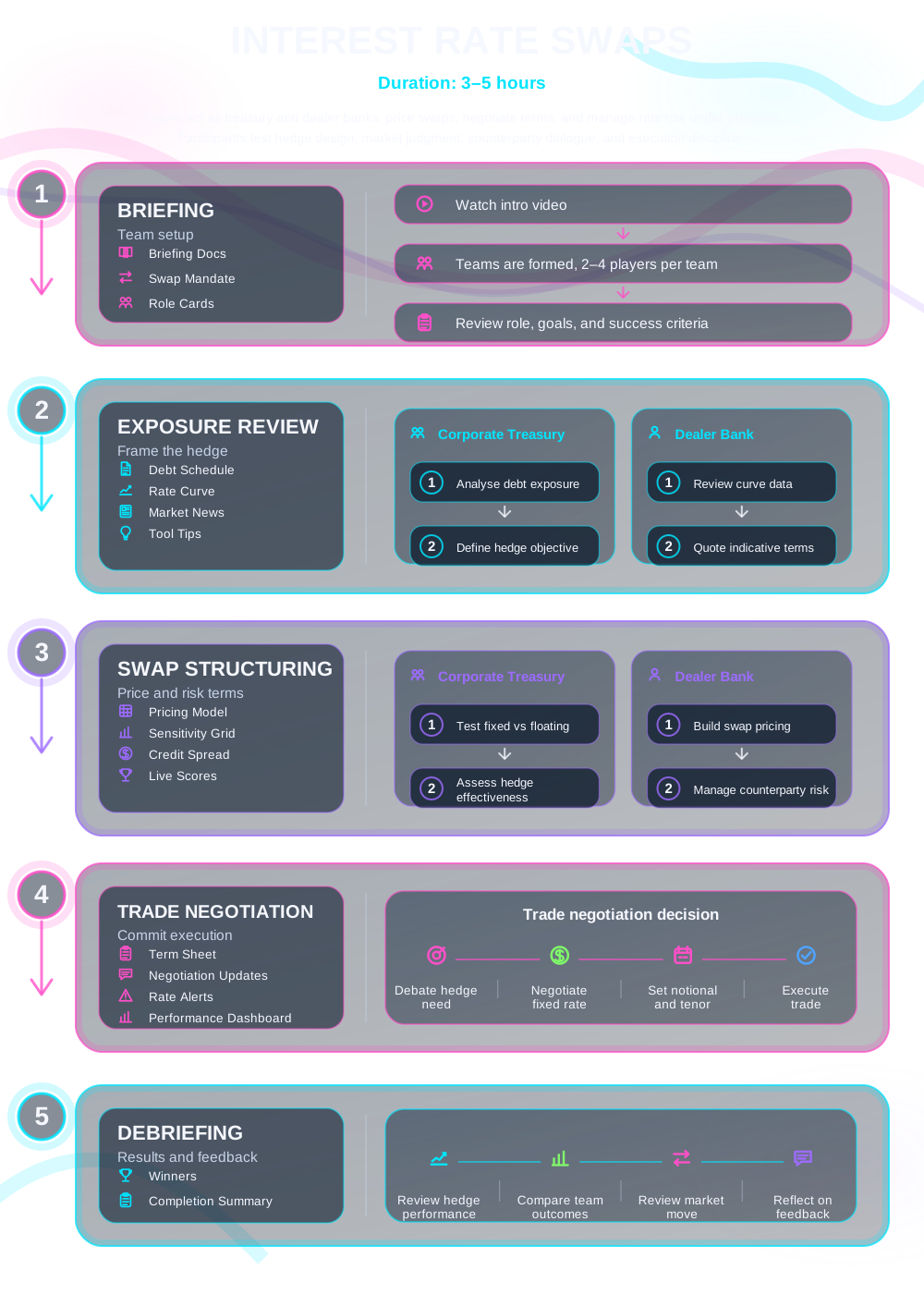
This simulation can be run individually or in teams in academic or corporate contexts. Each cycle represents a stage of getting through a pressing financial situation.
1. Team Formation and Briefing Participants are divided into teams, each representing a fund or bank treasury desk. They receive initial capital and a portfolio with inherent interest rate risk.
2. Market Data Feed A central platform displays a live, simulated yield curve that evolves throughout the session. Economic news alerts can cause sudden shifts.
3. Trading Rounds The core of the simulation. Teams analyze their risk, determine their strategy, and enter a live trading pit to negotiate and execute swaps with other teams. All trades are logged into the system.
4. Position Monitoring and Revaluation After each trading round or in real-time, the system automatically revalues all swap positions based on the new market yield curve, updating each team's P&L.
5. Debrief and Analysis The facilitator leads a debriefing session, analyzing the different strategies employed, the winners and losers, and the key lessons learned about derivatives trading and risk management.
Frequently Asked Questions
Assessment
Assessment of participant performance can be tailored according to the host institution’s objectives (business school, corporate training, assessment centre). Typical assessment criteria include:
- Final Portfolio Performance
- Team’s trading strategy
- Peer Evaluation and Contribution
- Reflection on failure and resilience
- Iterative improvement across rounds