An InsurTech simulation is an interactive business simulation that replicates the challenges of launching and running an insurance technology startup, allowing learners to practice strategy and finance in a risk-free environment.

InsurTech Simulation
The InsurTech Simulation challenges participants to disrupt a traditional insurance market by launching and scaling a data-driven, customer-centric InsurTech startup, navigating innovation, regulation, and fierce competition.

InsurTech Simulation Overview
This hands-on simulation immerses teams in the fast-evolving insurance landscape. Participants form the executive team of a new InsurTech venture. Starting with a seed funding round, they must develop a unique value proposition, choose target markets (auto, health, P&C), and deploy cutting-edge technologies like IoT, telematics, AI for underwriting, and blockchain for smart contracts.
They will set premiums, manage risk portfolios, allocate capital between marketing, R&D, and compliance, and respond to dynamic market events. All from catastrophic weather events to regulatory shifts and competitive moves. The goal is to achieve scale, profitability, and a sustainable advantage by fundamentally changing how insurance is priced, sold, and managed.
Although ideal for undergraduate and graduate finance courses, executive training, and corporate finance skill workshops, the simulation is modular and scalable, allowing instructors to vary complexity.

InsurTech Simulation Concepts
Participants work through realistic scenarios, which can be customized to emphasize or exclude specific topics depending on the learning goals. This modular structure allows the simulation to be tailored to any type of session. Key concepts include:
- InsurTech Business Models
- Data-Driven Underwriting
- Dynamic Pricing and Premium Setting
- Regulatory and Capital Compliance
- Customer Acquisition and Lifetime Value
- Risk Portfolio Management
- Investment of Float
- Disruption Dynamics

Gameflow
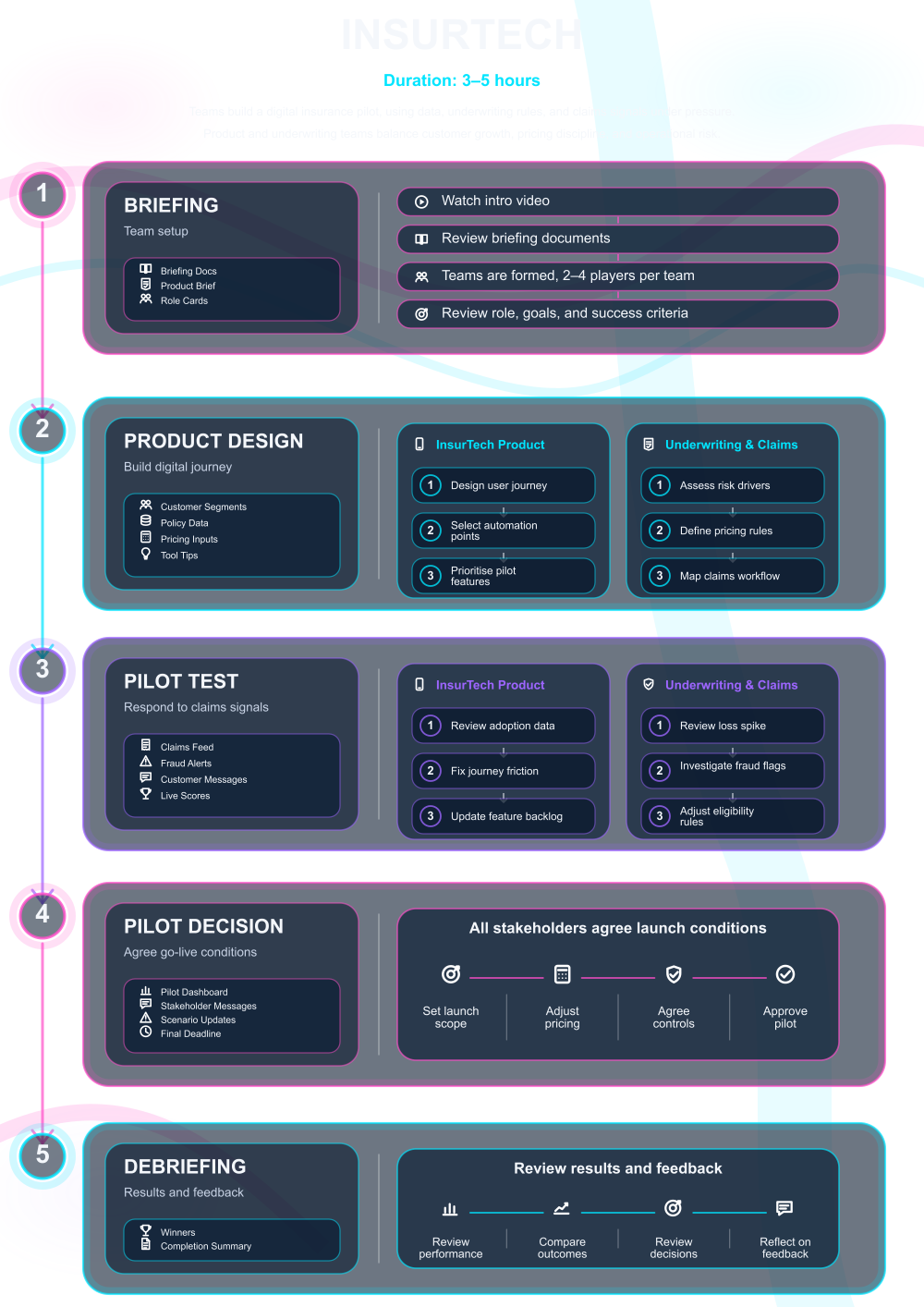

What Participants Do
In the simulation, participants will:
- Pitch to secure initial venture capital funding.
- Define a disruptive InsurTech product and target customer segment.
- Make quarterly strategic decisions on pricing, technology investment, and market expansion.
- Analyze real-time performance dashboards (loss ratios, combined ratios, customer growth).
- Negotiate reinsurance treaties or tech partnerships.
- Respond to randomized market "shocks" and competitor actions.
- Present a final strategy to "investors" showcasing growth and financial sustainability.

Learning Objectives
By the end of the simulation, participants will be able to:
- Understand the core drivers of profitability and disruption in the insurance sector.
- Develop the ability to build and price insurance products using modern data sources.
- Experience the critical balance between growth, risk management, and regulatory compliance.
- Enhance strategic decision-making and financial analysis skills in a dynamic, competitive environment.
- Foster teamwork and communication through collaborative executive-level planning.
How the InsurTech Simulation Works
This simulation can be run individually or in teams in academic or corporate contexts. Each cycle represents a stage of getting through a pressing financial situation.
1. Strategic Decision-Making Each quarter, teams analyze their comprehensive dashboard, featuring financial statements (P&L, balance sheet), key metrics (loss ratio, combined ratio, customer acquisition cost), market share reports, and a live news feed with regulatory updates and competitor actions.
** 2. Input and Execution** Based on their analysis, teams make simultaneous, interdependent strategic choices for the coming quarter. Setting premiums and coverage terms for specific product lines, allocating capital across marketing, technology R&D, and compliance, purchasing reinsurance or forming tech partnerships, entering new geographic or demographic markets, responding to specific market events.
3. Real-Time Engine Processing Once all decisions are locked in, simulation engine processes the inputs. It models complex market interactions, competitive dynamics, regulatory impacts, and randomized risk events (natural catastrophes, cyber-attacks) to calculate new market outcomes.
4. Results and Feedback Teams instantly receive updated financial reports and market standings. They see the direct consequences of their choices on profitability, growth, and risk exposure, enabling rapid learning and iterative strategy refinement.
5. Progression and Final Review This cycle repeats for 6 to 8 simulated quarters. The simulation culminates in a final review where teams present their strategy and performance to a panel of "investors”, defending their decisions based on the financial and market results achieved.
Frequently Asked Questions
Assessment
Assessment of participant performance can be tailored according to the host institution’s objectives (business school, corporate training, assessment centre). Typical assessment criteria include:
- Clarity, coherence, and persuasiveness of the valuation memo and presentation
- Ability to adapt and revise valuations in light of news shocks or changes
- Collaboration, division of work, integration of roles, and final coherence
- Rating by peers and self-reflection on approach and decisions