It's designed for anyone seeking to understand long-term asset financing, including students targeting careers in project finance, infrastructure funds, investment banking, development finance, corporate finance, and public policy executives involved in PPPs.

Infrastructure Finance Simulation
In this Infrastructure Finance Simulation, participants structure, finance, and manage a long-term infrastructure project, balancing complex risks, stakeholder interests, and financial viability in a dynamic environment.

Infrastructure Finance Simulation Overview
Participants navigate the end-to-end process of bringing a major infrastructure asset, such as a renewable energy plant, toll road, or utility. From conception to financial close and into operation. Each round introduces critical real-world challenges: shifting regulatory landscapes, construction delays, fluctuating interest rates, community opposition, and evolving environmental, social, and governance standards.
Teams must collaborate and compete to secure funding, negotiate contracts like Public-Private Partnerships, optimize capital structure, and manage operational risks to ensure the project delivers long-term value for investors and the public.
This simulation is ideal for MBA programs, executive education in project finance, corporate training for developers and banks, and workshops for public-sector officials, providing an immersive experience in the unique crossroads of finance, public policy, and engineering.

Infrastructure Finance Simulation Concepts
Participants work through realistic scenarios, which can be customized to emphasize or exclude specific topics depending on the learning goals. This modular structure allows the simulation to be tailored to any type of session. Key concepts include:
- Project finance structures and Special Purpose Vehicles
- Public-Private Partnership models and concession agreements
- Financial modeling for infrastructure: construction vs. operational phases
- Risk identification, allocation, and mitigation
- Capital structuring with debt, equity, and mezzanine financing
- Debt sizing, covenants, and loan life coverage ratios
- Tariff/Revenue structuring and government support mechanisms
- ESG integration and sustainable finance principles
- Lifecycle management and refinancing opportunities
- Stakeholder management and community engagement

Gameflow
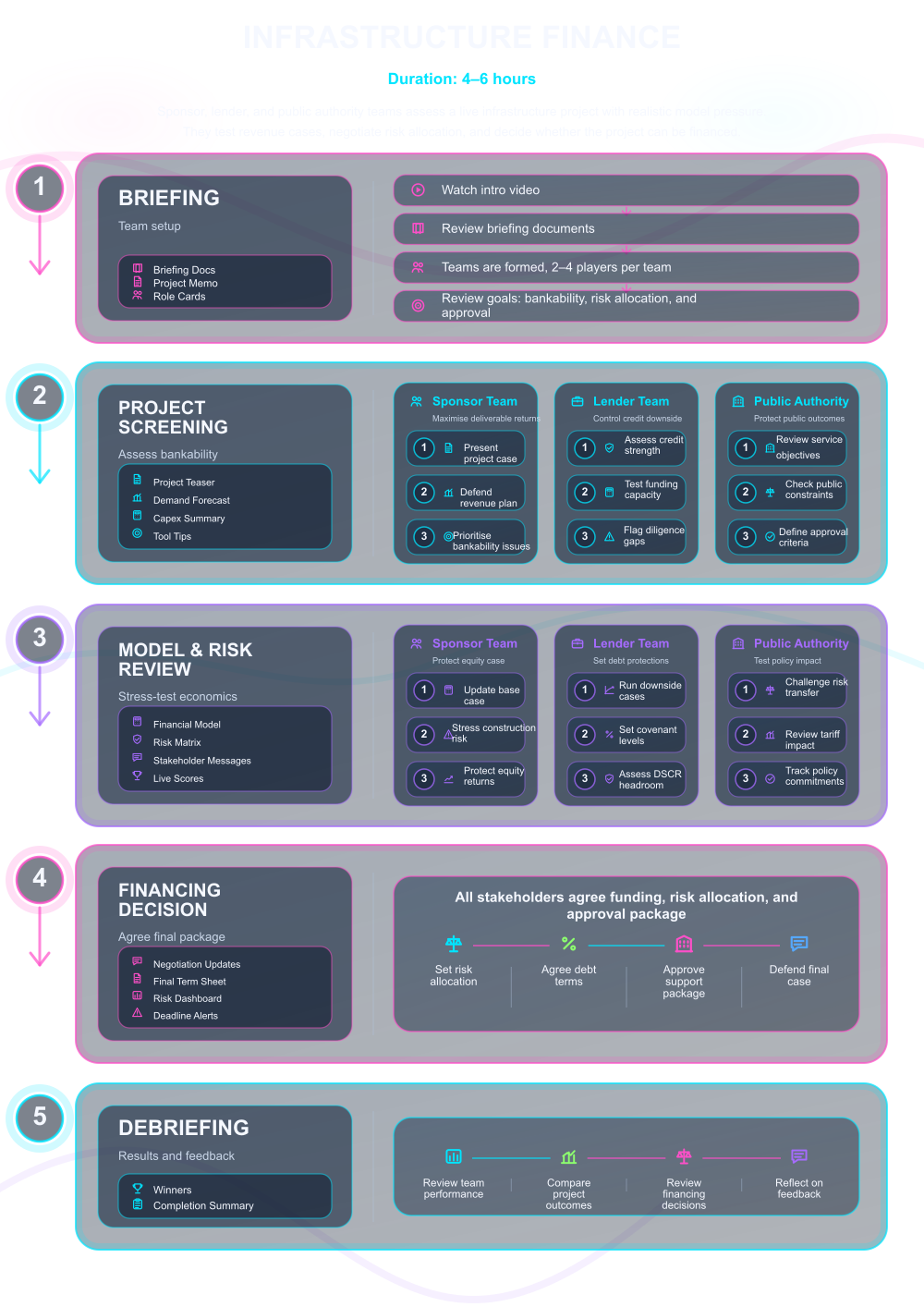

What Participants Do
In the simulation, participants will:
- Develop a bankable proposal and financial model for a new infrastructure asset.
- Negotiate terms with equity investors, commercial banks, and development finance institutions.
- Structure contracts to optimally allocate risks between public and private entities.
- React to simulated "risk events" during construction and operation, adjusting strategy accordingly.
- Optimize the capital stack to minimize the cost of funding while maintaining flexibility.
- Present investment cases and project updates to a simulated board or oversight committee.
- Analyze refinancing options during the operational phase to enhance returns.
- Balance financial returns with ESG commitments and public interest requirements.

Learning Objectives
By the end of the simulation, participants will be able to:
- Understand the unique principles and structures of project finance versus corporate finance.
- Develop and stress-test a financial model for a capital-intensive, long-duration project.
- Evaluate and allocate key project risks to the most appropriate party.
- Design a capital structure that aligns with project cash flows and risk profile.
- Apply core concepts of PPPs and concession agreements.
- Integrate ESG criteria into project planning, financing, and reporting.
- Negotiate effectively from the perspectives of different stakeholders (sponsor, lender, public entity).
- Make strategic decisions to ensure project viability through volatile economic cycles.
- Communicate complex financial and technical proposals clearly to diverse audiences.
How the Infrastructure Finance Simulation Works
This simulation can be run individually or in teams in academic or corporate contexts. Each cycle represents a stage of getting through a pressing financial situation.
1. Project Initiation Teams receive the project brief, including technical specs, market studies, and preliminary feasibility reports.
** 2. Analysis and Structuring** Participants analyze data, build their base-case financial model, and propose an initial financing and contractual structure.
3. Stakeholder Negotiation Teams engage in negotiations (as sponsors, lenders, or government agencies) to agree on terms, pricing, and risk-sharing.
4. Decision Submission Teams submit their comprehensive financing plan and key contracts into the simulator.
5. Scenario Roll-Out The simulator introduces new economic data, regulatory changes, or project-specific risk events.
6. Strategic Adjustment Teams must adapt their plans, manage crises, and potentially renegotiate terms based on the new scenario.
7. Communication and Reporting Participants prepare and deliver a concise update for investors or public stakeholders, justifying their decisions.
Frequently Asked Questions
Assessment
Assessment of participant performance can be tailored according to the host institution’s objectives (business school, corporate training, assessment centre). Typical assessment criteria include:
- Resilience of the financial model, achievement of target returns (Equity IRR), and debt service coverage ratios under stress.
- Effectiveness in identifying, allocating, and mitigating key project risks.
- Innovation and completeness of the financing and contractual structure.
- Ability to secure favorable terms while maintaining a workable partnership.
- Clarity and persuasiveness in written and oral updates to simulated stakeholders.