It's ideal for students and professionals in information systems, business technology, and management, or anyone seeking to understand the strategic role of IT in business.

Information Systems Simulation
In this Information Systems Simulation, participants become IT leaders, manage budgets, evaluate emerging tech, mitigate cybersecurity risks, and drive digital transformation, all while navigating stakeholder pressures and competitive market forces.

Information Systems Simulation Overview
Participants step into the role of Chief Information Officers or IT Directors within a dynamic, simulated business environment. Each round introduces new challenges—technology disruptions, budget constraints, security breaches, or shifts in organizational priorities.
They must analyze business needs, design scalable IT architectures, prioritize projects, allocate resources, and communicate the value of IT investments to executive stakeholders. The simulation emphasizes strategic decision-making under constraints, blending technical knowledge with business acumen and change management.
This simulation is ideal for university programs in information systems, business analytics, and management, as well as corporate training for IT professionals and aspiring leaders. It brings IT governance and digital strategy to life, demonstrating how technology choices directly impact operational efficiency, innovation, and competitive advantage.

Information Systems Simulation Concepts
Participants work through realistic scenarios, which can be customized to emphasize or exclude specific topics depending on the learning goals. This modular structure allows the simulation to be tailored to any type of session. Key concepts include:
- IT strategy alignment with business goals
- IT budgeting, cost-benefit analysis, and ROI justification
- Systems analysis and design methodologies
- Cloud migration strategies and vendor management
- Cybersecurity risk assessment and incident response
- Data governance, analytics, and business intelligence
- Enterprise architecture planning
- Agile project management and IT service delivery
- Digital transformation and change management
- Emerging technology evaluation

Gameflow
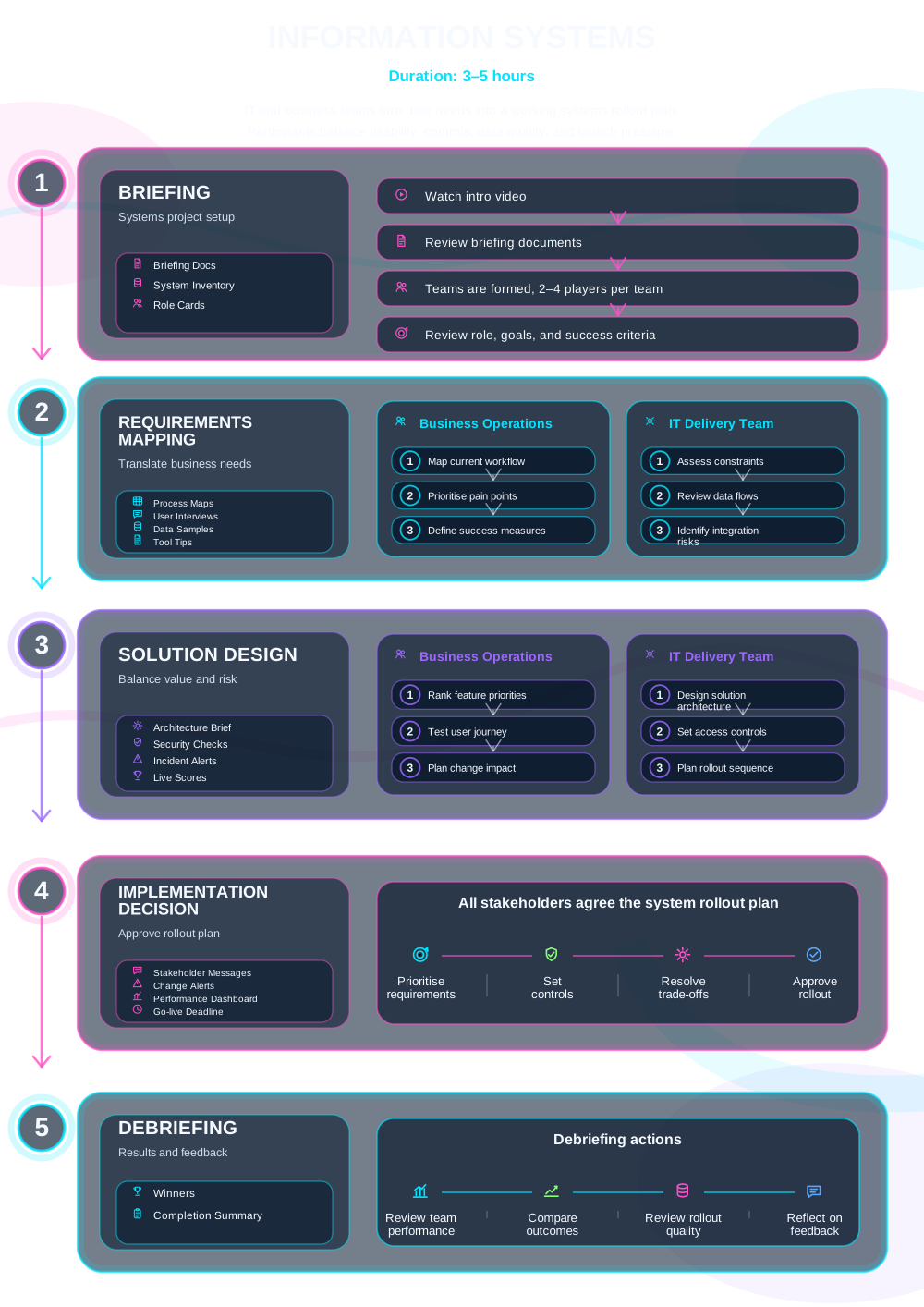

What Participants Do
In the simulation, participants will:
- Analyze business requirements and design appropriate IT solutions
- Allocate limited budgets across infrastructure, security, and innovation projects
- Assess and respond to IT risks, including cyber threats and system failures
- Negotiate with vendors and manage stakeholder expectations
- Present IT strategy and project justifications to a simulated executive board
- Adapt plans in response to new technologies, regulations, or market changes

Learning Objectives
By the end of the simulation, participants will be able to:
- Translate business needs into a coherent and actionable IT strategy
- Evaluate and prioritize IT investments based on strategic value and risk
- Design resilient and scalable information system architectures
- Apply frameworks for cybersecurity risk management and data governance
- Communicate the business value of IT initiatives to non-technical stakeholders
- Lead digital transformation efforts while managing organizational change
- Make confident, evidence-based decisions under pressure and uncertainty
How the Information Systems Simulation Works
This simulation can be run individually or in teams in academic or corporate contexts. Each cycle represents a stage of getting through a pressing financial situation.
1. Receive a Business Scenario Participants are introduced to a company facing specific IT challenges and opportunities.
** 2. Analyze the Situation** They review current systems, budget data, risk reports, and stakeholder requests.
**3. Make Strategic Decisions Participants allocate resources, select projects, approve architectures, and set risk tolerance levels.
4. Collaborate and Negotiate Teams may role-play as IT, finance, and business units to align priorities.
5. Communicate Outcomes Participants deliver executive briefings, write project proposals, or present board updates.
6. Review and Reflect Instant feedback highlights the impact of their choices on costs, security, system performance, and business outcomes. Strategies evolve across multiple rounds.
Frequently Asked Questions
Assessment
Assessment of participant performance can be tailored according to the host institution’s objectives (business school, corporate training, assessment centre). Typical assessment criteria include:
- Strategic alignment and business value delivered by IT portfolio
- Effectiveness of risk management and cybersecurity posture
- Budget efficiency and cost-benefit rationale for investments
- Clarity, persuasiveness, and professionalism in stakeholder communication
- Collaboration and adaptability in response to simulated disruptions