It's designed for students and professionals interested in derivatives, trading, risk management, and global finance.

Futures Trading Simulation
In this Futures Trading Simulation, participants step into the role of derivatives traders, executing trades, managing risk, and navigating volatile markets to hedge exposures or capture profits using futures contracts.

Futures Trading Simulation Overview
Participants immerse themselves in the fast-paced world of derivatives trading, acting as professional traders for an institutional desk. Each trading round presents new market dynamics, shifting commodity prices, interest rate movements, currency fluctuations, and equity index volatility.
They analyze market data, develop trading strategies, execute buy and sell orders for various futures contracts, and actively manage their positions. The simulation emphasizes real-time decision-making under pressure, requiring participants to balance profit objectives with strict risk limits. It covers the complete trade lifecycle from order entry to final settlement, incorporating margin calls, daily mark-to-market, and the impact of leverage.
This simulation is ideal for university finance programs, trading academies, and corporate training for banks and investment firms. It transforms abstract derivatives theory into tangible experience, demonstrating how price discovery, speculation, and hedging function in global futures markets.

Futures Trading Simulation Concepts
Participants work through realistic scenarios, which can be customized to emphasize or exclude specific topics depending on the learning goals. This modular structure allows the simulation to be tailored to any type of session. Key concepts include:
- Mechanics of futures contracts and exchanges
- Margin requirements and leverage
- Hedging strategies for commodities, currencies, and interest rates
- Speculative trading and spread trading
- Basis risk and convergence
- Mark-to-market and daily settlement
- Order types (market, limit, stop) and execution
- The role of clearinghouses and counterparty risk
- Impact of macroeconomic announcements on futures prices
- Building and managing a futures portfolio

Gameflow
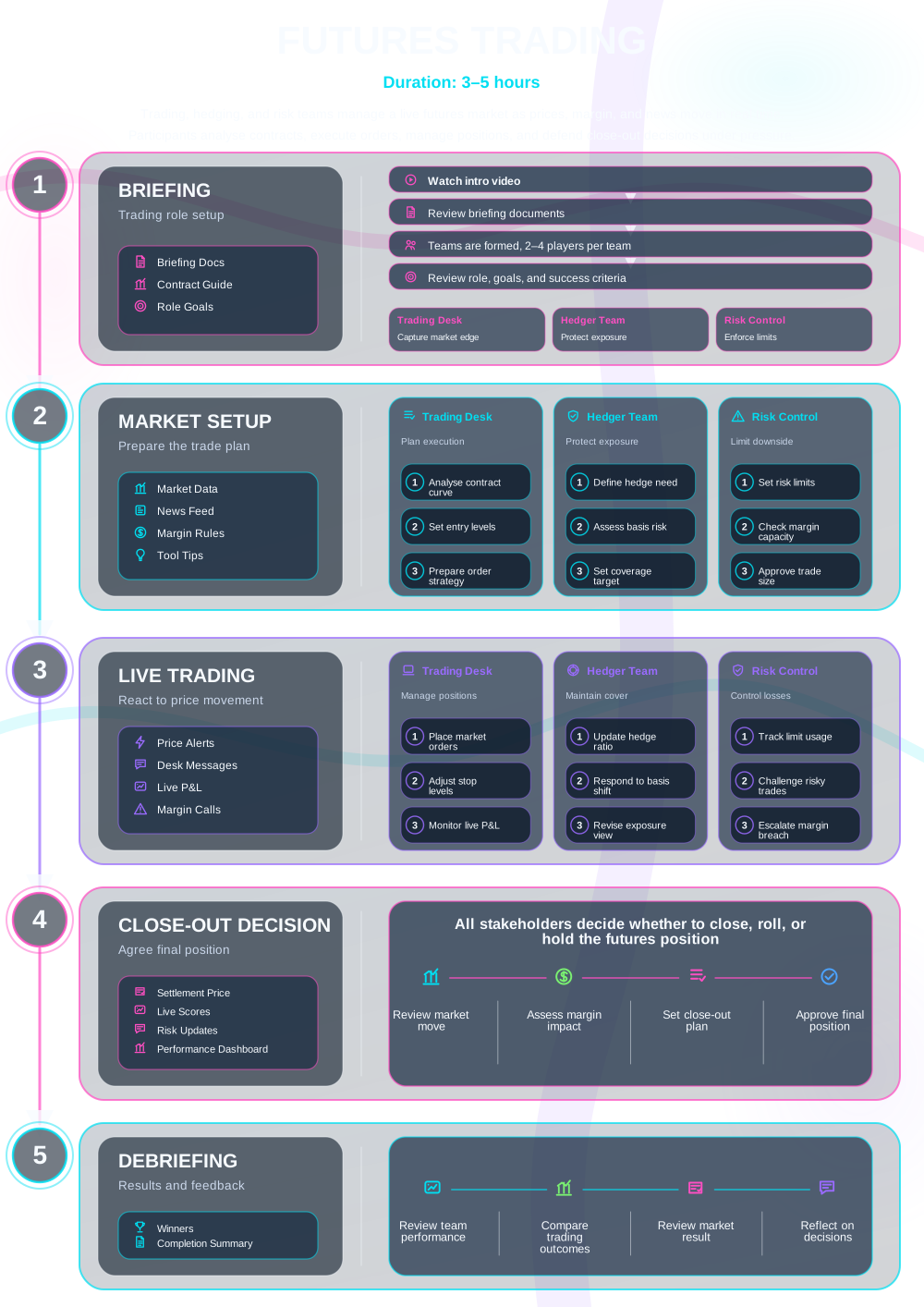

What Participants Do
In the simulation, participants will:
- Analyze real-time market data and economic indicators to forecast price movements.
- Formulate and execute trading strategies for different futures products.
- Monitor and manage margin requirements to avoid liquidation.
- Adjust or close positions in response to market news and price shocks.
- Calculate profit, loss, and risk exposure for their portfolio.
- Reflect on trading performance and strategy effectiveness.

Learning Objectives
By the end of the simulation, participants will be able to:
- Understand the structure, pricing, and mechanics of futures contracts.
- Execute hedging strategies to mitigate specific financial risks.
- Apply leverage responsibly while managing associated risks.
- React decisively to market volatility and news events.
- Calculate margin requirements and portfolio mark-to-market.
- Analyze the relationship between spot and futures prices (basis).
- Develop confidence in making trading decisions under time pressure.
- Evaluate the performance of different futures trading strategies.
How the Futures Trading Simulation Works
This simulation can be run individually or in teams in academic or corporate contexts. Each cycle represents a stage of getting through a pressing financial situation.
1. Receive Market Brief Participants review the opening market environment, including prices, news, and client hedging needs.
** 2. Analyze and Plan** They assess data, identify opportunities, and formulate a trading plan with clear risk limits.
3. Execute Trades Participants enter orders for various futures contracts, managing a live portfolio.
4. Monitor and Manage They track position performance, respond to margin calls, and adjust strategies as new market data arrives.
5. Settle and Report The round concludes with trade settlement, calculation of final P&L, and preparation of a brief performance report.
6. Review and Reflect Facilitated debriefs analyze decisions, risk management, and overall strategy effectiveness.
Frequently Asked Questions
Assessment
Assessment of participant performance can be tailored according to the host institution’s objectives (business school, corporate training, assessment centre). Typical assessment criteria include:
- Trading profitability and risk-adjusted returns
- Effectiveness and consistency of applied trading or hedging strategies
- Risk management and adherence to pre-set position or loss limits
- Ability to articulate and justify trading decisions in a brief report
- Responsiveness and adaptability to changing market conditions