It's ideal for students and professionals interested in investment banking, equity capital markets, corporate finance, and financial advisory roles.

Floatation Simulation
Take on the role of investment bankers to guide a company through the high-stakes journey of its Initial Public Offering (IPO), managing valuation, pricing, and market dynamics to achieve a successful market debut.

Floatation Simulation Overview
In this Floatation Simulation, participants step into the shoes of investment bankers tasked with executing a company's first public listing. The simulation captures the intense, multi-stage reality of an IPO: from pre-launch preparations and investor roadshows to final pricing and the first day of trading.
Teams are presented with a detailed company profile, market conditions, and financials. Each decision round introduces new challenges: volatile market sentiment, shifting investor demand, competitor actions, and regulatory considerations. Participants must analyze data, set an initial price range, strategize their roadshow pitch, and make the critical final pricing decision to balance issuer proceeds with after-market performance.
This simulation is designed for university finance programs, MBA courses, and executive training workshops. It transforms abstract IPO concepts into a tangible, competitive experience, demonstrating how financial theory, investor psychology, and strategic negotiation interact in the real-world capital markets.

Floatation Simulation Concepts
Participants work through realistic scenarios, which can be customized to emphasize or exclude specific topics depending on the learning goals. This modular structure allows the simulation to be tailored to any type of session. Key concepts include:
- IPO process and key stakeholders (issuer, investment banks, regulators, investors)
- Valuation methodologies for public listings (DCF, comparable company analysis, precedent transactions)
- Determining the initial price range and offer size
- The role and mechanics of the investor roadshow
- Book-building process and gauging investor demand
- Final offer pricing strategies and allocation
- Underwriting risk, fees, and the underwriting syndicate
- Stabilization activities (greenshoe option) in the aftermarket
- Analyzing first-day trading performance (IPO pop vs. underpricing)
- Post-IPO responsibilities and ongoing investor relations

Gameflow
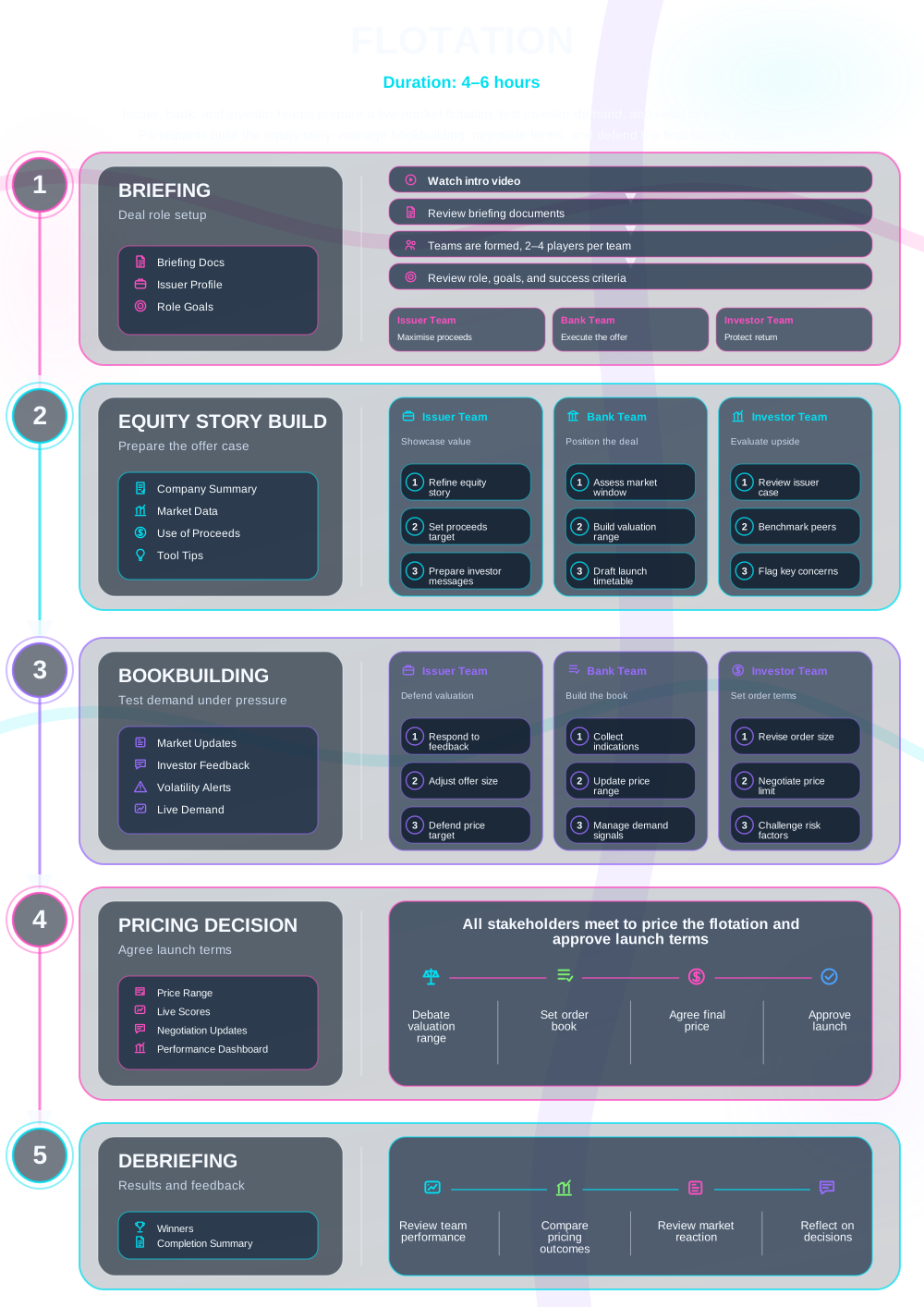

What Participants Do
In the simulation, participants will:
- Analyze the issuing company's financials and growth prospects.
- Value the company using multiple methodologies to establish a defensible price range.
- Craft a compelling equity story for the investor roadshow.
- Interpret feedback and demand indicators from the book-building process.
- Negotiate final offer terms with the company's management.
- Decide on the final offer price, balancing issuer goals with market appetite.
- Manage aftermarket stabilization if required.
- Present and defend their IPO strategy and outcomes.

Learning Objectives
By the end of the simulation, participants will be able to:
- Map out the end-to-end IPO process and the roles within it.
- Apply core valuation techniques specifically for a public listing.
- Articulate the factors that influence IPO pricing and initial returns.
- Understand the strategic purpose and execution of investor roadshows and book-building.
- Make informed pricing decisions under conditions of uncertainty and information asymmetry.
- Evaluate the trade-offs between underwriter, issuer, and investor interests.
- Communicate valuation and pricing rationale clearly to clients and stakeholders.
- Build confidence in managing complex capital market transactions.
How the Floatation Simulation Works
This simulation can be run individually or in teams in academic or corporate contexts. Each cycle represents a stage of getting through a pressing financial situation.
1. Receive the Mandate Teams are briefed on the client company, its industry, financials, and the current market environment.
** 2. Analysis and Valuation** Participants conduct financial analysis and use simulation tools to determine a preliminary valuation and price range.
3. Roadshow Strategy Teams develop their key investment thesis and messaging for potential investors.
4. Market Feedback and Pricing Participants review simulated investor demand feedback and must adjust their strategy, leading to the critical final pricing decision.
5. Deal Execution and Aftermarket The simulation reveals first-day trading results. Teams analyze their performance based on issuer proceeds, investor returns, and market share.
6. Review and Debrief Instructors lead a discussion linking team decisions to real-world IPO outcomes, reinforcing key learning objectives.
Frequently Asked Questions
Assessment
Assessment of participant performance can be tailored according to the host institution’s objectives (business school, corporate training, assessment centre). Typical assessment criteria include:
- Accuracy and justification of their company valuation.
- Financial outcomes of the IPO.
- Strategic adaptation to market feedback and new information.
- Quality and persuasiveness of their equity story and final recommendations.
- Peer and self-assessment insights on teamwork and contribution.