It's ideal for participants interested in leveraged finance, investment banking, private credit, private equity, and corporate development.

First or Second Lien Debt Simulation
Grasp the critical dynamics of layered debt structures by negotiating a complex capital raise from both the borrower and competing lender perspectives.

First or Second Lien Debt Simulation Overview
In this advanced financing simulation, participants dive into the nuanced world of leveraged finance, acting as either a corporate borrower or a lender team. The scenario involves a company seeking to refinance existing debt and fund an acquisition by securing a multi-tranche financing package, featuring both first lien and second lien debt.
Unlike simpler debt instruments, this simulation forces participants to navigate the intricate trade-offs between cost, covenant protection, and subordination risk. Teams must analyze the company's financials, market conditions, and competitive landscape to structure, price, and negotiate terms that meet their strategic objectives whether maximizing safety as a first lien lender, chasing yield as a second lien provider, or optimizing the capital stack as the borrower.
Although ideal for undergraduate and graduate finance courses, executive training, and corporate finance skill workshops, the simulation is modular and scalable, allowing instructors to vary complexity.

First or Second Lien Debt Simulation Concepts
Participants work through realistic scenarios, which can be customized to emphasize or exclude specific topics depending on the learning goals. This modular structure allows the simulation to be tailored to any type of session. Key concepts include:
- Capital stack hierarchy and subordination
- Structural versus contractual subordination
- First lien vs. second lien: security, priority, and risk-return profiles
- Debt covenants: maintenance vs. incurrence, and their negotiation
- Pricing debt tranches based on risk (Interest Rate, Original Issue Discount)
- Loan-to-Value and Debt-to-EBITDA ratios in structuring
- Intercreditor agreements and their critical terms
- Refinancing dynamics and exit strategies
- Impact of market conditions on debt appetite and terms
- Borrower-lender alignment and conflict in leveraged transactions

Gameflow
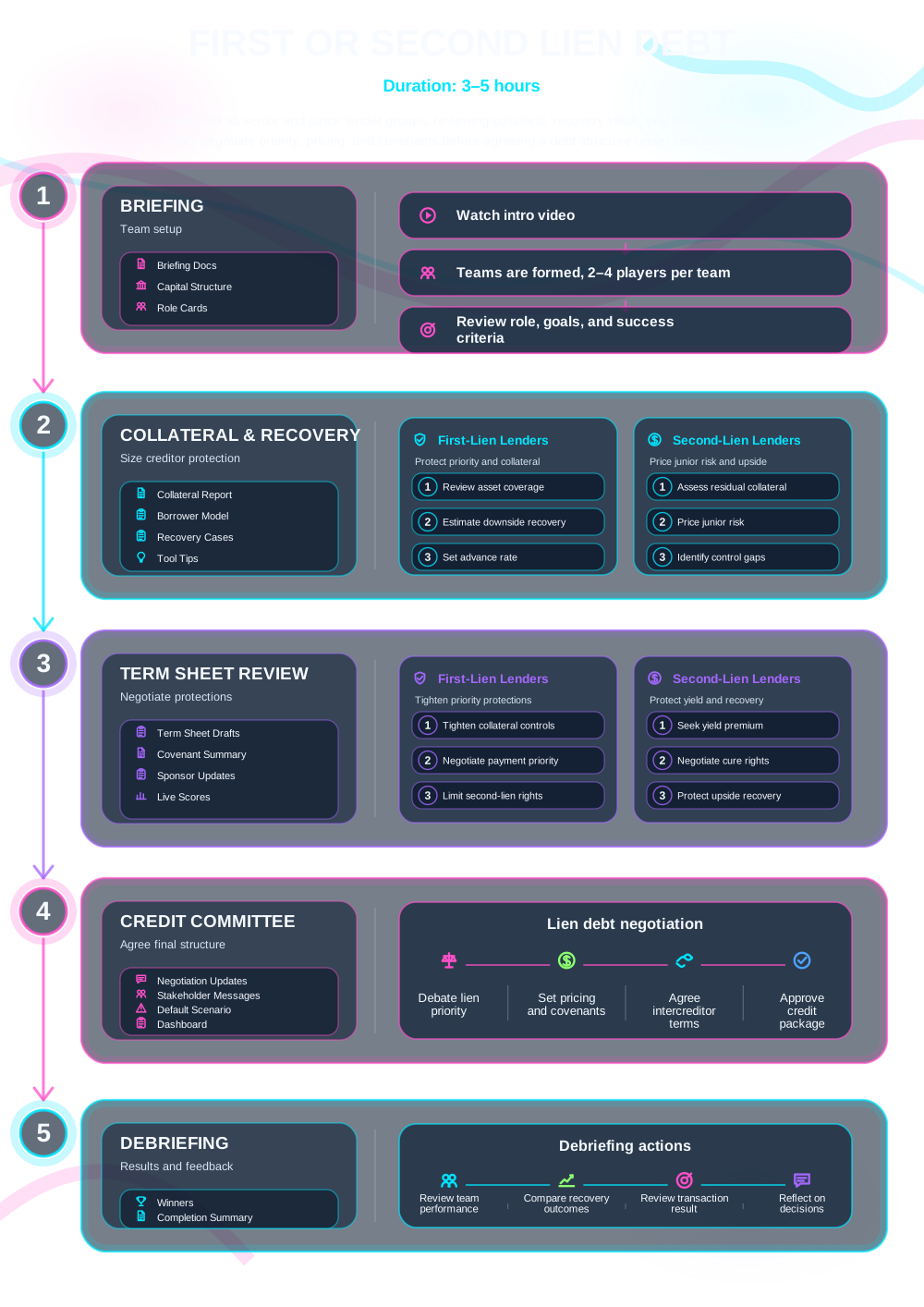

What Participants Do
In the simulation, participants will:
- Analyze a detailed company case and market briefing to understand financing needs and constraints.
- For Lender Teams: Structure a proposed financing package, deciding on the split between first and second lien tranches, pricing, covenants, and fees.
- For the Borrower Team: Evaluate competing term sheets from lenders, benchmarking terms and modeling the impact on the company's financials.
- Engage in direct, time-limited negotiations to secure or provide capital on the most favorable terms.
- Make strategic concessions on pricing, covenants, or tranche size to win the deal or protect key interests.
- Submit a final negotiated term sheet and justify the structure in a final presentation or memo.

Learning Objectives
By the end of the simulation, participants will be able to:
- Explain the structural differences and risk-return trade-offs between first lien and second lien debt.
- Analyze a company's capital structure needs and propose a layered debt solution.
- Construct a preliminary term sheet for senior and junior secured debt tranches.
- Negotiate key financing terms, including interest margin, covenants, and upfront fees.
- Understand the strategic priorities and constraints of different parties in a leveraged deal (borrower, senior lender, junior lender).
- Evaluate the impact of different debt structures on a company's balance sheet and financial flexibility.
How the First or Second Lien Debt Simulation Works
This simulation can be run individually or in teams in academic or corporate contexts. Each cycle represents a stage of getting through a pressing financial situation.
1. Role Assignment and Briefing Participants are divided into teams, one acting as the corporate borrower, and the others as competing lender groups. All receive a comprehensive case pack with financials, a business plan, and market data.
** 2. Analysis and Strategy Development** Borrower teams analyze their needs and target terms. Lender teams analyze the credit, model returns, and draft an initial term sheet for a combined first/second lien offer.
3. Negotiation Rounds The borrower team engages in separate negotiations with each lender team. Teams negotiate key terms like the size of each tranche, interest rate/OID for each lien, covenant tightness, and prepayment penalties.
4. Deal Finalization Following negotiations, the borrower team selects a "winning" lender. Both the chosen lender and the borrower finalize and submit their agreed-upon term sheet.
5. Presentation and Debrief Teams present their final deal structure, explaining the rationale for their choices. A facilitator-led debrief reviews the outcomes, highlights key learning points on capital structure, and compares the strategies of different teams.
Frequently Asked Questions
Assessment
Assessment of participant performance can be tailored according to the host institution’s objectives (business school, corporate training, assessment centre). Typical assessment criteria include:
- The quality and rationale of their proposed or accepted debt structure.
- The financial terms achieved relative to their role's objectives (e.g., cost of capital for the borrower, risk-adjusted return for the lender).
- Effectiveness during negotiations and strategic decision-making.
- Clarity and persuasiveness in presenting and defending their final deal.