The core objective is to provide a hands-on, immersive experience in navigating a company through severe financial distress. You will learn to analyze a company on the brink of failure, develop a viable turnaround plan, and negotiate with key stakeholders to avoid liquidation and engineer a financial recovery.

Financial Restructuring Simulation
Financial Restructuring Simulation immerses participants in the process of restructuring a financially distressed company. They assume roles negotiating between creditors and equity holders.

Financial Restructuring Simulation Overview
The Financial Restructuring Simulation Simulation emphasizes critical thinking, negotiation, and deal-making within a realistic framework of corporate financial distress. Participants analyze financial data, evaluate restructuring options such as debt rescheduling, capital changes, and creditor negotiations, then implement strategies to stabilize the company’s capital structure.
The simulation highlights the financial, strategic, and shareholder relations aspects of share repurchases within a dynamic market environment.
Ideal for university programs, executive training, and corporate workshops, this simulation brings to life the complexities and considerations of share repurchase decisions and their impact on a company's financial health and market perception.

Financial Restructuring Simulation Concepts
Participants work through realistic scenarios, which can be customized to emphasize or exclude specific topics depending on the learning goals. This modular structure allows the simulation to be tailored to any type of session. Key concepts include:
- Debt restructuring instruments: standstill agreements, haircuts, subordination, interest adjustments
- Equity restructuring: capital increases, shareholder loan adjustments, mezzanine financing
- Creditor negotiations and consolidation
- Managing financial distress and liquidity issues
- Impact of operational and financial restructuring on company value
- In- and out-of-court restructuring processes
- Stakeholder alignment and conflict resolution

Gameflow
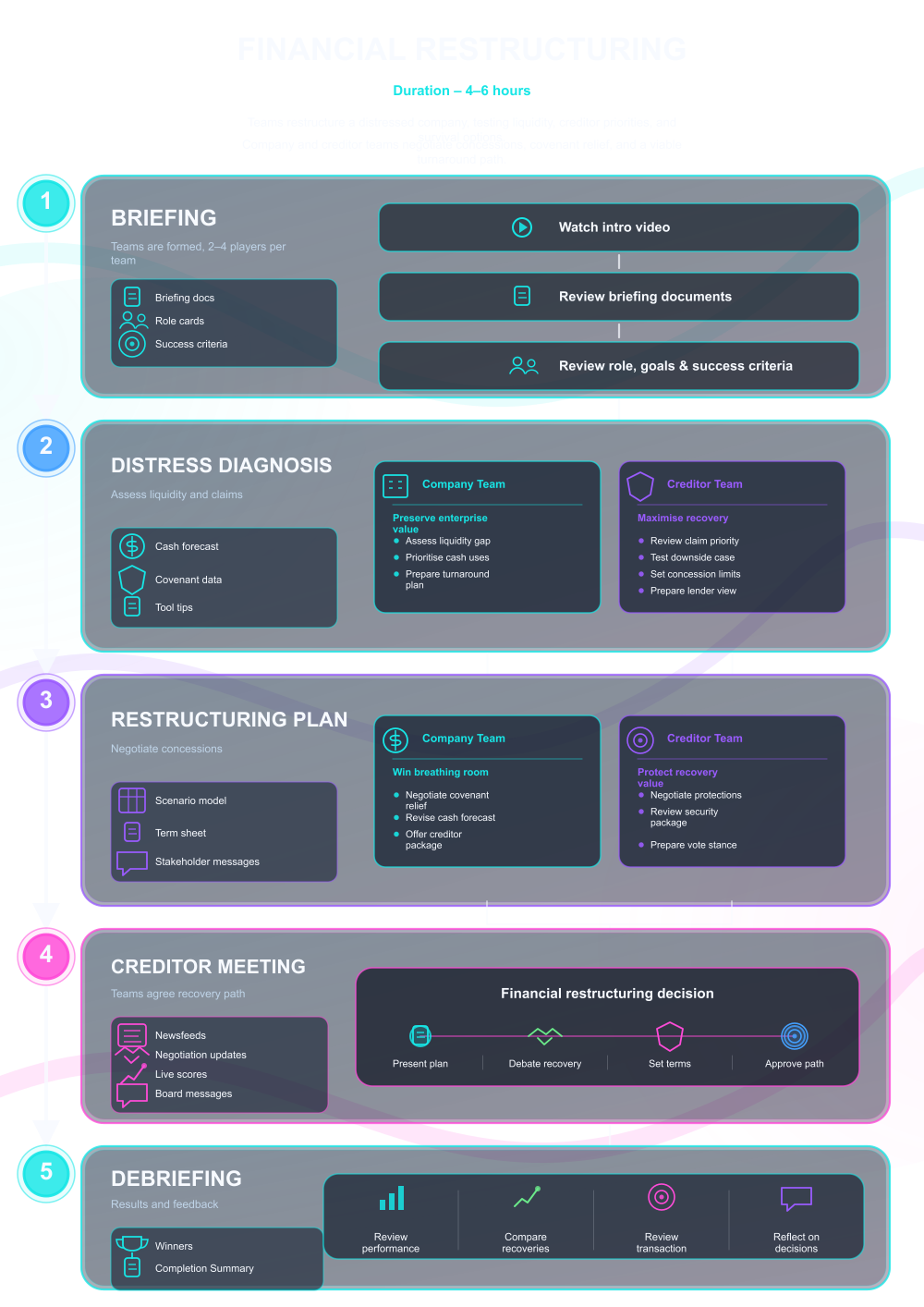

What Participants Do
In the simulation, participants will:
- Analyze distressed company financials and creditor claims
- Negotiate terms with creditors and equity holders to restructure debt and capital
- Develop and propose restructuring plans balancing risk and stakeholder interests
- Manage liquidity and operational constraints in restructuring scenarios
- Collaborate within teams assuming different roles (creditors, equity owners, advisors)
- Communicate outcomes via presentations, memos, or negotiation updates
- Adapt strategies in response to dynamic scenario developments

Learning Objectives
By the end of the simulation, participants will be able to:
- Understand financial restructuring mechanisms and their applications
- Apply negotiation tactics within creditor and equity holder dynamics
- Manage financial and operational risks in distressed situations
- Develop problem-solving skills in high-pressure decision-making environments
- Communicate complex restructuring strategies effectively to stakeholders
- Recognize legal and regulatory aspects influencing restructuring outcomes
- Build confidence in managing corporate financial crises through simulations
How the Financial Restructuring Simulation Works
This simulation can be run individually or in teams in academic or corporate contexts. Each cycle represents a stage of getting through a pressing financial situation.
1. Receive a Scenario or Brief Participants receive a company profile along with market data, financials, and shareholder expectations.
2. Analyze the Situation Participants assess the company's valuation, earnings, cash flow, capital structure, and market conditions to determine the feasibility and timing of share repurchases.
3. Make Strategic Repurchase Decisions Decisions include repurchase method (open market, tender offer, or accelerated buyback), timing, volume, financing, and communication strategy.
4. Collaborate Across Roles Teams may include financial managers, investor relations officers, and analysts who negotiate and align priorities.
5. Communicate Outcomes Participants prepare and present shareholder communications, explaining repurchase rationale and expected impact.
6. Review and Reflect Simulation feedback covers financial performance, market reaction, capital structure outcomes, and stakeholder communication effectiveness. Decisions and strategies evolve across simulation rounds.
Frequently Asked Questions
Assessment
Assessment of participant performance can be tailored according to the host institution’s objectives (business school, corporate training, assessment centre). Typical assessment criteria include:
- Strategic selection of repurchase methods and timing aligned with market conditions and company goals Financial analysis and assessment of share repurchase impact on earnings per share (EPS), return on equity (ROE), and valuation metrics
- Effective capital structure management balancing debt, equity, and liquidity
- Responsiveness to market signals and shareholder expectations
- Clear and persuasive communication to shareholders and stakeholders regarding repurchase rationale and benefits
- Collaboration and decision-making under realistic financial constraints and uncertainty
- Adaptability in adjusting repurchase strategies based on market developments and regulatory considerations