It is ideal for MBA students, finance undergraduates, corporate trainees in FP&A, and any professional seeking to build or enhance their financial modeling and strategic planning skills.

Financial Forecasting Simulation
In today's volatile economic landscape, the ability to accurately forecast a company's financial future is not just a skill—it's a critical strategic advantage.

Financial Forecasting Simulation Overview
The Financial Forecasting Simulation plunges participants into the high-stakes role of a Corporate FP&A team. Faced with a dynamic market, competitive pressures, and internal operational constraints, teams must build a comprehensive, multi-year financial model from the ground up.
This hands-on simulation moves beyond static spreadsheet exercises. Participants will make strategic decisions about pricing, production, marketing, capital investments, and financing, witnessing the immediate and long-term impact of their choices on the company's income statement, balance sheet, and cash flow statement.
The goal is clear: to create the most robust, accurate, and valuable financial plan that steers their virtual company to sustainable growth and impresses the board of directors.

Financial Forecasting Simulation Concepts
Participants work through realistic scenarios, which can be customized to emphasize or exclude specific topics depending on the learning goals. This modular structure allows the simulation to be tailored to any type of session. Key concepts include:
- Three-Statement Modeling
- Revenue Forecasting
- Cost Behavior Analysis
- Working Capital Management
- Capital Expenditure Planning
- Debt and Equity Financing
- Financial Ratio Analysis
- Sensitivity and Scenario Analysis
- Dashboard and Management Reporting

Gameflow
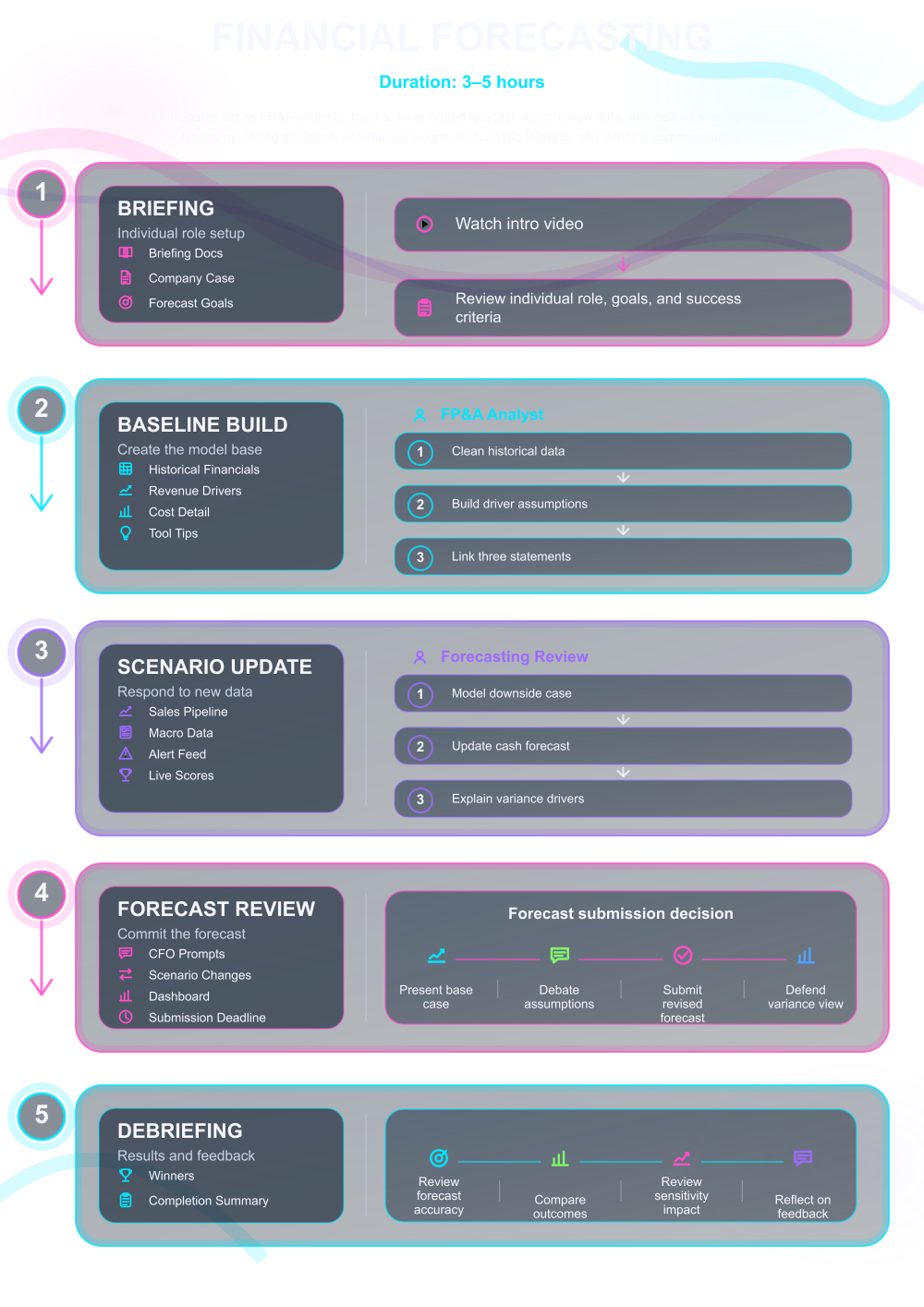

What Participants Do
In the simulation, participants will:
- Analyze a company's historical data and the competitive market environment.
- Build a dynamic, integrated 3-statement financial model from scratch.
- Forecast key drivers like sales volume, pricing, and operational expenses.
- Make strategic decisions on hiring, marketing spend, and capital projects.
- Secure necessary funding by choosing between debt and equity options.
- Manage the delicate balance between profitability, liquidity, and growth.
- Present their financial forecast and strategic rationale to the "board" (instructors and peers).
- Compete against other teams to create the most accurate and valuable financial plan.

Learning Objectives
By the end of the simulation, participants will be able to:
- Construct a fully integrated and dynamic three-statement financial model.
- Identify and forecast the key operational and financial drivers of a business.
- Analyze the intrinsic linkages between strategic decisions and financial outcomes.
- Evaluate a company's financial health and performance using key ratios and metrics.
- Develop multiple financial scenarios to assess risk and opportunity.
- Communicate financial forecasts effectively to support strategic decision-making.
How the Financial Forecasting Simulation Works
This simulation can be run individually or in teams in academic or corporate contexts. Each cycle represents a stage of getting through a pressing financial situation.
1. Team Formation and Introduction Participants are divided into FP&A teams and introduced to the simulation platform and their company's specific case.
2. Initial Analysis Teams analyze provided historical financials, market research, and industry trends.
3. Model Building Over several rounds, teams build their forecast by inputting assumptions and making strategic decisions for each fiscal quarter/year.
4. Decision Submission At the end of each round, teams submit their financial model and strategic plan.
5. Results and Market Feedback The simulation engine processes all decisions, generating detailed financial statements and market feedback. Teams see their company's valuation, stock price, and key metrics compared to competitors.
6. Analysis and Iteration Teams analyze their performance, identify variances from their forecast, and adjust their strategy and model for the next round.
7. Final Presentation The simulation culminates in teams presenting their multi-year strategic plan and financial forecast to a panel, justifying their assumptions and results.
Frequently Asked Questions
Assessment
Assessment of participant performance can be tailored according to the host institution’s objectives (business school, corporate training, assessment centre). Typical assessment criteria include:
- Accuracy, integrity, and logic of the 3-statement model.
- Reasonableness of assumptions.
- Achievement of key financial metrics (Revenue Growth, EBITDA Margin, ROIC, Leverage Ratios) and final company valuation.
- Quality of strategic choices and the depth of "what-if" analysis performed.
- Clarity, professionalism, and justification of the financial forecast and strategic plan.