A basic understanding of accounting, finance, and Excel is helpful. The simulation is designed to build competency, guiding participants through data cleaning, modeling, and visualization from the ground up, making it suitable for advanced undergraduates, MBAs, and early-career professionals.

Financial Data Analytics Simulation
Master the language of modern finance. Our Financial Data Analytics Simulation immerses participants in a competitive environment where strategic decisions are driven by data extraction, analysis, and visualization.

Financial Data Analytics Simulation Overview
In today's data-driven financial landscape, the ability to synthesize information from disparate sources—company filings, market feeds, economic indicators—is a fundamental skill. This simulation places teams in the role of a financial analytics firm tasked with providing investment recommendations.
Participants must navigate a dynamic market, sourcing and cleaning real-world financial data, building integrated financial models, and creating dashboards to support their thesis. The core challenge is not just number-crunching, but effectively communicating data-driven stories to influence key stakeholders, mirroring the cross-functional demands of roles in equity research, asset management, and fintech.
Although ideal for undergraduate and graduate finance courses, executive training, and corporate finance skill workshops, the simulation is modular and scalable, allowing instructors to vary complexity.

Financial Data Analytics Simulation Concepts
Participants work through realistic scenarios, which can be customized to emphasize or exclude specific topics depending on the learning goals. This modular structure allows the simulation to be tailored to any type of session. Key concepts include:
- Data Sourcing and Mining
- Financial Modeling and Scenario Analysis
- Data Visualization and Dashboard Design
- Statistical Analysis for Finance
- Investment Thesis Development
- Strategic Storytelling with Data
- Capital Markets Dynamics
- Risk Assessment through Data

Gameflow
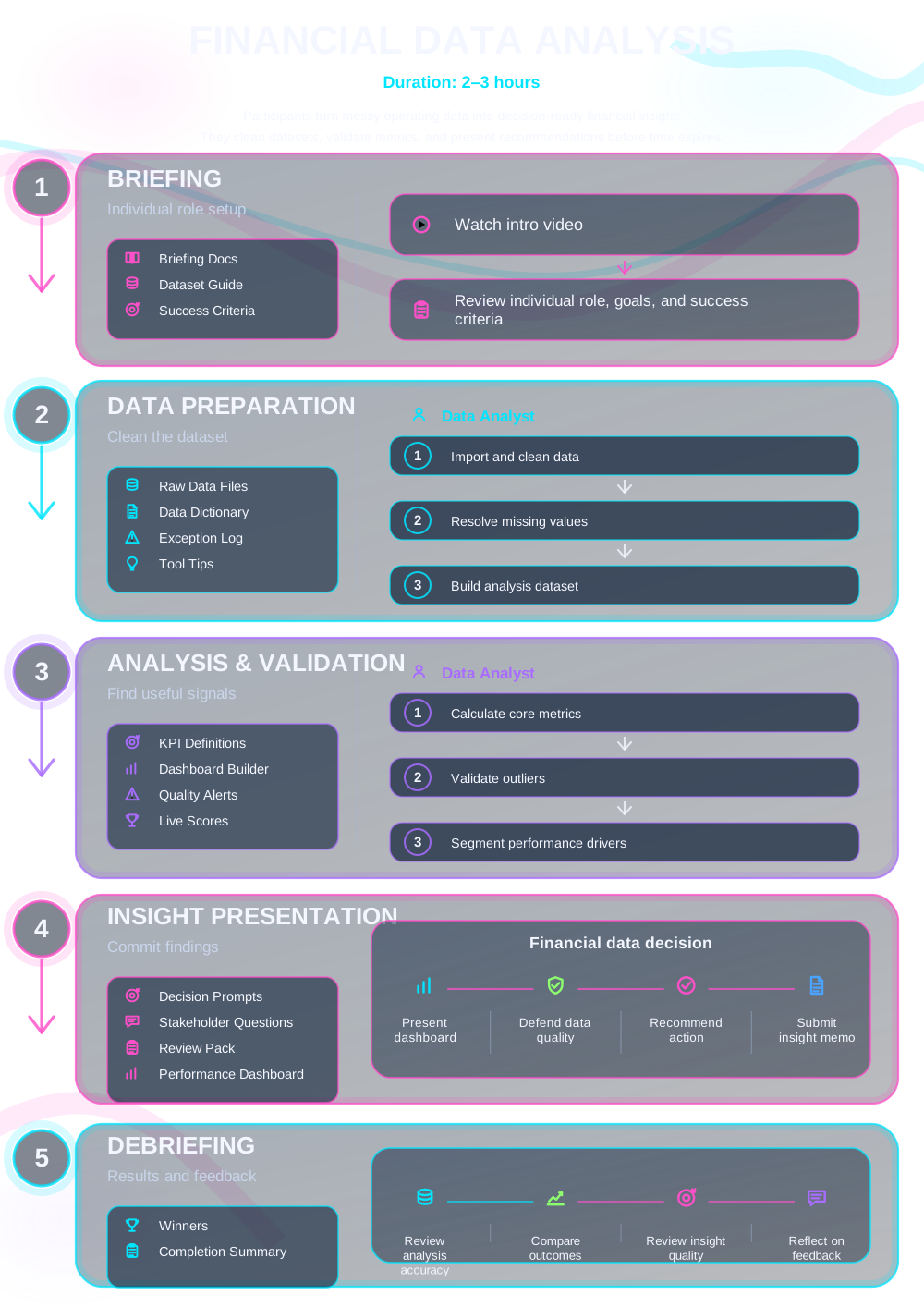

What Participants Do
In the simulation, participants will:
- Extract and prepare financial data from simulated SEC filings, Bloomberg terminals, and economic databases.
- Create three-statement models and valuation analyses based on their curated datasets.
- Use integrated tools to build interactive dashboards tracking key performance and valuation metrics.
- Test investment theses against various economic and company-specific scenarios.
- Synthesize findings into concise, professional reports advocating a buy/sell/hold position.
- Pitch their data-driven recommendation, defending their methodology and conclusions.

Learning Objectives
By the end of the simulation, participants will be able to:
- Identify, extract, and cleanse relevant financial data from multiple sources.
- Construct a robust, data-driven financial model to forecast company performance.
- Apply data visualization principles to create clear, persuasive financial dashboards.
- Perform quantitative scenario and sensitivity analysis to assess risk and opportunity.
- Develop and articulate a coherent investment thesis supported by empirical evidence.
- Communicate complex data insights effectively to a professional audience.
How the Financial Data Analytics Simulation Works
This simulation can be run individually or in teams in academic or corporate contexts. Each cycle represents a stage of getting through a pressing financial situation.
1. Data Hub Access Teams access the simulation's Data Hub, containing raw, unstructured financial data feeds, market data, and news.
2. Analysis and Modeling Phase They must clean the data, choose relevant metrics, build their financial model and dashboard, and formulate a recommendation.
3. Decision Submission Teams submit their quantified forecast, valuation, and recommended action.
4. Market Feedback and New Data The simulation engine processes all decisions, generating new market prices and quarterly results, accompanied by a new set of raw data for the next round.
5. Final Presentation The simulation culminates in a final presentation to an "Investment Committee," where teams justify their long-term analysis and performance.
Frequently Asked Questions
Assessment
Assessment of participant performance can be tailored according to the host institution’s objectives (business school, corporate training, assessment centre). Typical assessment criteria include:
- Accuracy and integrity of the financial model and data pipelines.
- Robustness of scenario and sensitivity analysis.
- Logical coherence of valuation outputs.
- Clarity, design, and effectiveness of dashboards and charts.
- Professionalism and structure of the written analytical report.
- Ability to highlight key drivers and trends visually.
- Risk-adjusted returns generated by the submitted recommendations over multiple rounds.
- Consistency and adaptability of the investment strategy based on new data.
- Persuasive articulation of the data-driven thesis during the final presentation.
- Ability to field questions and defend analytical choices convincingly.