It's ideal for undergraduate and graduate students in accounting, finance, or business administration, as well as corporate trainees in finance departments.

Financial Accounting Simulation
Students master the language of business by actively managing the financial reporting and performance of a simulated company with our Financial Accounting Simulation.

Financial Accounting Simulation Overview
The Financial Accounting Simulation is a dynamic, hands-on learning experience developed in collaboration with accounting professionals and educators. It moves beyond textbook theory to place students in the role of corporate accountants and financial managers responsible for the complete accounting cycle of a virtual company.
Participants are immersed in the end-to-end process of financial management, from recording initial transactions to preparing final financial statements and communicating results to stakeholders. Each decision round introduces new operational events, market challenges, and strategic choices that directly impact the company's financial health. Students must apply accounting principles to make recording judgments, perform necessary adjustments, analyze outcomes, and explain performance.
This multiplayer simulation emphasizes critical thinking, accurate application of GAAP/IFRS principles, and the strategic implications of financial data. It is ideal for university accounting courses, MBA programs, and corporate finance training, effectively bridging the gap between conceptual knowledge and practical application in a competitive, engaging environment.

Financial Accounting Simulation Concepts
Participants work through realistic scenarios, which can be customized to emphasize or exclude specific topics depending on the learning goals. This modular structure allows the simulation to be tailored to any type of session. Key concepts include:
- The full accounting cycle
- Revenue recognition principles and application
- Expense matching and accrual accounting
- Asset capitalization, depreciation, and impairment
- Inventory valuation methods
- Liability recognition and valuation
- Equity transactions and retained earnings
- Preparation of key financial statements
- Financial ratio analysis and performance interpretation
- Internal controls and error detection
- The impact of operational decisions on financial results
- Basic budgeting and forecasting techniques

Gameflow
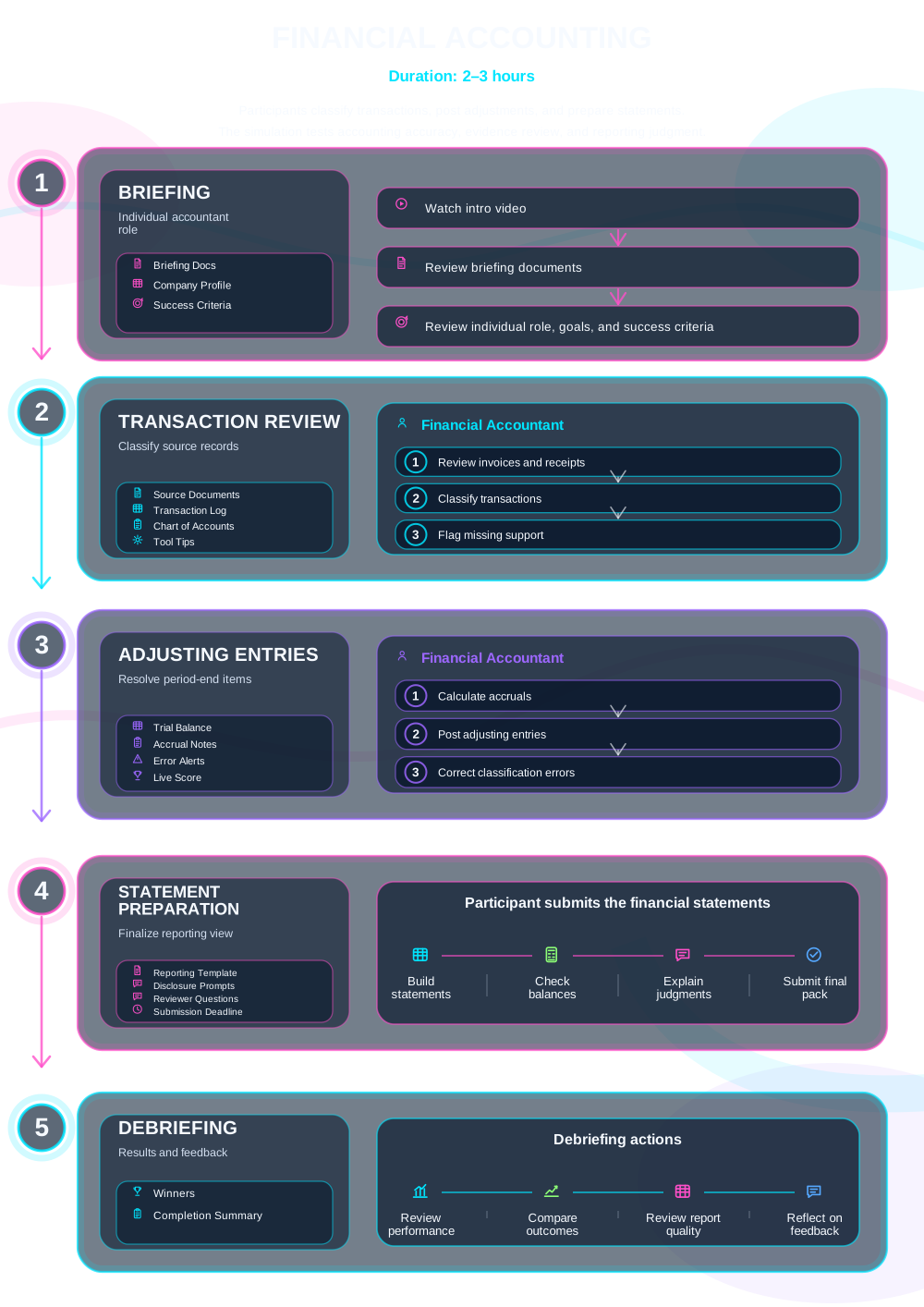

What Participants Do
In the simulation, participants will:
- Analyze business transactions and determine proper journal entries.
- Make period-end adjusting entries for accruals, deferrals, and estimates.
- Manage inventory costing and calculate cost of goods sold.
- Account for long-term assets, including depreciation and disposal.
- Prepare a complete set of financial statements from the adjusted trial balance.
- Calculate key financial ratios (liquidity, profitability, solvency) to assess company health.
- Identify accounting errors or irregularities through reconciliation and analysis.
- Present financial results and explain performance drivers to a simulated board or investors.

Learning Objectives
By the end of the simulation, participants will be able to:
- Execute the complete accounting cycle for a going concern.
- Apply GAAP/IFRS principles to record complex business transactions accurately.
- Demonstrate the cause-and-effect relationship between operational decisions and financial statements.
- Prepare and interpret the three major financial statements.
- Use ratio analysis to evaluate a company's financial performance and position.
- Communicate financial information clearly to support business decision-making.
- Develop professional judgment in applying accounting standards.
- Build confidence in handling real-world accounting scenarios under time constraints.
How the Financial Accounting Simulation Works
This simulation can be run individually or in teams in academic or corporate contexts. Each cycle represents a stage of getting through a pressing financial situation.
1. Receive the Business Scenario Participants are introduced to their company, its industry, and the strategic and operational events for the period.
** 2. Record Transactions** They analyze invoices, contracts, and bank statements to record journal entries in a simulated general ledger.
3. Perform Period-End Tasks Participants make necessary adjusting entries, update subsidiary ledgers, and run an adjusted trial balance.
4. Prepare and Analyze Teams prepare the income statement, balance sheet, and statement of cash flows. They then calculate ratios to analyze results.
5. Report and Strategize Participants compile their findings into a management report or deliver a brief presentation, explaining performance and suggesting future actions.
6. Review and Iterate Automated feedback scores accuracy, compliance, and analytical depth. Teams see their financial outcomes and rankings before proceeding to the next challenging period.
Frequently Asked Questions
Assessment
Assessment of participant performance can be tailored according to the host institution’s objectives (business school, corporate training, assessment centre). Typical assessment criteria include:
- Correct application of accounting rules and preparation of statements.
- Quality of financial ratio analysis and business insight.
- How well financial data is used to inform operational choices.
- Clarity and persuasiveness in reporting financial results.
- Teamwork and time management.