This simulation is contextualized exclusively for finance. The scenarios, work products, and professional tensions are all drawn from real-world banking, hedge fund, and M&A environments, making the learning immediately applicable.

Feedback Giving Simulation
Master the art of delivering high-impact feedback. The ability to give and receive constructive, precise, and actionable feedback is a critical driver of performance and team success.

Feedback Giving Simulation Overview
Traditional finance training focuses heavily on technical skills, but often neglects the "soft skills" that determine career trajectory and team efficacy. The Feedback Giving in Finance Simulation bridges this gap.
Participants are immersed in realistic, high-pressure scenarios mirroring those in investment banking, private equity, and hedge funds. They will assess work products, formulate feedback using proven frameworks, and deliver it to their colleagues.
Keep up the tone, formulate clearly and efficiently, mind the receiver’s perspective and you through communication get the result you were aiming for.

Feedback Giving Simulation Concepts
Participants work through realistic scenarios, which can be customized to emphasize or exclude specific topics depending on the learning goals. This modular structure allows the simulation to be tailored to any type of session. Key concepts include:
- The SBI Framework
- Actionability
- Psychological Safety
- Upward and Downward Feedback
- Receiving Feedback
- The Feedback Loop

Gameflow
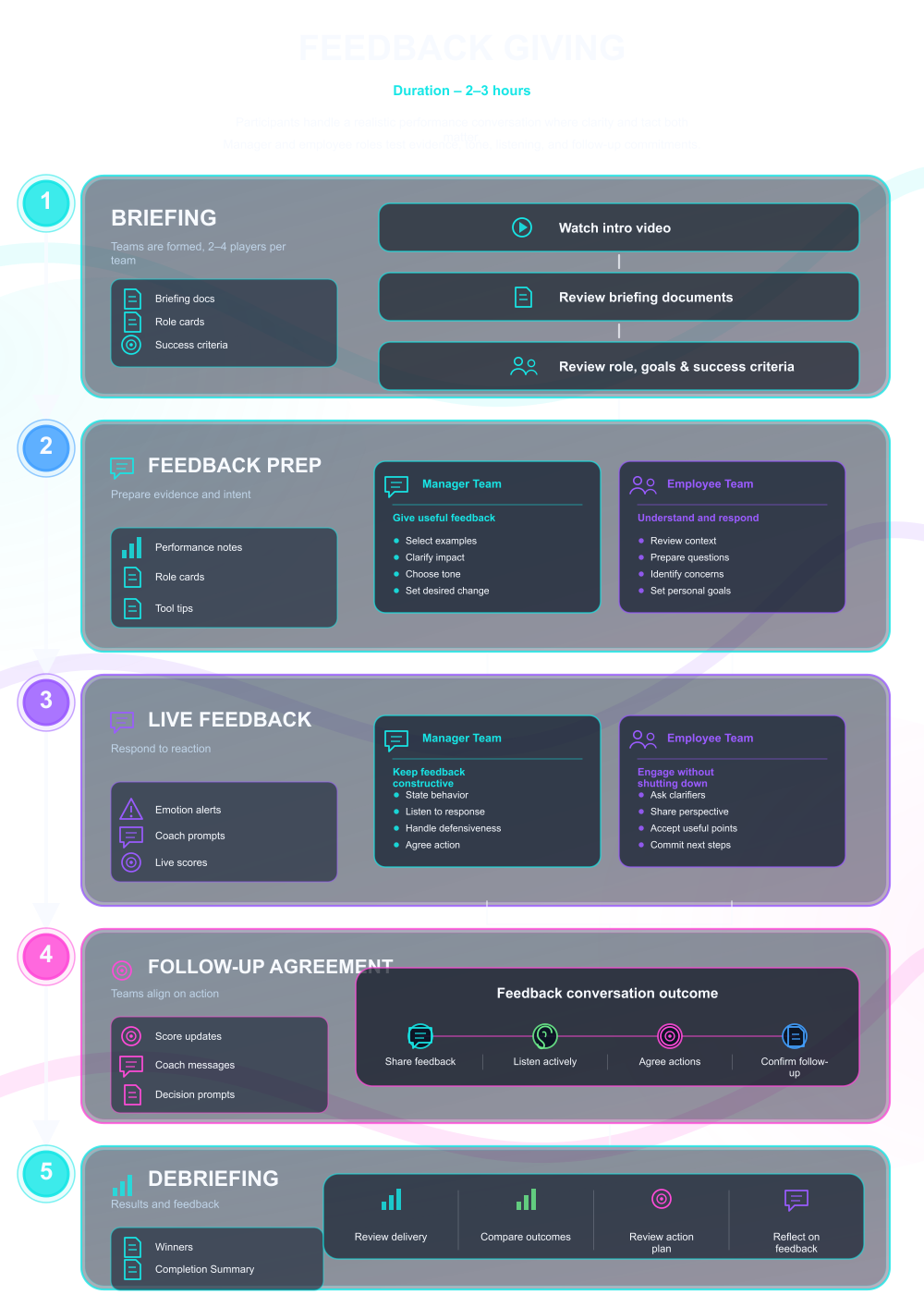

What Participants Do
In the simulation, participants will:
- Formulate written and verbal feedback using structured frameworks.
- Deliver feedback to team members.
- Receive and incorporate feedback on their own performance within the sim.
- Compare their feedback against expert benchmarks and peer responses.
- Reflect on their personal feedback style and identify areas for growth.

Learning Objectives
By the end of the simulation, participants will be able to:
- Identify their personal physical and mental triggers for stress in a professional context.
- Apply a structured framework to prepare and deliver clear, constructive, and actionable feedback.
- Differentiate between effective and ineffective feedback in a finance context.
- Navigate sensitive conversations regarding performance gaps and mistakes.
- Demonstrate improved ability to receive critical feedback with professionalism.
- Foster a team culture of continuous improvement and psychological safety.
- Enhance the overall quality and efficiency of team outputs through effective communication.
How the Feedback Giving Simulation Works
This simulation can be run individually or in teams in academic or corporate contexts. Each cycle represents a stage of getting through a pressing financial situation.
1. Setup and Briefing Participants are introduced to a scenario.
2. Analysis They review the provided work product, identifying strengths, weaknesses, and errors.
3. Feedback Formulation Using in-tool guides, they draft their feedback, selecting tone, framing, and specific points.
4. Feedback Delivery They deliver the feedback to a virtual character via a choice-based interface. The character responds based on the quality of the delivery.
5. Analysis and Debrief The platform scores the feedback on criteria like clarity, actionability, and empathy. It provides a side-by-side comparison with an expert model response.
6. Progression Participants advance through progressively more complex scenarios, dealing with sensitive issues and upward feedback.
Frequently Asked Questions
Assessment
Assessment of participant performance can be tailored according to the host institution’s objectives (business school, corporate training, assessment centre). Typical assessment criteria include:
- Specific and unambiguousness of the feedback
- Clarity and possibility of improvement in the feedback
- Motivation vs. demoralisation in the feedback
- Participants can see how their feedback approach compares to the anonymized responses of their peers, providing valuable context for their performance.
- Participants complete a written reflection on what they learned about their own feedback style, solidifying the behavioral change.
Assessment may incorporate peer and self-review components, facilitator scoring, and debrief discussion. Results may feed into grades, executive feedback, certification or development plans.