No. The simulation is designed to be accessible, with foundational materials provided, yet challenging enough for those with prior experience.

Ethical Investing Simulation
Our Ethical Investing Simulation plunges participants into the high-stakes world of corporate finance, where allocating capital effectively is the key to driving growth and creating shareholder value.

Ethical Investing Simulation Overview
In today's financial landscape, performance is no longer measured by returns alone. Investors, regulators, and stakeholders increasingly demand that capital generates positive societal and environmental impact alongside financial gain.
This immersive simulation places participants in the role of an investment fund manager tasked with building a portfolio that balances competitive financial returns against rigorous ethical, social, and governance criteria.
Participants will analyze companies, navigate real-world ethical dilemmas, and respond to dynamic market and regulatory shifts, all while communicating their strategy to a board of sustainability-conscious stakeholders. It’s a hands-on exercise in making tough, impactful investment decisions.

Ethical Investing Simulation Concepts
Participants work through realistic scenarios, which can be customized to emphasize or exclude specific topics depending on the learning goals. This modular structure allows the simulation to be tailored to any type of session. Key concepts include:
- ESG Integration (Environmental, Social, Governance)
- Positive/Negative Screening and Best-in-Class Selection
- Impact Measurement and Reporting (SASB, GRI)
- Stakeholder Theory vs. Shareholder Primacy
- Greenwashing and Due Diligence
- Ethical Dilemmas in Finance (Sin Stocks, Transition Sectors)
- The Risk-Return-Impact Trilemma
- Sustainability-Linked Financial Instruments

Gameflow

What Participants Do
In the simulation, participants will:
- Allocate capital across asset classes and sectors using ESG ratings and financial data.
- Evaluate potential investments on both quantitative metrics (P/E, ROI) and qualitative ESG factors.
- Respond to breaking news, shareholder activism, regulatory changes, and corporate scandals.
- Defend strategy and trade-offs to a simulated Board of Directors or client.
- Measure performance against ethical indices and create integrated financial/impact reports.

Learning Objectives
By the end of the simulation, participants will be able to:
- Analyze and integrate ESG factors into traditional financial analysis.
- Construct and justify an investment portfolio aligned with specific ethical mandates.
- Evaluate the potential financial materiality of ESG risks and opportunities.
- Navigate the practical challenges and trade-offs between financial targets and impact goals.
- Communicate investment strategy effectively to ethically-focused stakeholders.
How the Ethical Investing Simulation Works
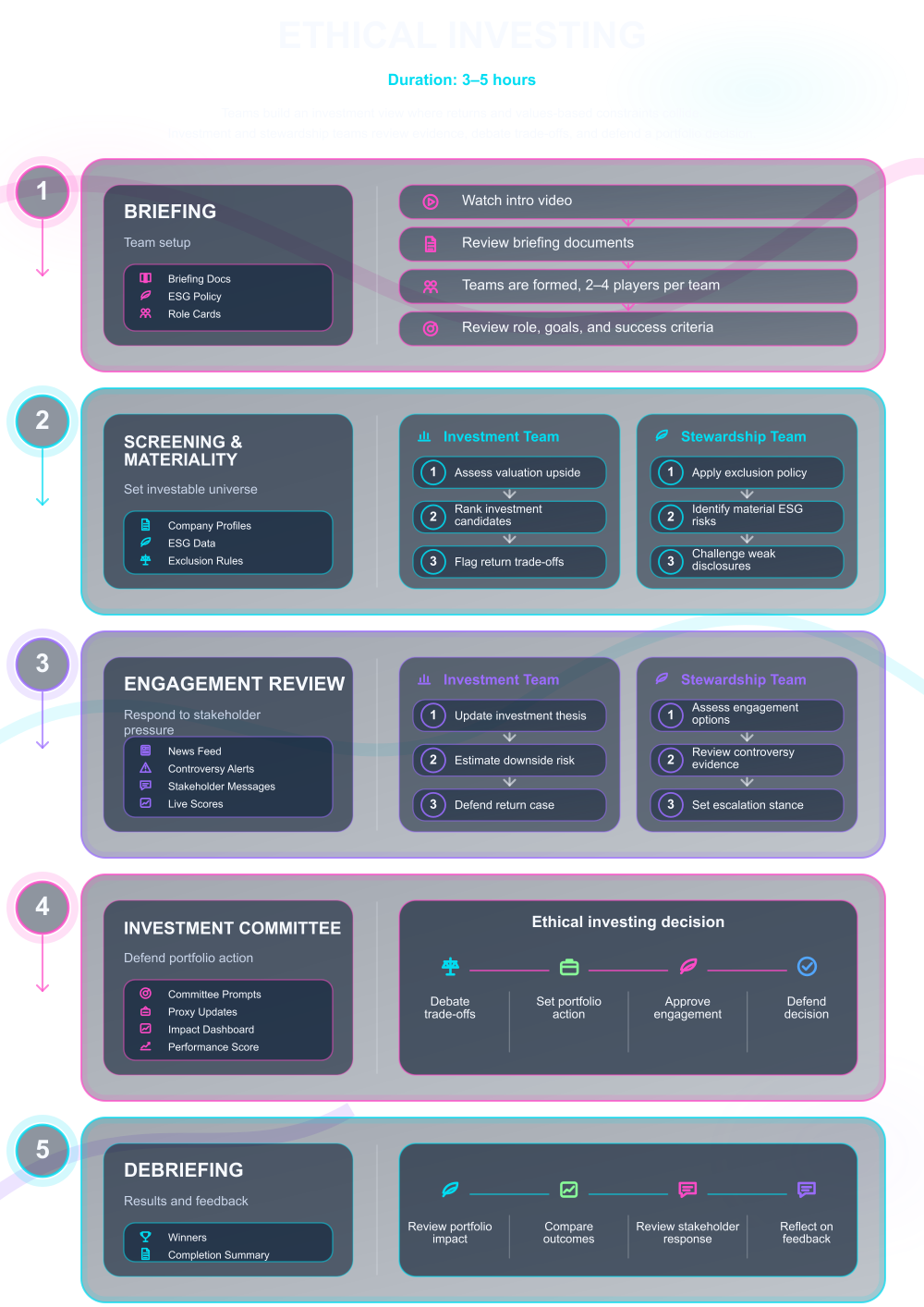
This simulation can be run individually or in teams in academic or corporate contexts. Each cycle represents a stage of getting through a pressing financial situation.
1. Research Go through the universe of companies using provided financials, ESG scores, and news feeds.
** 2. Make Decisions** Buy/sell holdings, submit investment theses, and allocate resources to ESG engagement or due diligence.
3. Receive Results Participants' portfolio's financial return and ESG impact score are calculated, moving into a ranked leaderboard.
4. Respond to Injects Critical events force teams to reassess holdings and strategy.
5. Respond to Market Shocks New rounds introduce market volatility, corporate actions (like mergers or special dividends), or changes in credit ratings, forcing participants to adapt.
6. Present Teams present their final strategy, results, and lessons learned to a judging panel (instructor or peers).
Frequently Asked Questions
Assessment
Assessment of participant performance can be tailored according to the host institution’s objectives (business school, corporate training, assessment centre). Typical assessment criteria include:
- Risk-adjusted returns relative to benchmarks.
- Adherence to mandate, improvement in portfolio ESG scores, and quality of impact rationale.
- Coherence of investment thesis, response to scenarios, and effectiveness of final stakeholder presentation.