An entrepreneurship simulation is an interactive learning experience that replicates the challenges of starting and scaling a business, allowing participants to test strategies and learn from outcomes in a risk-free environment.

Entrepreneurship Simulation
Navigate the exhilarating journey of building a venture from a raw idea to a successful exit in this dynamic, hands-on entrepreneurship simulation.

Entrepreneurship Simulation Overview
This immersive simulation plunges participants into the high-stakes world of startup creation and scaling. Acting as founding teams, participants must validate a business concept, develop a minimum viable product (MVP), and navigate the critical early stages of venture growth.
They will grapple with real-world decisions involving bootstrapping, pitching to investors, managing burn rate, and planning for a strategic exit.
The simulation captures the iterative, resource-constrained, and uncertain nature of entrepreneurship, providing a safe environment to experiment, fail, and learn. It bridges textbook theory with the practical pressures of building a business, making it an essential tool for aspiring founders and innovators.

Entrepreneurship Simulation Concepts
Participants work through realistic scenarios, which can be customized to emphasize or exclude specific topics depending on the learning goals. This modular structure allows the simulation to be tailored to any type of session. Key concepts include:
- Lean Startup Methodology and Business Model Validation
- Product-Market Fit and MVP Development
- Startup Financials: Burn Rate, Runway, Unit Economics
- Funding Stages: Bootstrapping, Angel Investment, Venture Capital
- Pitching and Term Sheet Fundamentals
- Cap Table and Founder Equity
- Growth Metrics and Scaling Strategies
- Exit Strategies: Acquisition vs. IPO

Gameflow
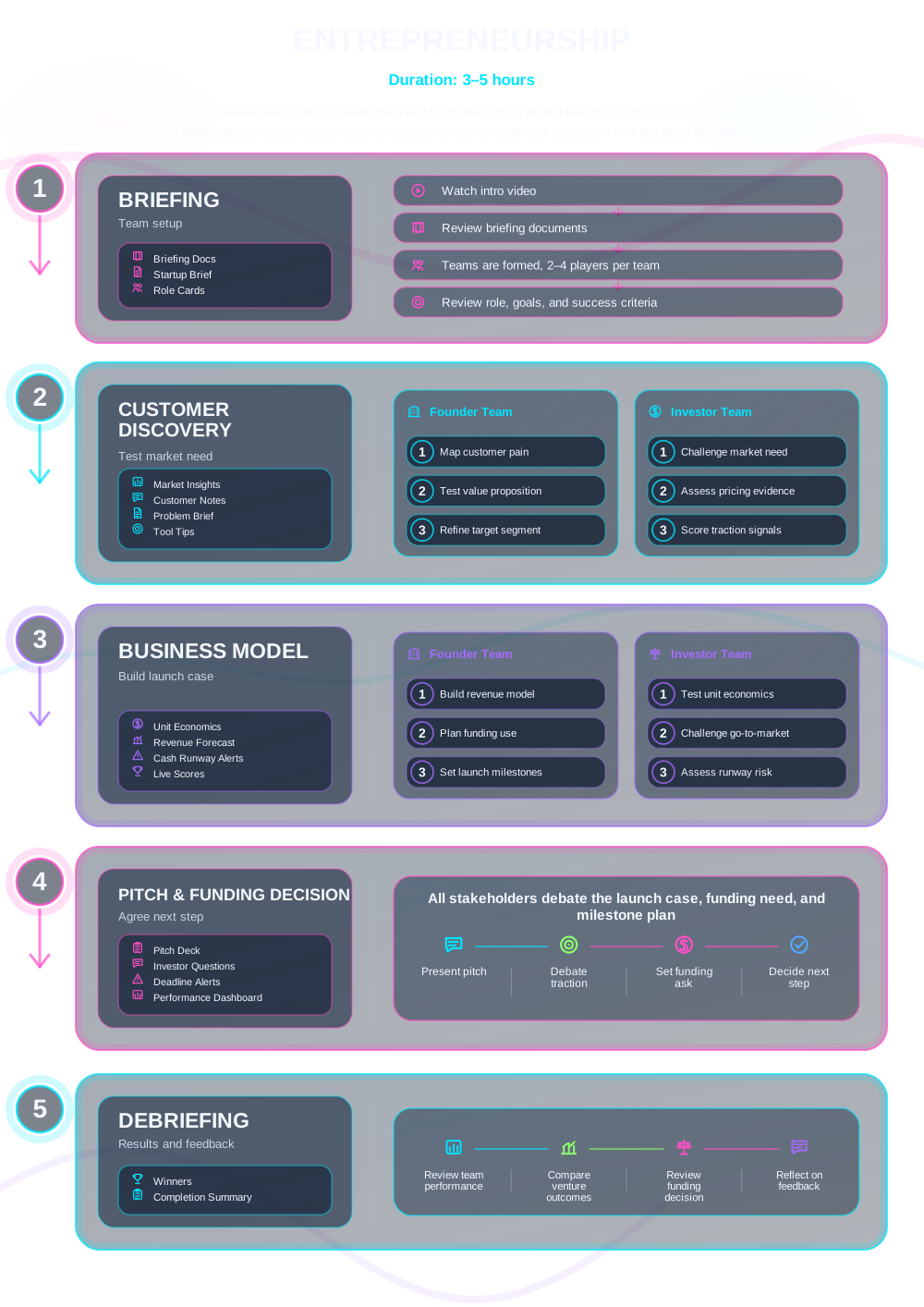

What Participants Do
In the simulation, participants will:
- Form a founding team and pivot a business idea based on initial market feedback.
- Allocate limited seed capital to R&D, marketing, and operations.
- Develop and "launch" an MVP, interpreting simulated customer adoption data.
- Create and present a pitch deck to secure Series A funding from simulated investors.
- Negotiate a term sheet, managing dilution and investor rights.
- Make strategic scaling decisions to maximize valuation.
- Navigate a random market disruption or competitive threat.
- Decide on the timing and method of their company's exit.

Learning Objectives
By the end of the simulation, participants will be able to:
- Apply the Lean Startup framework to validate a business concept efficiently.
- Construct and interpret basic startup financial projections and key metrics.
- Design a compelling investment pitch tailored to different investor personas.
- Evaluate the trade-offs in founder equity, funding amounts, and investor terms.
- Analyze growth data to make strategic decisions on resource allocation.
- Understand the lifecycle of a venture from founding to exit.
How the Entrepreneurship Simulation Works
This simulation can be run individually or in teams in academic or corporate contexts. Each cycle represents a stage of getting through a pressing financial situation.
1. Market Analysis and Ideation Teams review market data to identify a high-potential opportunity and draft an initial business concept.
** 2. Business Model Canvas** Teams formalize their strategy by completing key sections of a Business Model Canvas, defining their value proposition and customer segments.
3. Seed Funding Pitch Teams create a brief pitch and financial projection to secure seed capital from simulated angel investors, negotiating initial terms.
4. MVP Development and Launch Teams allocate their seed budget across R&D and marketing to develop and launch their Minimum Viable Product, receiving initial user traction data.
5. Series A Fundraising With early traction data, teams refine their pitch deck and present to venture capital panels to secure a larger Series A funding round.
6. Scaling Operations In multiple decision rounds, teams competitively allocate quarterly budgets across product, marketing, talent, and ops to drive growth and manage burn rate.
7. Crisis Management An unexpected market event (e.g., new competitor, supply shock) forces teams to pivot strategy and manage a crisis with limited resources.
8. Term Sheet Negotiation Top-performing teams receive acquisition offers or IPO term sheets and must negotiate final valuation and deal terms.
9. Exit and Liquidity Event Final valuations are calculated based on company performance, market share, and negotiated terms. Founder payouts are determined, declaring a winner.
Frequently Asked Questions
Assessment
Assessment of participant performance can be tailored according to the host institution’s objectives (business school, corporate training, assessment centre). Typical assessment criteria include:
- Revenue growth and market share
- Profitability and burn rate management
- Successful navigation of funding rounds with favorable dilution
- Strength of final balance sheet
- Clarity and persuasiveness of the value proposition
- Coherence of financial projections and use of funds
- Effectiveness in handling Q&A from "investors"