While helpful, a deep finance background is not required. The simulation is designed to be accessible, teaching core concepts as you go. It provides a practical application for those with foundational business knowledge.

Entrepreneurial Finance Simulation
Master the Art of Funding and Scaling a High-Growth Venture and step into the high-stakes world of a startup founder. Make critical financial decisions to secure funding, manage burn rate, and scale the venture toward a successful exit.

Entrepreneurial Finance Simulation Overview
The Entrepreneurial Finance Simulation places participants in the driver's seat of a promising tech startup. They will navigate the complex and often challenging journey of entrepreneurial finance.
Starting with a seed idea and limited capital, participants will be responsible for developing a compelling business plan, pitching to various types of investors, and negotiating term sheets.
Participants will learn about tension between growth and runway and will make crucial decisions on hiring, marketing spend, and revenue generation, all while managing the company's valuation and cap table. The goal is clear: achieve milestones, raise subsequent funding rounds at increasing valuations, and ultimately guide the company to a successful acquisition or IPO.

Entrepreneurial Finance Simulation Concepts
Participants work through realistic scenarios, which can be customized to emphasize or exclude specific topics depending on the learning goals. This modular structure allows the simulation to be tailored to any type of session. Key concepts include:
- Venture Capital Cycle
- Financial Modeling and Valuation
- Capitalization Table Management
- Term Sheets and Deal Structuring
- Burn Rate and Runway Management
- Pitching to Investors
- Convertible Notes and SAFE Agreements
- Liquidation Preferences
- Due Diligence
- Exit Strategies

Gameflow

What Participants Do
In the simulation, participants will:
- Build a dynamic model projecting revenue, expenses, and cash flow.
- Create and refine a compelling pitch deck to attract investors.
- Engage in live negotiations with angel investors and venture capital firms, debating valuation and terms.
- Allocate resources across R&D, Marketing, and Talent Acquisition to hit key performance indicators.
- Evaluate and negotiate the fine print, including liquidation preferences and board control.
- Manage ownership stake through multiple funding rounds.
- Pitch in a competitive environment where only the most convincing teams secure capital.
- Determine the optimal timing and strategy for a merger, acquisition, or public offering.

Learning Objectives
By the end of the simulation, participants will be able to:
- Understand the complete lifecycle of venture funding, from seed to exit.
- Construct a basic financial model for a high-growth startup and calculate its valuation using accepted methodologies.
- Interpret and negotiate key clauses in a venture capital term sheet.
- Manage a company’s cap table and understand the impact of dilution through funding rounds.
- Articulate a compelling investment thesis and business case to potential investors.
- Analyze the critical trade-offs between burn rate, growth, and runway.
- Evaluate different exit strategies and their financial implications for founders and investors.
How the Entrepreneurial Finance Simulation Works
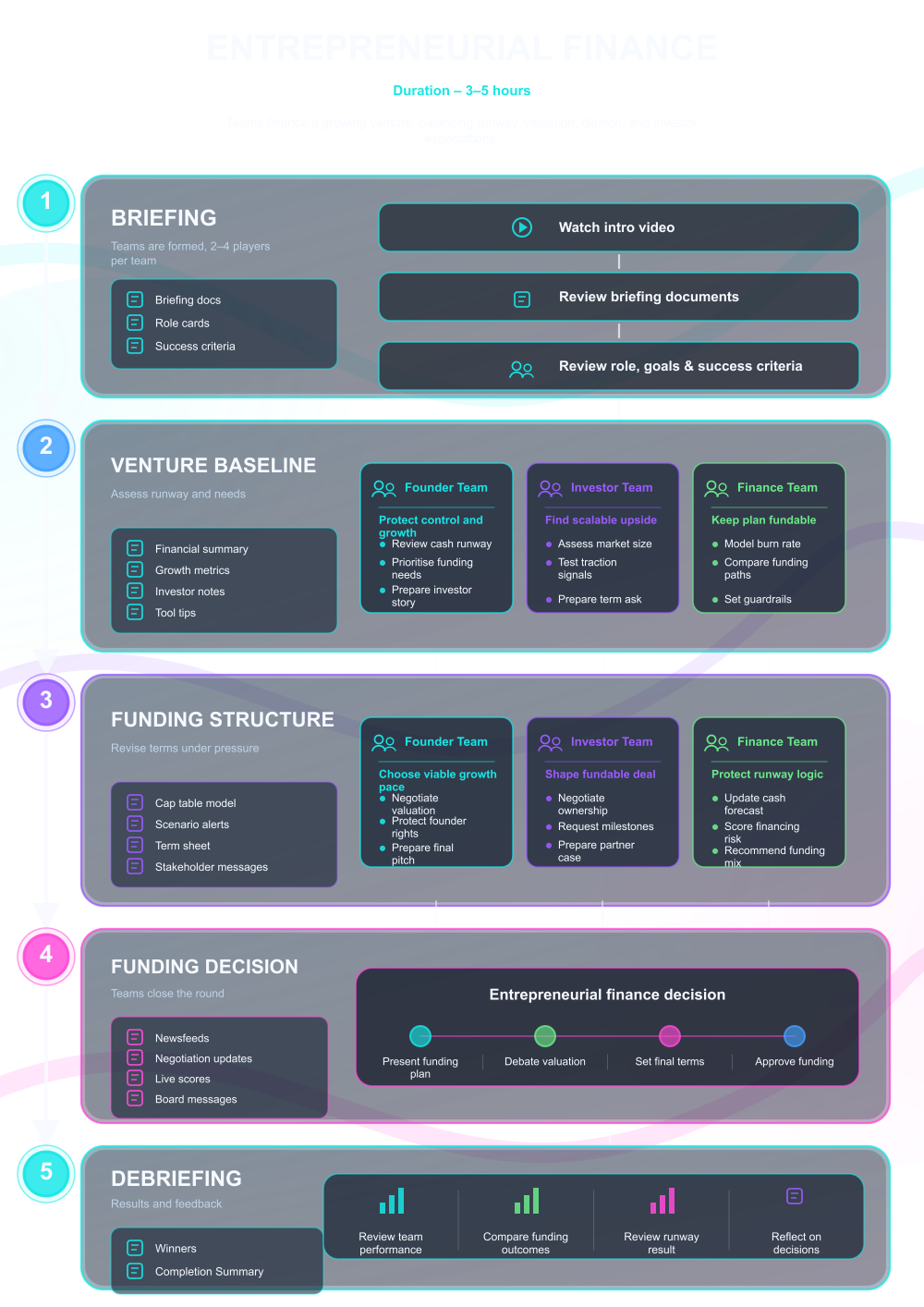
This simulation can be run individually or in teams in academic or corporate contexts. Each cycle represents a stage of getting through a pressing financial situation.
1. Team Formation and Briefing Participants are divided into startup founder teams and receive their initial company profile, including technology, market data, and seed capital.
2. Strategy Development Teams analyze their position, build their financial model, and prepare their initial pitch deck for the Seed Round.
3. Funding Teams pitch to Angel Investors (played by instructors or other participants). They receive initial funding, often via convertible notes.After operating their company for several simulated quarters—making strategic decisions that impact their KPIs and valuation—teams pitch to Venture Capitalists. Negotiations are more complex, focusing on valuation and term sheet details.
4. Operations and Decision-Making Between rounds, teams make strategic decisions on how to spend their capital to increase company value, constantly monitored by their burn rate.
5. The Exit The simulation culminates in an exit event. The company with the strongest position may go public, while others may be acquired. Final wealth is calculated based on ownership percentage and exit valuation.
Frequently Asked Questions
Assessment
Assessment of participant performance can be tailored according to the host institution’s objectives (business school, corporate training, assessment centre). Typical assessment criteria include:
- Final Company Valuation and Shareholder Wealth
- Completeness and Coherence of Financial Model
- Pitch Deck and Investor Presentation
- Strategic Decision-Making Log
- Peer Evaluation and Team Contribution
Assessment may incorporate peer and self-review components, facilitator scoring, and debrief discussion. Results may feed into grades, executive feedback, certification or development plans.