The simulation is 100% web-based and runs on any modern browser (Chrome, Safari, Firefox) with an internet connection. No special software is required.

Energy Finance Simulation
The global energy sector is undergoing a seismic shift, driven by the dual forces of climate imperatives and technological disruption. For finance professionals, this presents a complex and high-stakes landscape of opportunities and risks.

Energy Finance Simulation Overview
The Energy Finance Simulation is a dynamic, hands-on online program that immerses participants in the high-pressure world of energy project finance and corporate strategy.
Participants step into the roles of energy financiers, tasked with evaluating, funding, and managing a diverse portfolio of energy assets. They will navigate the volatile realities of commodity prices, changing government policies, and breakthrough technologies.
From securing capital for a massive offshore wind farm to managing the decline of a legacy fossil fuel asset, this simulation provides an unparalleled, risk-free environment to understand the capital allocation decisions that are powering the future.

Energy Finance Simulation Concepts
Participants work through realistic scenarios, which can be customized to emphasize or exclude specific topics depending on the learning goals. This modular structure allows the simulation to be tailored to any type of session. Key concepts include:
- Project Finance Fundamentals
- Financial Modeling and Valuation
- Energy-Specific Metrics
- Risk Analysis and Mitigation
- Capital Raising
- The Energy Transition
- Due Diligence
- Portfolio Management

Gameflow
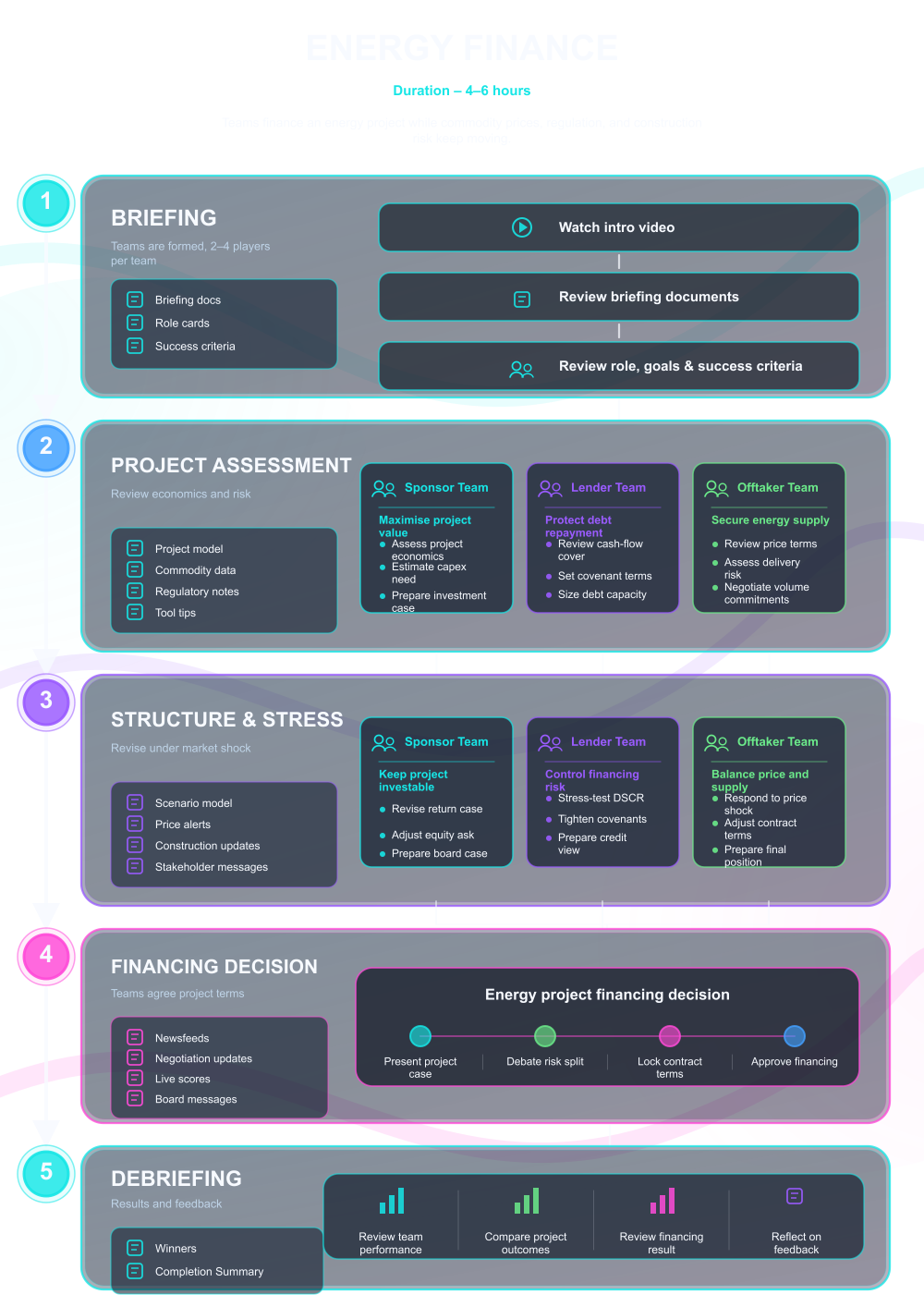

What Participants Do
In the simulation, participants will:
- Conduct due diligence on a variety of project proposals, from utility-scale solar to natural gas peaker plants.
- Construct and stress-test project finance models in Excel or a simulation interface, calculating key metrics like IRR and NPV.
- Negotiate and structure the optimal mix of senior debt, mezzanine financing, and equity to fund projects.
- React to randomized market events, including policy shifts, technology cost breakthroughs, and commodity price shocks.
- Defend investment decisions and funding proposals based on rigorous financial and strategic analysis.
- Track the performance of the funded projects, making strategic decisions on asset optimization or divestment.

Learning Objectives
By the end of the simulation, participants will be able to:
- Analyze the financial viability of diverse energy projects using industry-standard metrics.
- Construct a robust project finance model to evaluate capital structure and returns.
- Evaluate the major risks inherent in energy investments and propose mitigation strategies.
- Differentiate the financial drivers and risk profiles of renewable vs. conventional energy assets.
- Synthesize market data, policy trends, and financial analysis to make strategic capital allocation decisions.
- Communicate investment recommendations persuasively to stakeholders and senior management.
How the Energy Finance Simulation Works
This simulation can be run individually or in teams in academic or corporate contexts. Each cycle represents a stage of getting through a pressing financial situation.
1. Introduction and Training Participants are introduced to the simulation platform and the core principles of energy project finance through guided tutorials
2. Deal Sourcing and Analysis Each round, teams are presented with a new set of investment opportunities. They must analyze project dossiers, market data, and build financial models to assess each deal's risk/return profile.
3. Capital Raising and Deal Structuring Teams decide which projects to bid on and must then structure the financing. This involves negotiating with "banks" for debt and allocating their own "equity" capital efficiently.
4. Market Events and Portfolio Management After funding, each round is advanced in time. Random market events are triggered, impacting project cash flows. Teams must manage their growing portfolio, deciding whether to hold, refinance, or sell assets.
5. Reporting and Debrief Teams report on their portfolio performance. A comprehensive debrief session led by the instructor connects the simulation experience to real-world energy finance concepts, highlighting best practices and common pitfalls.
Frequently Asked Questions
Assessment
Assessment of participant performance can be tailored according to the host institution’s objectives (business school, corporate training, assessment centre). Typical assessment criteria include:
- Profitability Score
- Risk Management Index
- Compliance and Accuracy Score
- Portfolio Performance
- Financial Model Accuracy and Rigor
- Investment Committee Presentation
Assessment may incorporate peer and self-review components, facilitator scoring, and debrief discussion. Results may feed into grades, executive feedback, certification or development plans.