EQ is the ability to understand and manage your own emotions, and to recognize and influence the emotions of others. In finance, it's crucial for negotiating deals, managing client relationships, leading teams, and making clear-headed decisions under extreme pressure.

Emotional Intelligence Simulation
Master the Human Dynamics of High-Stakes Finance. While technical prowess in financial modeling, valuation, and market analysis is the foundation of a finance career, it is often Emotional Intelligence that separates top performers from the rest.

Emotional Intelligence Simulation Overview
In the high-pressure, fast-paced world of finance, the ability to manage one's own emotions, read interpersonal dynamics, negotiate effectively, and lead under stress is the ultimate competitive advantage.
This innovative simulation moves beyond spreadsheets and into the human heart of financial decision-making. Participants are immersed in a realistic, multi-stage financial scenario where they must apply EQ principles to achieve optimal outcomes. They will encounter stressed colleagues, demanding clients, and tough negotiators, learning that a "perfect" financial deal can be lost due to poor interpersonal skills.
The Emotional Intelligence in Finance Simulation provides a safe, engaging environment to practice and hone these critical soft skills, translating psychological theory into tangible financial results.

Emotional Intelligence Simulation Concepts
Participants work through realistic scenarios, which can be customized to emphasize or exclude specific topics depending on the learning goals. This modular structure allows the simulation to be tailored to any type of session. Key concepts include:
- Emotional Intelligence Framework
- Stakeholder Management
- Negotiation Psychology
- Influence and Persuasion
- Managing Stress and Pressure
- Giving and Receiving Difficult Feedback
- Conflict Resolution
- Non-Verbal Communication

Gameflow
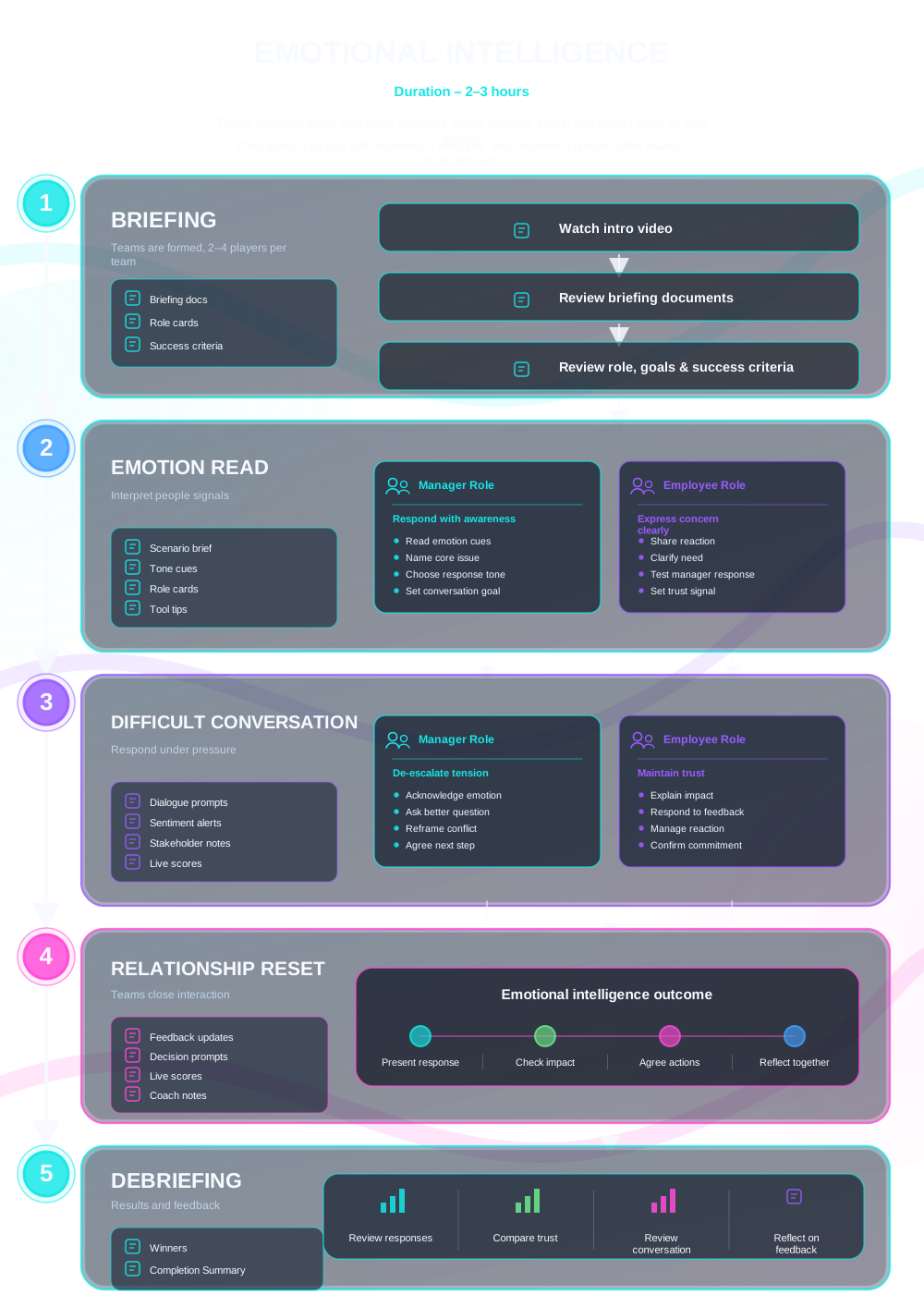

What Participants Do
In the simulation, participants will:
- Assume roles such as Investment Banker, Hedge Fund Manager, CEO, or Venture Capitalist, each with distinct emotional drivers and pressures.
- Progress through a dynamic narrative, such as a deal negotiation, where each interaction impacts the next.
- Interpret in-simulation feedback on their counterpart's emotional state and their own behavioral impact.
- Choose how to respond to provocations, setbacks, and opportunities, weighing both the financial and relational consequences.
- Work within teams and across the table to build trust and alignment.

Learning Objectives
By the end of the simulation, participants will be able to:
- Identify their own emotional triggers and default behaviors under stress.
- Apply a structured EQ framework to analyze and manage complex interpersonal dynamics.
- Demonstrate enhanced empathy by accurately assessing the motivations and concerns of clients and counterparts.
- Execute negotiation and persuasion strategies that leverage emotional intelligence for better financial terms.
- Develop strategies for building stronger, more trusting client and team relationships.
- Articulate the direct link between emotional intelligence and key financial outcomes like deal success, client retention, and team performance.
How the Emotional Intelligence Simulation Works
This simulation can be run individually or in teams in academic or corporate contexts. Each cycle represents a stage of getting through a pressing financial situation.
1. Introduction and Briefing Participants are introduced to the core EQ concepts and their specific role, objectives, and background for the scenario.
2. Scenario Launch The simulation begins, presenting participants with a realistic financial challenge (a contentious M&A term sheet negotiation, a distressed asset sale).
3. Interactive Rounds The simulation unfolds in a series of timed rounds. In each round, participants interact with other participants, making dialogue and strategic choices.
4. Real-Time Feedback The simulation provides feedback on the emotional impact of their choices, the trust level with their counterpart, and the progression toward their financial goals.
5. Consequence and Progression Choices have direct consequences, altering the negotiation landscape, changing the other party's willingness to deal, and impacting the final terms.
Frequently Asked Questions
Assessment
Assessment of participant performance can be tailored according to the host institution’s objectives (business school, corporate training, assessment centre). Typical assessment criteria include:
- Achievement of stated financial and relational goals.
- Consistency in building trust and rapport with counterparts.
- Effectiveness in navigating conflict and overcoming impasses.
- Facilitator-led discussion analyzing key decision points.
- Participant self-assessment of their emotional awareness and strategic choices.
- Peer feedback on collaboration and influence within team-based scenarios.
Assessment may incorporate peer and self-review components, facilitator scoring, and debrief discussion. Results may feed into grades, executive feedback, certification or development plans.