It is ideal for business and finance students, investment banking and sales and trading analysts, fintech professionals, and anyone seeking hands-on experience in modern, electronic market mechanics.

Electronic Trading Simulation
This Electronic Trading Simulation immerses participants in the world of electronic markets. Using a real-time platform, you will make tactical trading decisions, manage risk, and compete to capture alpha in a dynamic marketplace.

Electronic Trading Simulation Overview
The Electronic Trading Simulation is a hands-on, competitive training environment that replicates the core functions and pressures of a professional electronic trading desk. Unlike static case studies, this simulation creates a live, reactive market where prices move in response to news, volatility, and the collective actions of all participants.
Traders are given clear mandates and must use real-time analytics, order book data, and market feeds to execute strategies. The simulation covers both exchange-traded and OTC-style instruments, teaching the critical link between microstructure, strategy, and P&L.
Although ideal for undergraduate and graduate finance courses, executive training, and corporate finance skill workshops, the simulation is modular and scalable, allowing instructors to vary complexity.

Electronic Trading Simulation Concepts
Participants work through realistic scenarios, which can be customized to emphasize or exclude specific topics depending on the learning goals. This modular structure allows the simulation to be tailored to any type of session. Key concepts include:
- Market Microstructure and Order Types
- Bid-Ask Spread and Market Making
- Latency and Its Impact on Strategy
- Price Discovery and Volume Analysis
- Basic Arbitrage Strategies
- Market Impact and Slippage
- Risk Management
- News and Sentiment Integration
- Introduction to Algorithmic Trading Logic

Gameflow

What Participants Do
In the simulation, participants will:
- Execute trades using a variety of electronic order types.
- Manage a live book of positions across multiple correlated instruments.
- React to real-time economic news flashes and volatility shocks.
- Develop and adjust a trading strategy based on live market depth.
- Compete for profitability and Sharpe ratio against peers.
- Analyze post-trade reports to assess execution quality and market impact.
- Adjust risk parameters and position limits in response to changing market conditions.
- Potentially submit simple algorithmic trading rules for automated execution.

Learning Objectives
By the end of the simulation, participants will be able to:
- Understand the mechanics and dynamics of electronic financial markets.
- Apply different trading strategies in a live environment.
- Execute trades while effectively managing transaction costs.
- Interpret Level 2 order book data and trade tapes for strategic advantage.
- Articulate the relationship between news, volatility, and market liquidity.
- Calculate key performance metrics and analyze their drivers.
- Implement basic principles of pre-trade and real-time risk management.
- Frame the foundational logic behind algorithmic trading systems.
How the Electronic Trading Simulation Works
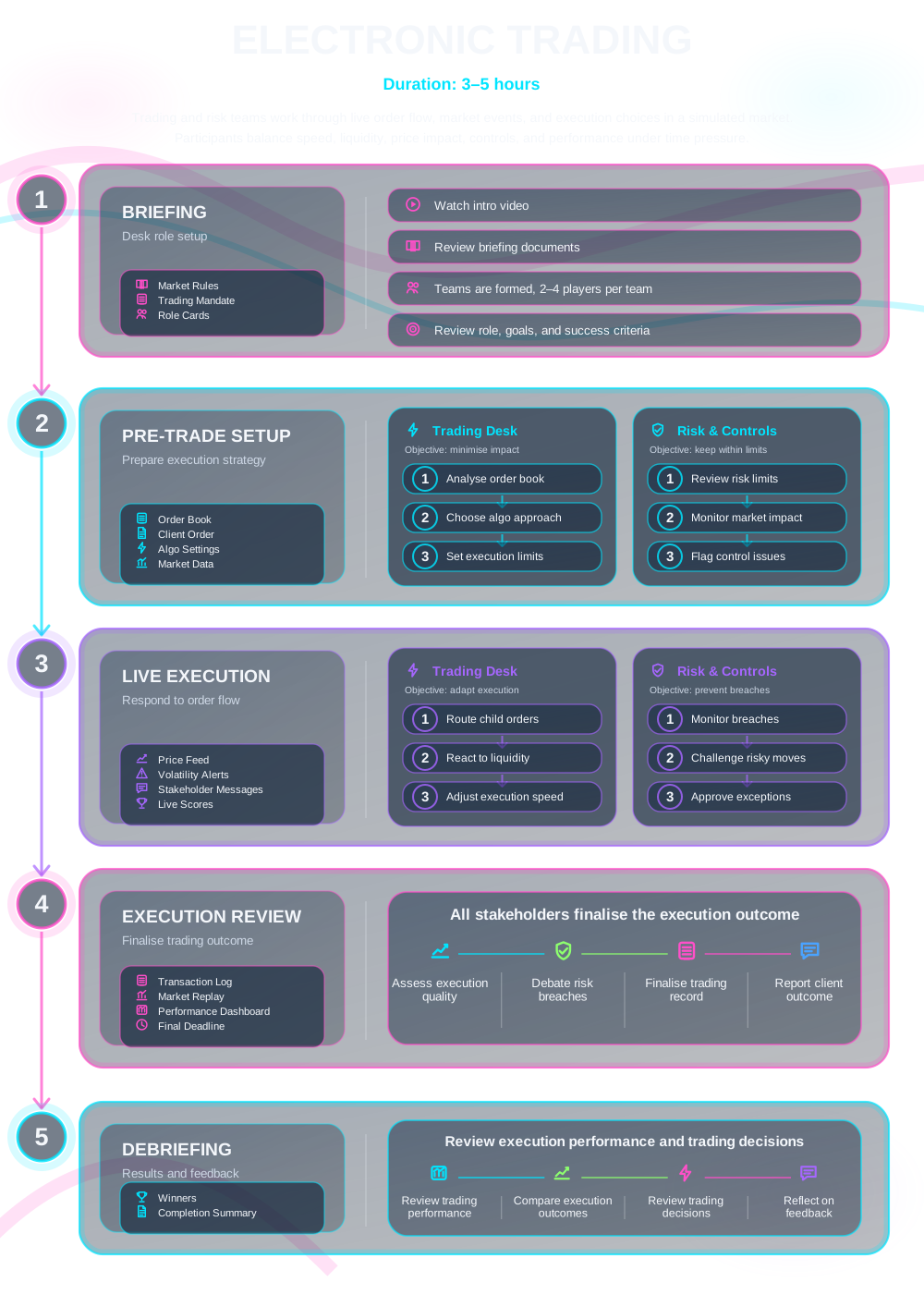
This simulation can be run individually or in teams in academic or corporate contexts. Each cycle represents a stage of getting through a pressing financial situation.
1. Setup and Briefing Participants are divided into competing trading firms or act as independent desks. Each receives initial capital, a specific mandate, and access to the real-time trading platform. A live instructional session covers the platform, instruments, key rules, and economic scenarios that will unfold.
** 2. Trading Rounds** The simulation runs in multiple, accelerated trading sessions. Each round may introduce new market conditions. Participants trade via a browser-based interface that streams prices, news, and order books.
3. Market Engine A powerful server-based market engine processes all orders, matches trades, and updates prices based on a simulated liquidity model and participant activity.
4. Coaching and Debrief Instructors provide live commentary on market dynamics. Between rounds, teams review their dashboards, assess their strategy, and plan adjustments.
** 5. Final Analysis** The simulation concludes with a comprehensive debrief. Teams review their performance metrics, trades, and the "tape" of market activity to understand key learning moments.
Frequently Asked Questions
Assessment
Assessment of participant performance can be tailored according to the host institution’s objectives (business school, corporate training, assessment centre). Typical assessment criteria include:
- Performance metrics are based on risk-adjusted returns, profitability relative to mandate, and consistency of strategy execution.
- Participants submit a written analysis explaining their strategy, key trade decisions, reactions to market events, and an evaluation of their execution quality.
- Contribution to team strategy, understanding of market dynamics during debriefs.
- The ability to articulate lessons learned from both successes and failures.